7 Medicine Cabinet Organization Ideas for a Safer, Tidier Shelf
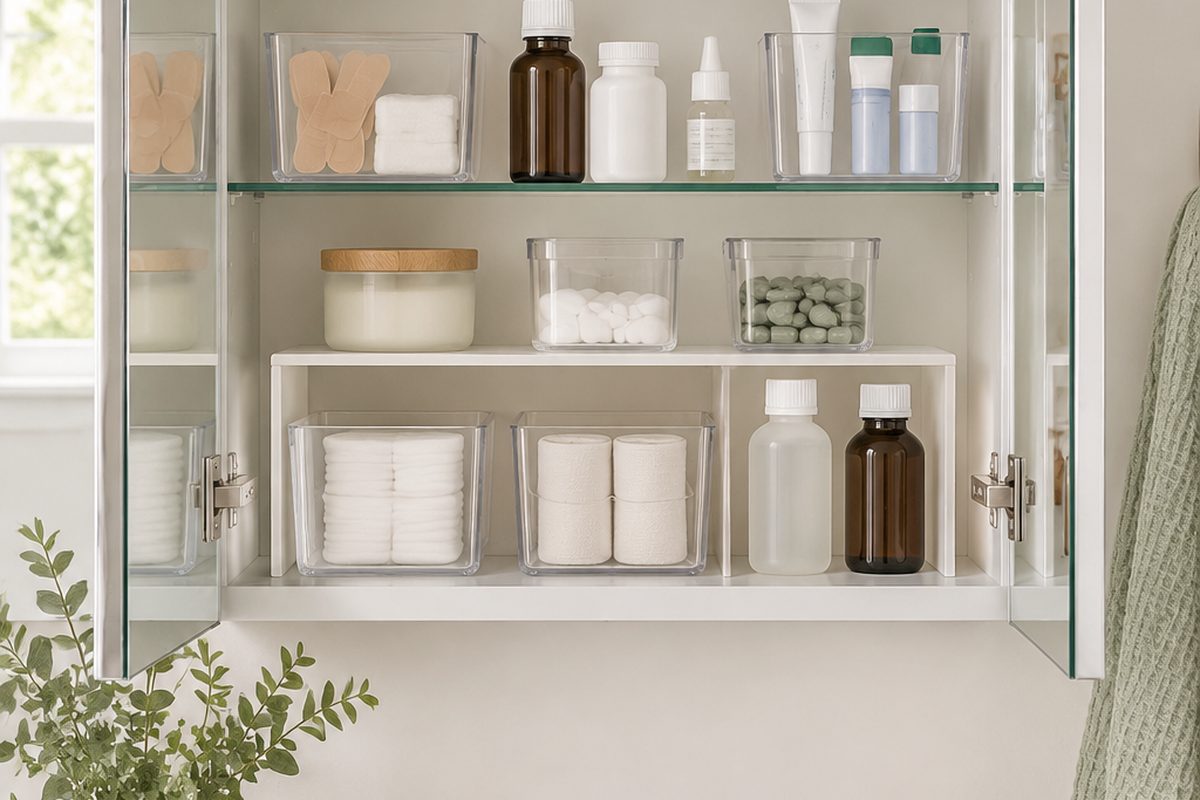
A medicine cabinet is shallow, narrow and full of tiny things with small print. It is also the place you go when you feel unwell and have the least patience for searching.
Organizing it takes under half an hour, and it matters more than most cabinets, because the contents have dates and safety rules.
1Empty it and check every date
Take everything out and look at the expiration date on each item. Set aside anything expired, anything without a label and any prescription you no longer take. Do not flush medicines or put them loose in the trash. Pharmacies and local take-back programs accept them.
2Rethink what belongs in the bathroom
Heat and humidity from showers can affect many medicines. Read the storage instructions on the label. A cool, dry spot such as a high kitchen cabinet or a hallway closet is often a better place, leaving the bathroom cabinet for toiletries and first-aid basics.
3Group by need
Sort what stays into groups: daily care, first aid, cold and allergy, pain relief, and children's items. When something is needed in a hurry, you look in one group instead of reading every label. Keep each adult's prescriptions separate from everyone else's.
4Add a second level
Most cabinet shelves leave empty air above short bottles. A narrow shelf riser creates a second level, so small items sit above without being stacked. Adjustable shelves can also be moved closer together to add an extra row.
5Use the door
The inside of the cabinet door can hold flat, light items. Adhesive pockets or magnetic strips take tweezers, nail clippers and small scissors, which otherwise fall behind everything else.
6Keep first aid in one kit
Bandages, antiseptic wipes, gauze and tape belong together in one container that can be carried to whoever needs it. A divided box keeps sizes separate. Check it twice a year and replace what has been used.
7Lock up what needs locking
If children visit or live in the home, keep all medicines up high and consider a lockable box. Child-resistant caps slow children down but do not stop them. A small lock box is also sensible for any strong prescription medication.
Keeping it that way
Put a reminder in your calendar twice a year to check dates. Many people pair it with changing smoke-alarm batteries.
This article covers organization only. For questions about how to store or dispose of a specific medicine, follow the label or ask a pharmacist.
Everything mentioned in this guide
One list, so you can check sizes against your own measurements. Links go to Amazon; we may earn a commission.
Questions people ask
Should medicine be stored in the bathroom?
Often not. Many medicines should be kept cool and dry, and bathrooms are warm and humid. Check each label, and consider a high cabinet in another room.
How do I dispose of expired medicine?
Use a pharmacy or community take-back program where available. Follow local guidance and the instructions on the label rather than flushing medicines or throwing them away loose.