The 30-Day Declutter Challenge: One Small Area a Day
Decluttering a whole home in a weekend sounds good and almost never happens. What works for most people is smaller: one drawer, one shelf or one category a day, for about fifteen minutes.
This challenge is built that way. Thirty short tasks, grouped by week, that take you from the easiest areas to the harder ones. Start on any date. If you miss a day, continue with the next task and do not try to catch up.
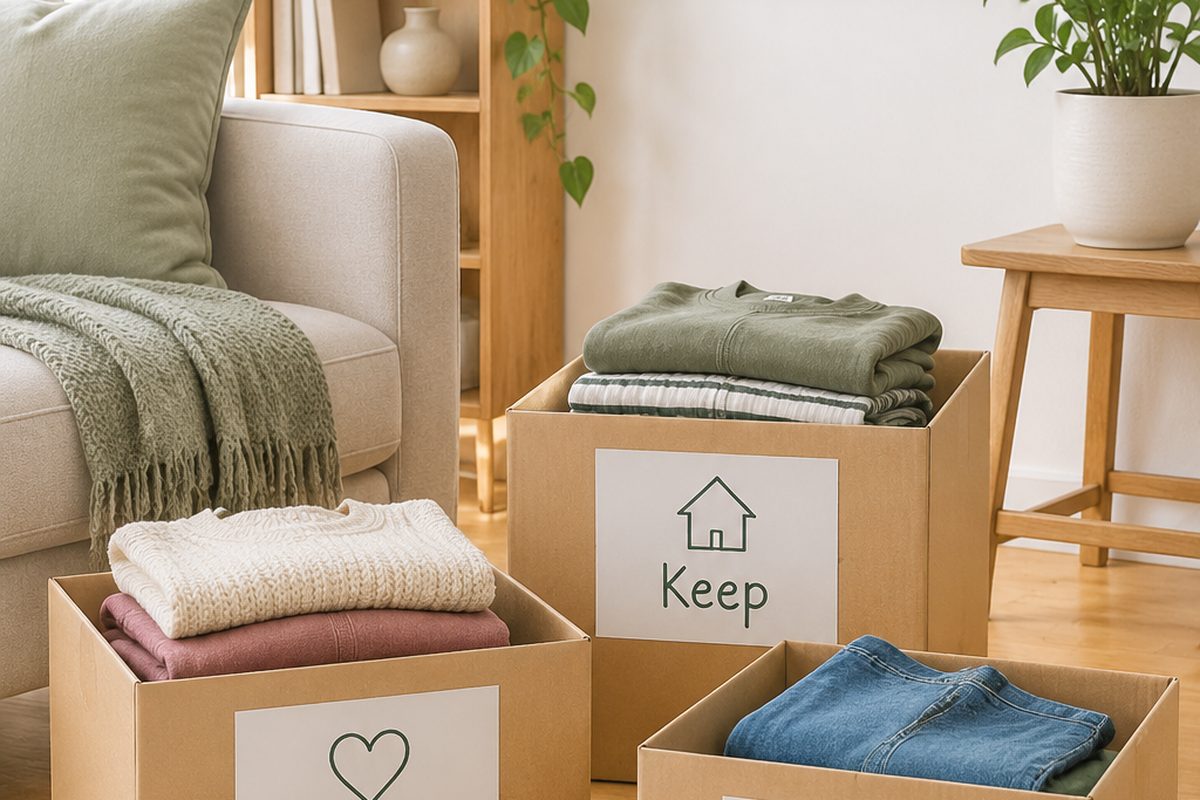
1. Set up four boxes first
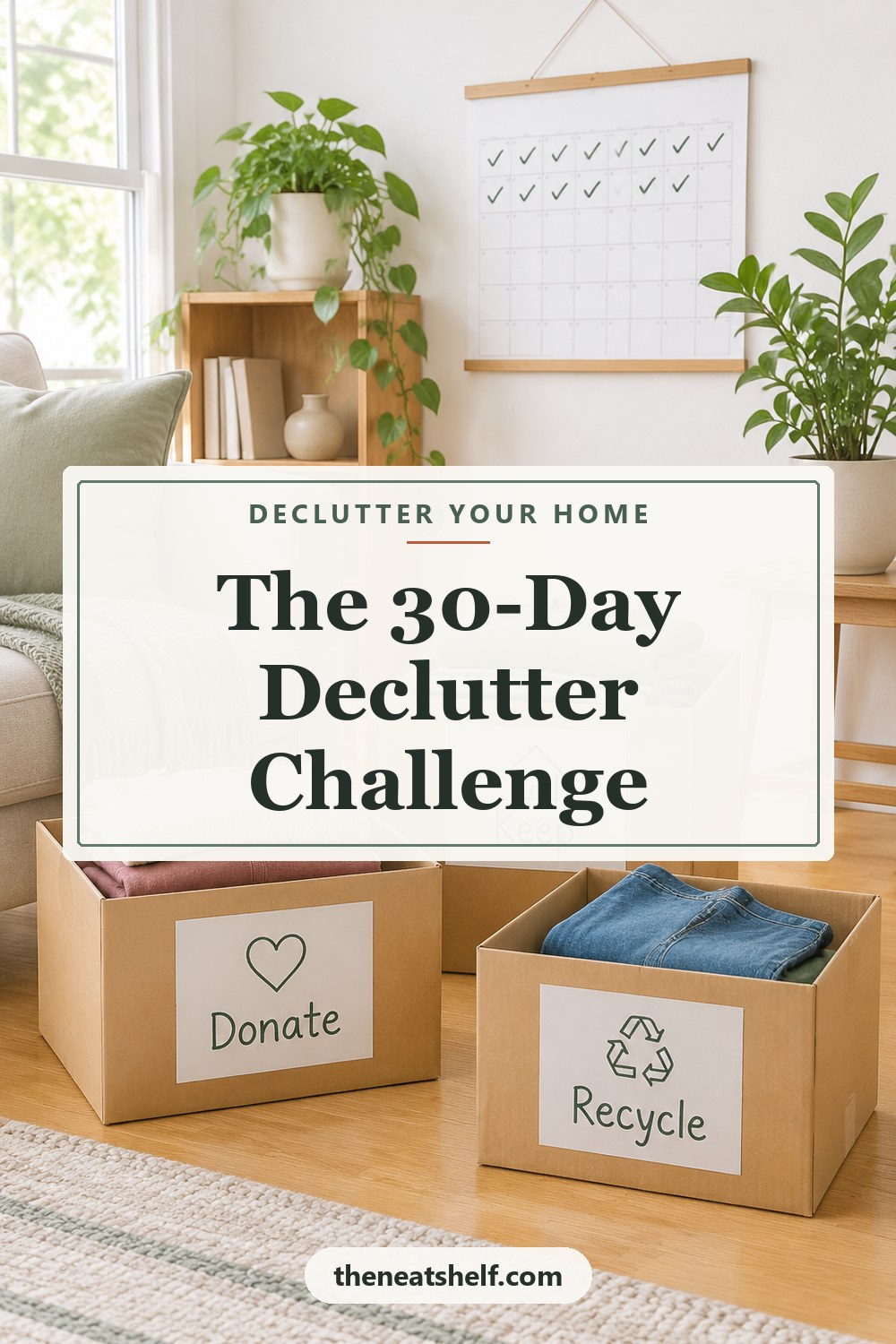
Before day one, label four containers: keep, donate, recycle or trash, and belongs elsewhere. Every object you pick up goes into one of them. Sturdy collapsible boxes are easy to carry from room to room and fold flat when the challenge is over.
2. Week 1: the easy wins (days 1 to 7)
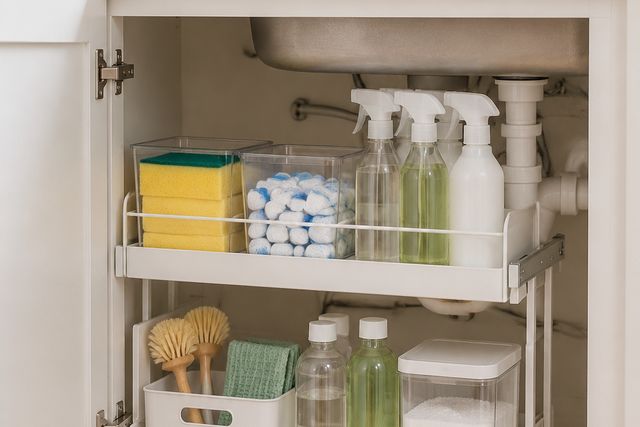
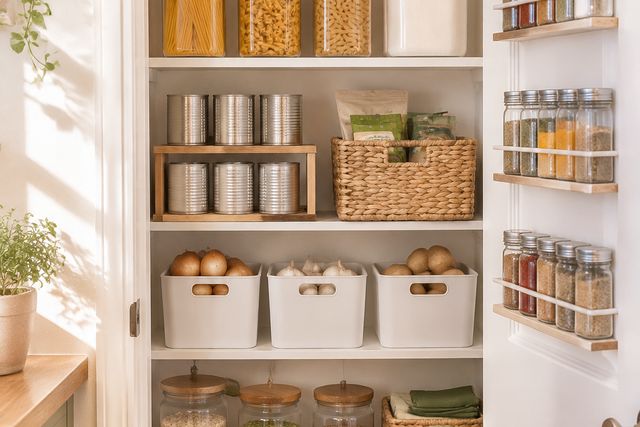
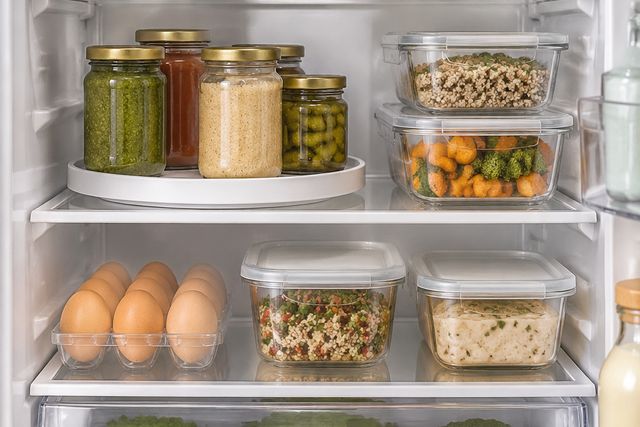
Day 1 bags and wallet. Day 2 the junk drawer. Day 3 expired food in the pantry. Day 4 the fridge and freezer. Day 5 mugs and water bottles. Day 6 food containers without lids. Day 7 under the kitchen sink. Easy decisions first build the habit before anything sentimental comes up.
3. Week 2: bathroom and bedroom (days 8 to 14)
Day 8 medicine and first aid. Day 9 makeup and skincare. Day 10 towels and bed linen. Day 11 socks and underwear. Day 12 T-shirts and tops. Day 13 shoes. Day 14 the bedside table. For clothes, ask one question: would I buy this again today?
4. Week 3: living areas and paper (days 15 to 21)
Day 15 the coffee table and remotes. Day 16 books and magazines. Day 17 cables and old electronics. Day 18 the paper pile. Day 19 the desk. Day 20 toys or hobby supplies. Day 21 the entryway. Paper is the slowest category, so only sort it into act, file and shred today.
5. Week 4: storage and the hard stuff (days 22 to 30)
Day 22 the linen closet. Day 23 cleaning supplies. Day 24 coats and bags. Day 25 the car. Day 26 one shelf in the garage or storage unit. Day 27 seasonal decorations. Day 28 gifts you never used. Day 29 sentimental items, with a limit of one box. Day 30 drive the donations away.
6. Use a timer
Fifteen minutes is short enough to start on a bad day and long enough to finish a drawer. Set a timer, stop when it rings, and leave the area finished rather than half sorted. A visual timer helps if you tend to lose track of time.
7. Shred as you go
Old statements and letters with your name and address should not go in the recycling as they are. A small shredder beside the desk lets you deal with paper the moment you decide, so the pile does not simply move to another room.
8. Label what stays
Decluttering lasts when what remains has a marked home. Label bins, shelves and boxes as you finish each area. It takes a minute and tells everyone else in the house where things go back.
Keeping it that way
Get the donate box out of the house the same week. Bags that wait by the door for a month tend to get unpacked again.
After day 30, keep one small habit: a donation bag in a closet and ten minutes on a single drawer every Sunday. That is enough to stop the clutter from coming back.
Questions people ask
Where do I start decluttering when I feel overwhelmed?
Start with something small that holds no memories, such as a bag, a junk drawer or expired food. A finished drawer gives you momentum for the next one.
How do I decide what to keep?
Ask whether you have used it in the past year, whether you would buy it again today, and whether you own something else that does the same job. Two noes mean it can go.