8 Fridge Organization Ideas That Cut Food Waste
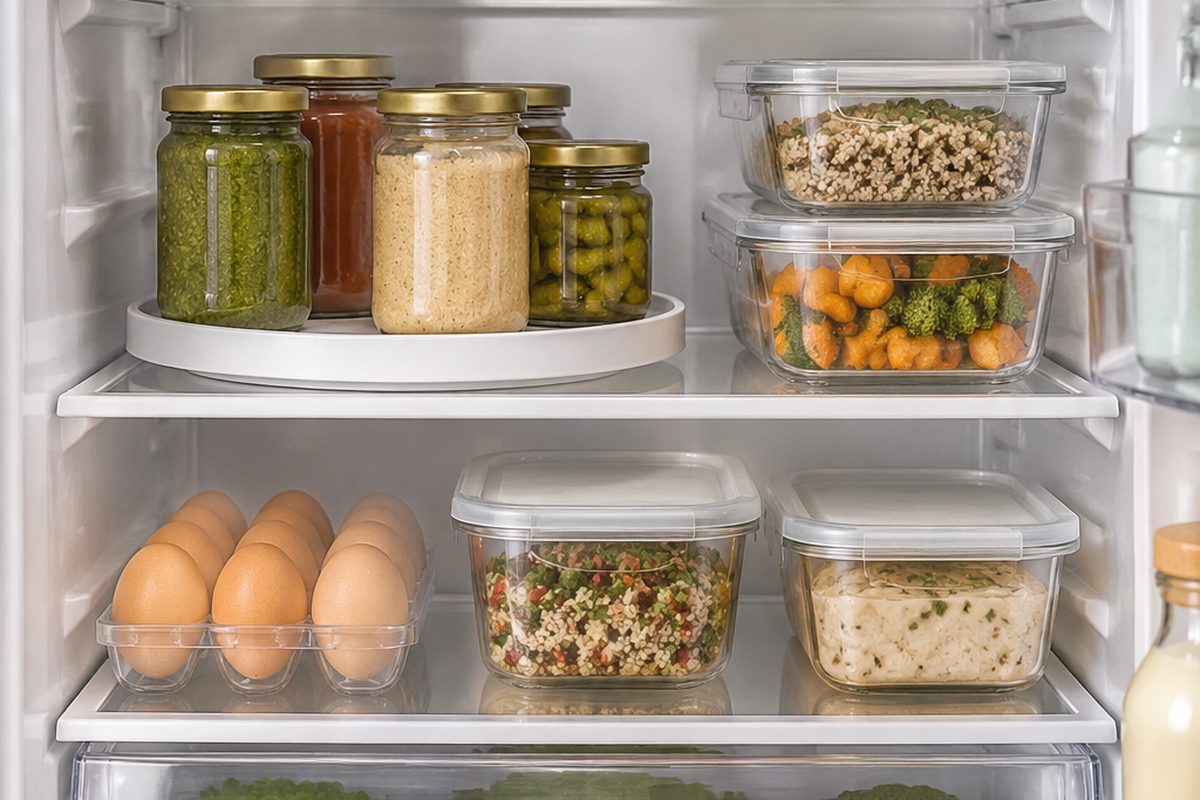
An organized fridge is less about looks and more about money. Food that you can see gets eaten. Food pushed to the back of a shelf turns into a science project and goes in the bin.
These ideas follow how a fridge actually works: the temperature differs from shelf to shelf, and the easiest spot to reach is the one that gets used. Set it up once and a two-minute reset each week keeps it going.
1. Zone the shelves by temperature
The door is the warmest part of the fridge, so keep it for condiments, juice and butter rather than milk and eggs. Ready-to-eat food and leftovers go on the upper shelves, dairy in the middle, and raw meat and fish on the lowest shelf where it is coldest and cannot drip on anything.
2. Use clear bins as drawers
Clear bins turn a deep shelf into pull-out drawers. One for yogurt and snacks, one for cheese and deli, one for breakfast. You pull the bin, take what you need and push it back, and nothing hides behind anything else. Measure shelf depth before buying.
3. Create an eat-first box
Pick one bin at eye level and put everything that needs to be used soon in it: half an onion, the open packet of ham, leftovers from two days ago. When someone opens the fridge looking for a snack, that is the first place they look. It is the single most effective habit against food waste.
4. Spin the jars
Jams, pickles, mustard and sauces collect at the back. A turntable on one shelf keeps every jar one spin away and makes it obvious when you already have three open jars of the same thing.
5. Switch leftovers to glass
Glass containers let you see what is inside without opening the lid, they stack neatly and they go from fridge to microwave. Keep to two or three sizes so the lids are interchangeable. Add a strip of tape with the date if you tend to lose track.
6. Store produce so it lasts
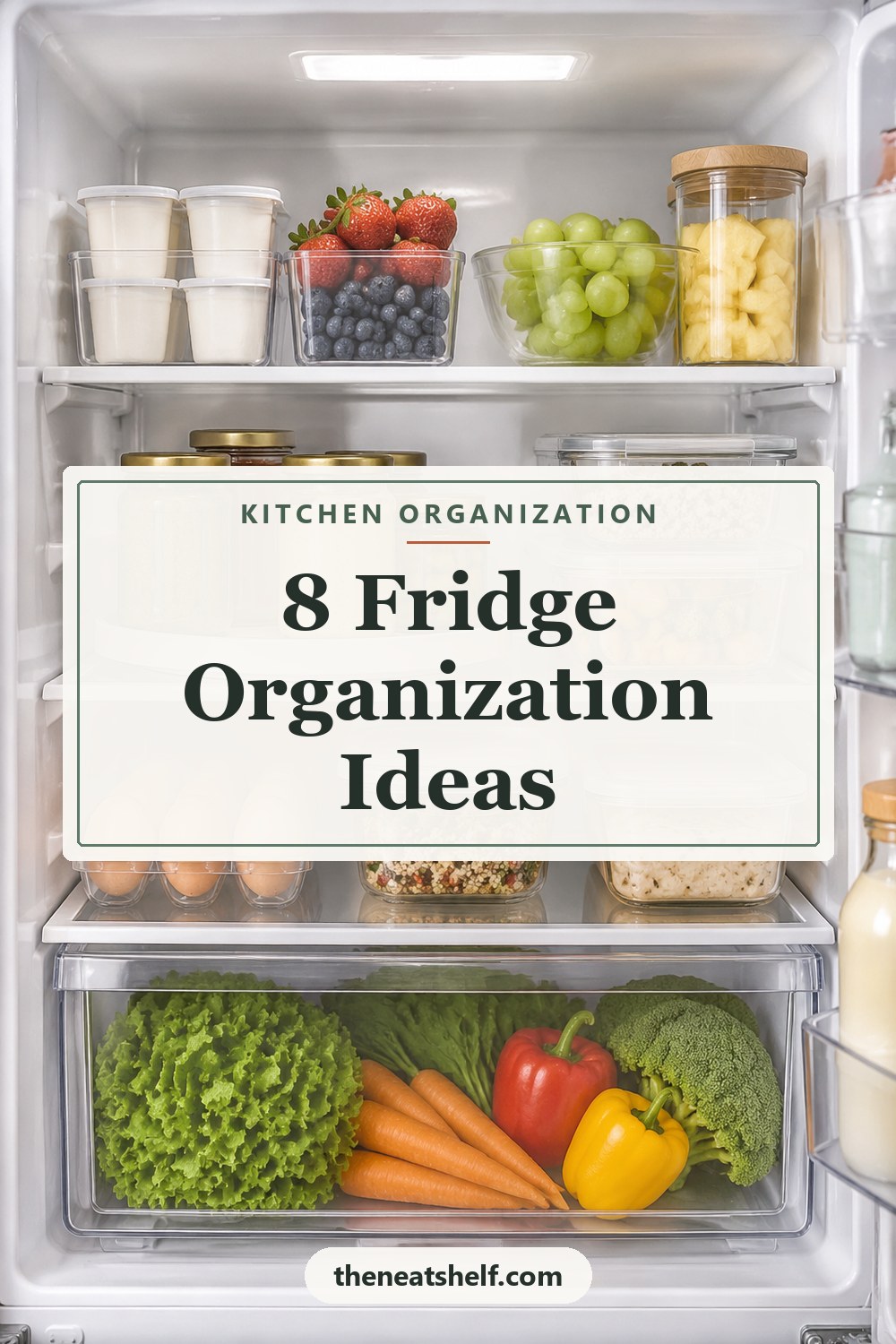
Most vegetables keep longer in the high-humidity drawer and most fruit in the low-humidity one. Wash berries just before eating, not before storing, and keep herbs upright in a little water. Vented produce containers help if your drawers are small or always overfull.
7. Line cans and bottles up
Drinks roll, tip and take over shelves. A can dispenser or bottle rack stacks them in a fixed footprint and feeds the next one forward. It also shows at a glance how many are left before the next shop.
8. Give eggs and small things a home
A clear egg holder protects eggs better than a torn carton and shows how many remain. Use a small divided tray for the little things that otherwise float around: cheese sticks, sauce sachets, lemon halves.
Keeping it that way
The weekly reset: the day before you shop, move anything close to its date into the eat-first box, wipe one shelf and check the drawers. It takes about two minutes.
Leave some empty space. A fridge packed to the walls cools unevenly and hides food. Aim for shelves that are roughly three-quarters full.
Questions people ask
Where should milk go in the fridge?
On a middle or lower shelf toward the back, where the temperature is most stable. The door is the warmest spot and shortens the life of milk.
Should I wash produce before putting it in the fridge?
Hardy vegetables can be washed and dried well before storing. Berries, mushrooms and leafy herbs last longer if you wash them just before use, because extra moisture speeds up spoilage.