10 Kitchen Cabinet Organization Ideas to End the Avalanche
Kitchen cabinets get messy for a mechanical reason: we stack things. To get the pan at the bottom you lift three others, and putting it back correctly is too much work, so it goes on top.
The principle behind every idea here is the same. Store things side by side instead of on top of each other, so that anything can be taken out with one hand.
1. Store by where you use it
Before buying anything, move things to where they are used. Pots and pans beside the stove, plates and glasses near the dishwasher, oils and spices by the prep area, coffee things together above the machine. Good zones save more steps than any organizer.
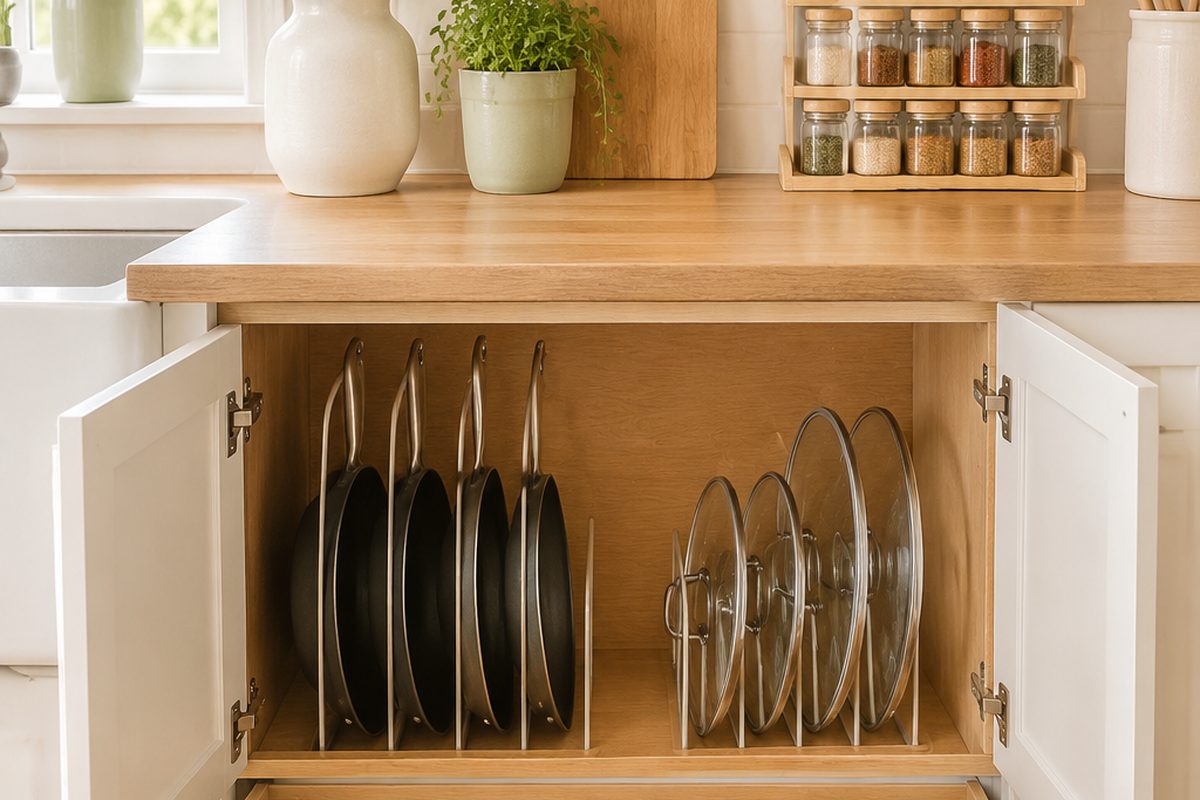
2. Stand pans on their sides
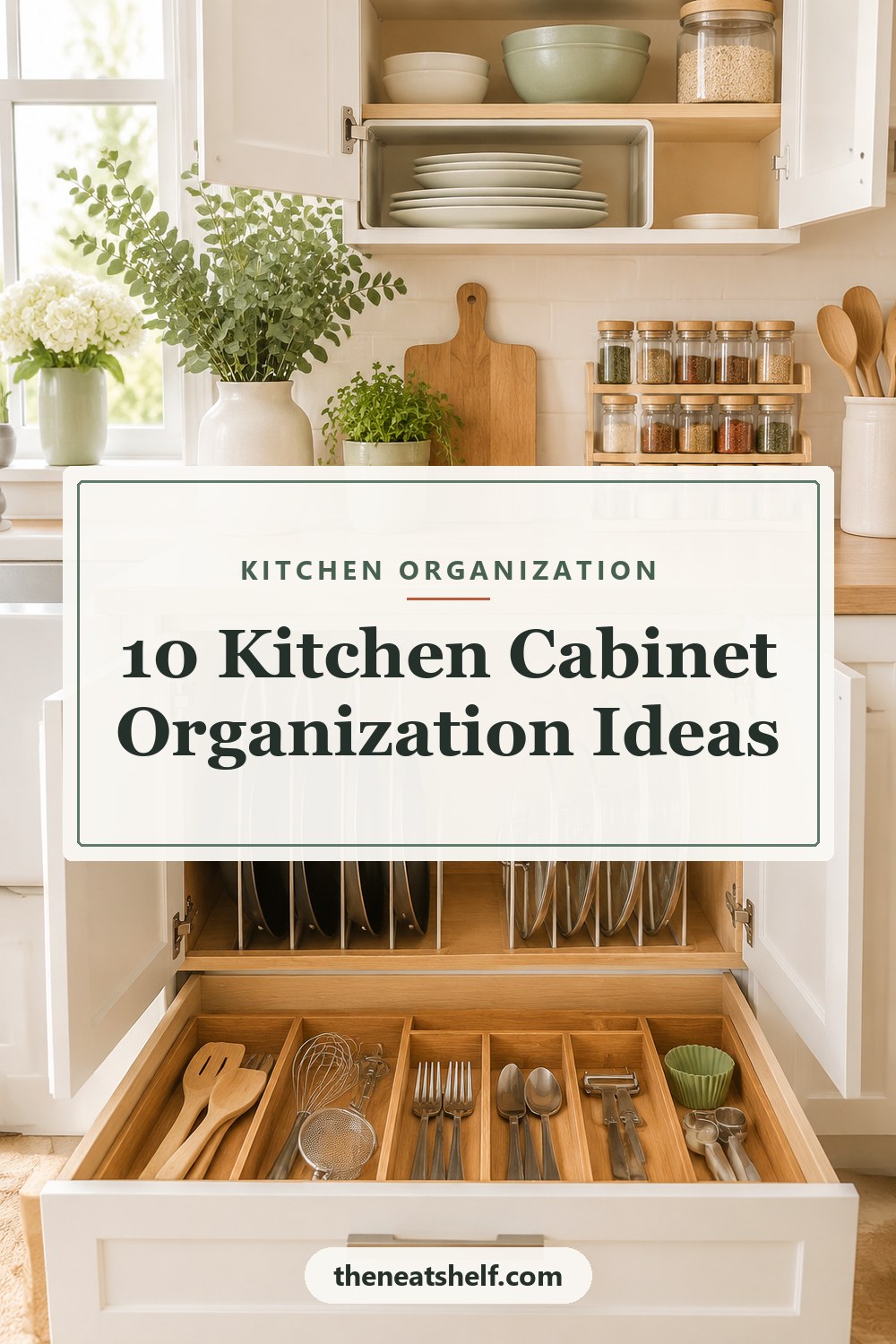
A pan rack holds frying pans and baking dishes vertically or in separate tiers, like files in a drawer. You take the one you need without touching the others, and non-stick coatings stop getting scratched by the pan above.
3. Give lids their own rack
Lids are the reason pots do not nest. A lid organizer on the shelf or on the inside of the cabinet door keeps them upright and in size order, and lets the pots stack neatly inside each other.
4. Add a shelf for plates and bowls
Cabinet shelves are usually too far apart, so plates and bowls end up in one tall mixed stack. A shelf riser creates a second level, so plates sit below and bowls above, and both can be lifted out freely.
5. Put a pull-out in the deep lower cabinet
Lower cabinets without drawers hide everything behind the front row. A slide-out shelf installs with a few screws on the cabinet floor and brings the whole contents forward. It is the closest thing to new cabinetry without the cost.
6. File the baking sheets
Baking sheets, cutting boards and cooling racks belong upright in a divider rack, ideally in the narrow cabinet beside the oven. Laid flat, the one you want is always at the bottom.
7. Sort the food containers
Recycle any container without a lid and any lid without a container. Nest the bases by size and file the lids upright in an adjustable organizer. If the drawer still overflows, you own more containers than you have leftovers.
8. Line up the spices
Spices in a cabinet should be on a tiered shelf or a pull-down rack so every label shows. In a drawer, use an angled insert. Keep them away from the heat directly above the stove, which shortens their life.
9. Divide the utensil drawers
Expandable dividers fit the drawer exactly, with no wasted strip at the side. Keep everyday cutlery in one drawer and cooking tools in another, and move rarely used gadgets to a bin on a high shelf.
10. Use the inside of the doors
The inside of a cabinet door can hold measuring spoons, pot holders, foil and wrap, or cutting boards on slim racks and adhesive hooks. Check that shelves and contents leave room for the door to close.
Keeping it that way
After a week of cooking, look at what you actually took out. Whatever stayed untouched for a month can go to a higher shelf, and whatever stayed untouched for a year can leave the kitchen.
The test of a well organized cabinet is simple: can you put something away with one hand? If yes, it will stay organized.
Questions people ask
How do I organize kitchen cabinets with deep shelves?
Use pull-out shelves or bins that act as drawers, and keep tall items at the back with shorter ones in front. Avoid stacking different items on top of each other.
Where should pots and pans be stored?
In a lower cabinet or deep drawer next to the stove, standing in a rack or nested with their lids filed separately.