10 Small Pantry Organization Ideas for a Pantry You Can See Into
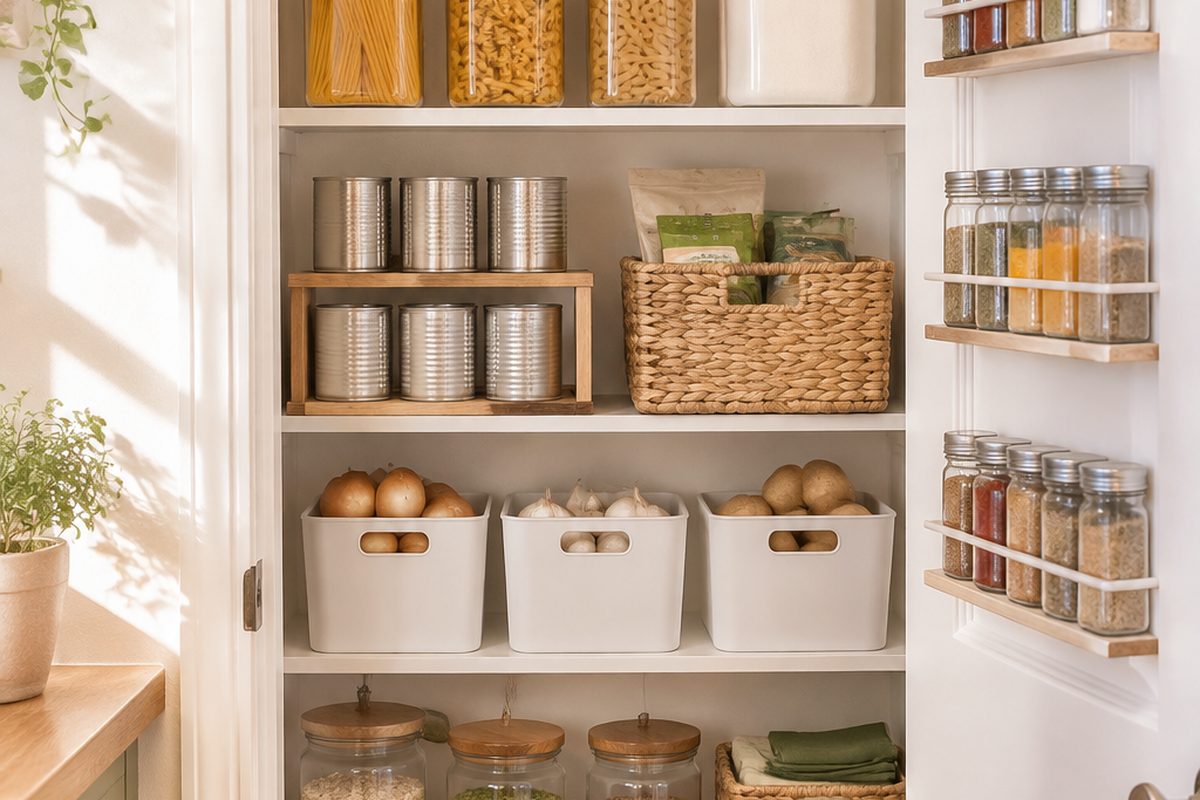
A small pantry does not fail because it is small. It fails because you can't see the back of the shelf, so food expires behind newer food and you buy a third jar of cumin.
Everything below is aimed at one goal: being able to see what you own from the doorway. You do not need a matching set of containers to get there, and you certainly do not need to decant every single thing.
1. Empty, check dates, group
Pull everything out and sort it on the counter into groups: baking, grains and pasta, cans, snacks, breakfast, oils and sauces. Throw out what has expired and set aside what you will honestly never cook for a food bank. The groups you end up with are your pantry zones.
2. Give each shelf one job
Assign every shelf a zone and keep it there. Daily items go between waist and eye level, heavy things such as drinks and bulk bags go low, and rarely used baking supplies go up high. When each shelf has one job, anyone in the house can put groceries away correctly.
3. Decant only what you buy on repeat
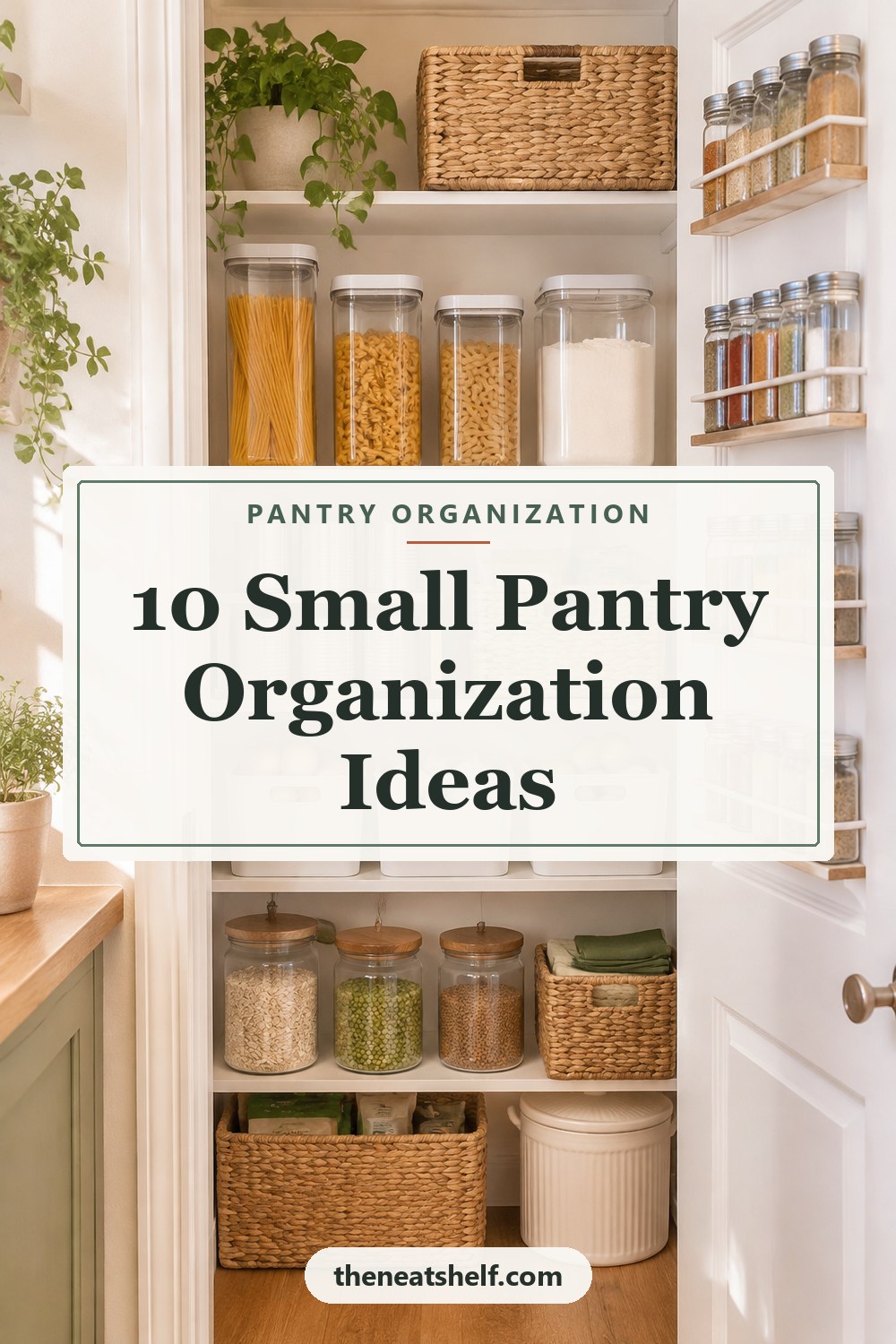
Airtight containers make sense for the staples you refill constantly: flour, sugar, rice, oats, pasta, cereal. They stack, they keep food fresh, and you can see the level at a glance. Leave one-off purchases in their own packaging so you do not create extra work.
4. Put cans on a tiered riser
Cans lined up three deep hide each other. A tiered shelf lifts the back rows so every label is visible, the same way a spice rack does. Expandable versions adjust to the width of the shelf, which matters in narrow cabinet pantries.
5. Use the door
The back of the pantry door can hold as much as an extra shelf. An over-the-door rack with adjustable baskets is ideal for spices, foil and wraps, snack bars and small bottles. Measure the gap between the door and the shelves first so the baskets do not hit when the door closes.
6. Turn deep corners with a lazy Susan
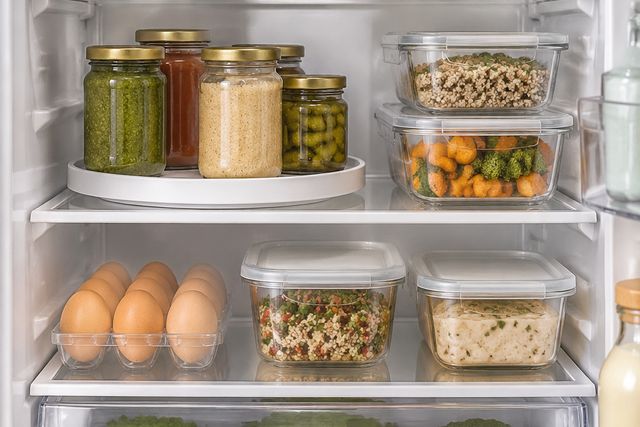
Oils, vinegars, nut butters and sauces are round, sticky and easy to lose. A turntable keeps them together and brings the back of the shelf to the front with one spin. Choose one with a raised edge so nothing slides off.
7. Corral packets and snacks in baskets
Seasoning packets, tea bags and snack bars never stack. Drop each group into its own basket or bin and treat the basket as a drawer. On high shelves, a basket with a handle means you can pull the whole category down instead of reaching blindly.
8. Add a shelf where there is air
Most pantry shelves are spaced for cereal boxes, which leaves empty air above cans and jars. A stackable shelf riser or an under-shelf basket uses that gap without any installation. It is the cheapest way to add real storage to a small pantry.
9. Keep a backstock bin
Duplicates and bulk buys should not live with the open packages. Give them one bin on the floor or the top shelf. Before you write a shopping list, look in the bin first. This single habit stops most double buying.
10. Label the shelf, not only the container
A label on the container tells you what is inside. A label on the shelf edge tells everyone where it goes back. Clip-on bin labels or a simple label maker take ten minutes and are the difference between a pantry that stays organized and one that lasts a week.
Keeping it that way
Keeping it this way takes about five minutes a week. When you unpack groceries, put new items behind the older ones, and give the snack basket a quick reset.
Twice a year, repeat the first step: everything out, dates checked, shelves wiped. A small pantry rewards that habit more than any container ever will.
Questions people ask
Do I need matching containers to organize a pantry?
No. Zones and visibility matter far more than matching sets. Start with bins and risers you already have and buy containers only for the staples you refill often.
How do I organize a pantry with deep shelves?
Use bins as drawers so you can pull a whole category forward, add tiered risers for cans, and put turntables in the corners. Avoid storing loose single items at the back.