Winter Entryway Organization: Boots, Coats and Wet Gear
To organize a winter entryway, put a boot tray by the door for wet boots, give each person one bin for hats and gloves, and hang coats on sturdy hooks instead of stuffing them in a closet. Add a spot to dry wet gear, a heavy doormat inside and out, and move out-of-season shoes elsewhere.
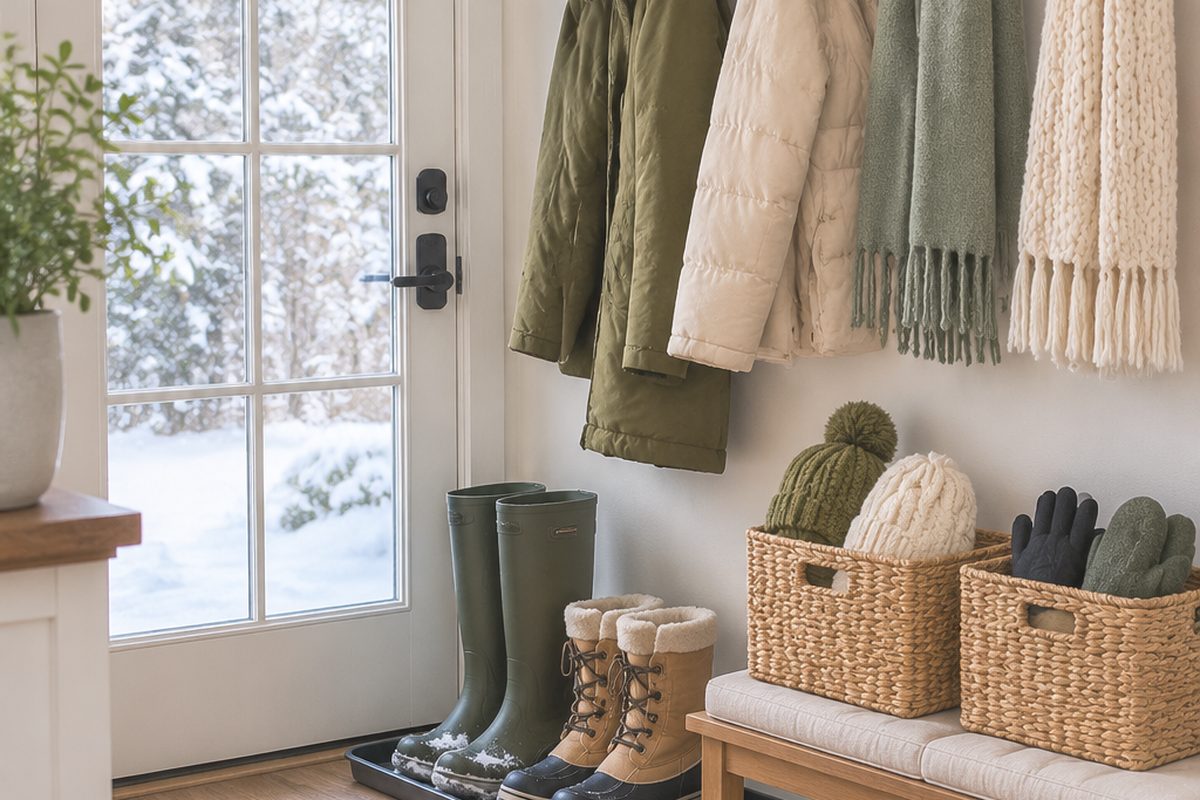
Winter doubles everything that comes through the front door. Bulky coats, snow boots, wet gloves, scarves, hats and a slushy puddle that spreads across the floor by the end of the day. An entryway that worked fine in September suddenly cannot keep up.
Winter entryway organization comes down to three jobs: catching water and salt at the door, giving each person a place for their gear and letting wet things dry instead of sitting in a pile. The ideas below work in a mudroom, a small entry and an apartment with no entry at all. For year-round shoe storage, see our small entryway shoe storage ideas.
- Put a boot tray right inside the door
- Use two doormats, one outside and one inside
- Give each person a hat and glove bin
- Hang coats on hooks, not in the closet
- Set up a spot to dry wet gear
- Move out-of-season shoes elsewhere
- Add a bench for putting on boots
- Build a small-entry and apartment version
- Do a quick weekly entryway reset
1Put a boot tray right inside the door
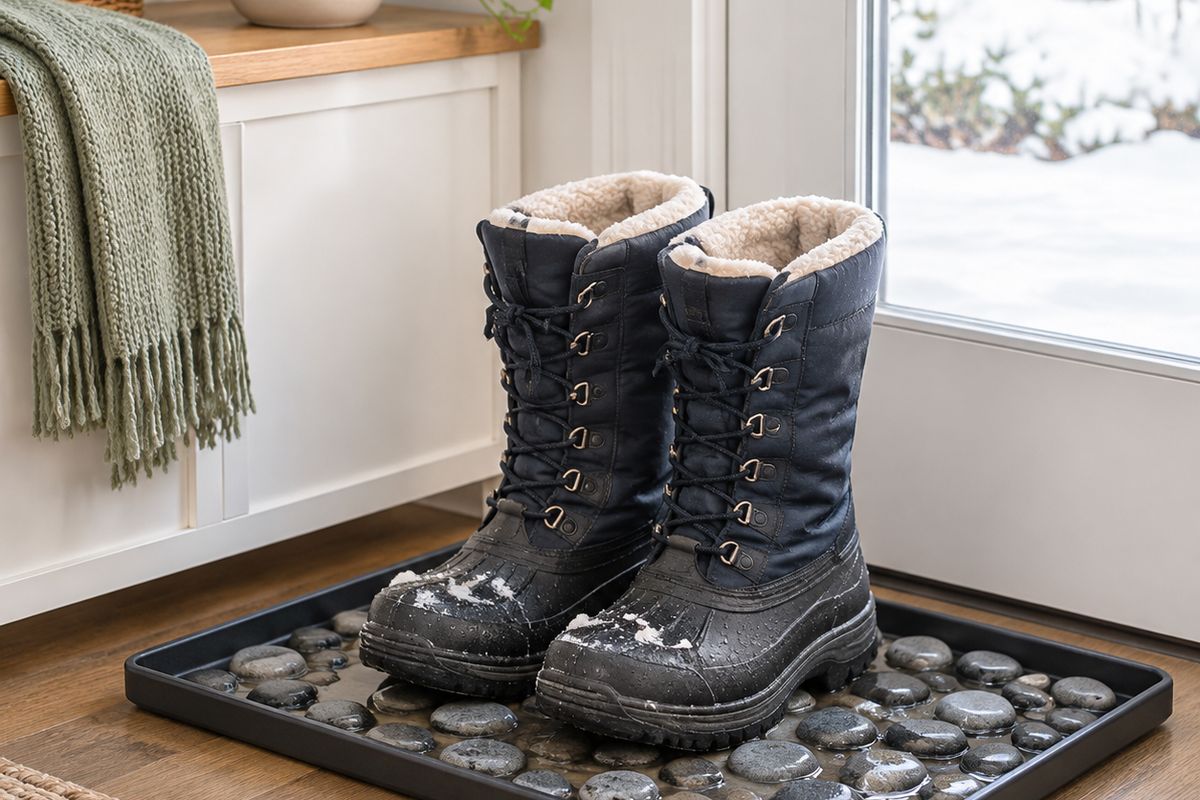
A boot tray is the single most useful winter entryway item. It catches melting snow, mud and road salt before they reach the floor. Choose one with a raised rim, and place it right where people step in, not in a corner they have to walk to.
A standard tray about 15 by 30 inches holds roughly two or three pairs of adult boots. A family of four usually needs two trays or one long one. Fill the tray with a layer of smooth river rocks or set a ridged rubber insert in it, so boots sit above the water and dry faster. Empty and rinse the tray once a week.
2Use two doormats, one outside and one inside
Stopping snow and salt at the threshold saves the rest of the floor. Use a coarse, scraping mat outside to knock off snow and grit, and an absorbent mat inside to catch the rest.
A washable indoor mat with a rubber backing works well because you can shake it out and wash it when salt builds up. Choose one large enough for two full steps, since most people only wipe one foot on a small mat. In very snowy climates, a long runner from the door to the boot tray keeps the path clear.
3Give each person a hat and glove bin
Loose hats and gloves are the main source of winter entryway chaos. The fix is one small bin or basket per person, labeled with a name or a color. Everything that person wears on their head and hands goes in it.
Keep the bins on a shelf, a bench or a cubby at a height the owner can reach. Open baskets work better than lidded ones, because kids will actually toss things in. Make one rule: gloves go in damp only if they are dry by morning. Wet ones go to the drying spot first. A separate shared basket for spare hats and scarves for guests prevents borrowing from everyone else's bin.
4Hang coats on hooks, not in the closet
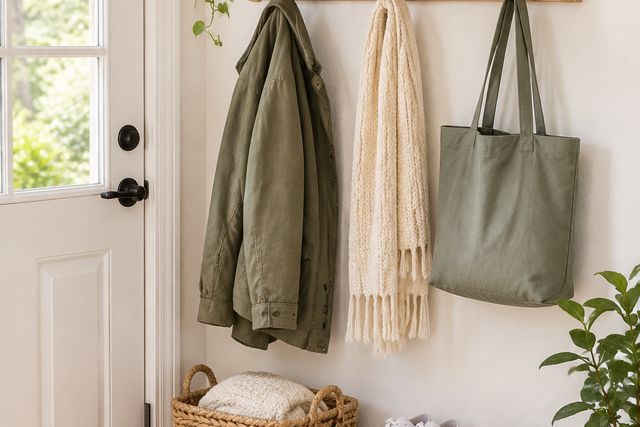
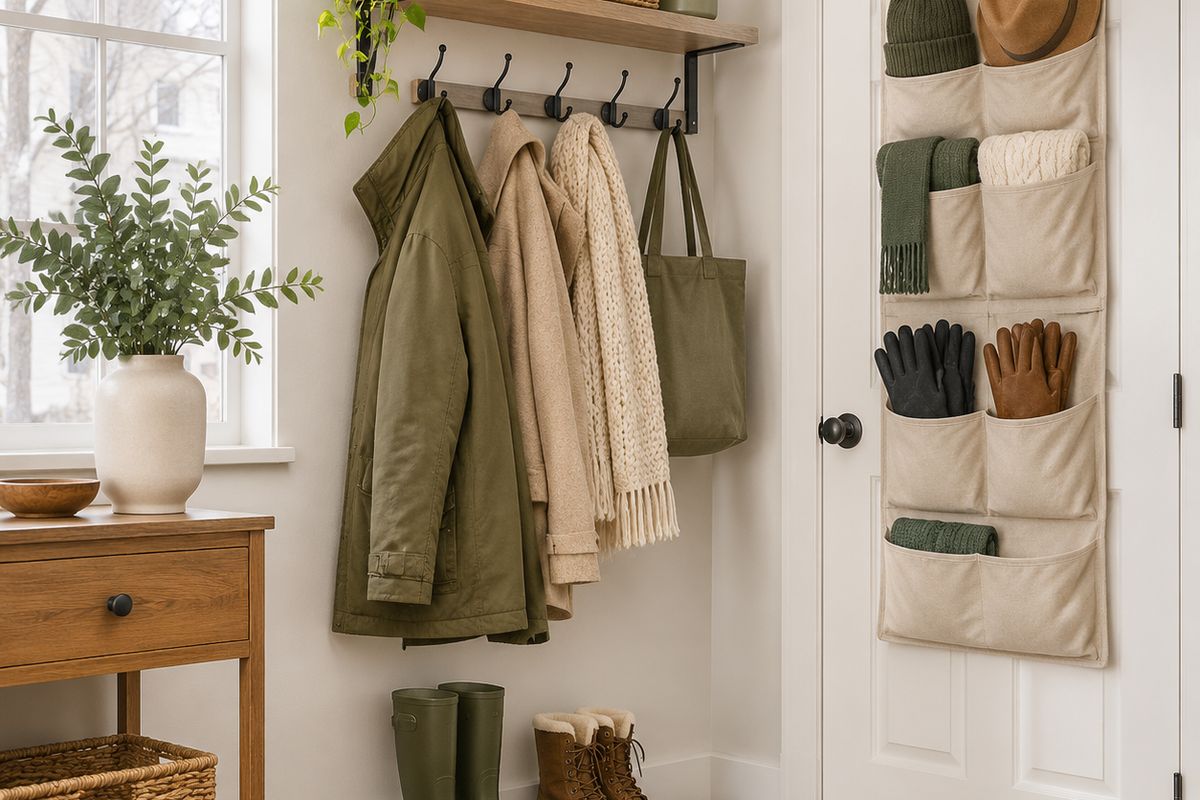
Winter coats are bulky, often damp, and worn every day, so hooks beat hangers for daily coats. A row of sturdy double hooks gives each person one coat and one bag or scarf.
Mount adult hooks around 60 to 66 inches from the floor and kids' hooks at about 36 to 48 inches, so children can hang their own coats. Screw hooks into studs or use solid anchors, since a loaded rack of winter coats is heavy. Keep the coat closet for guests' coats and the less used pieces. Our coat closet organization ideas help with that space.
5Set up a spot to dry wet gear
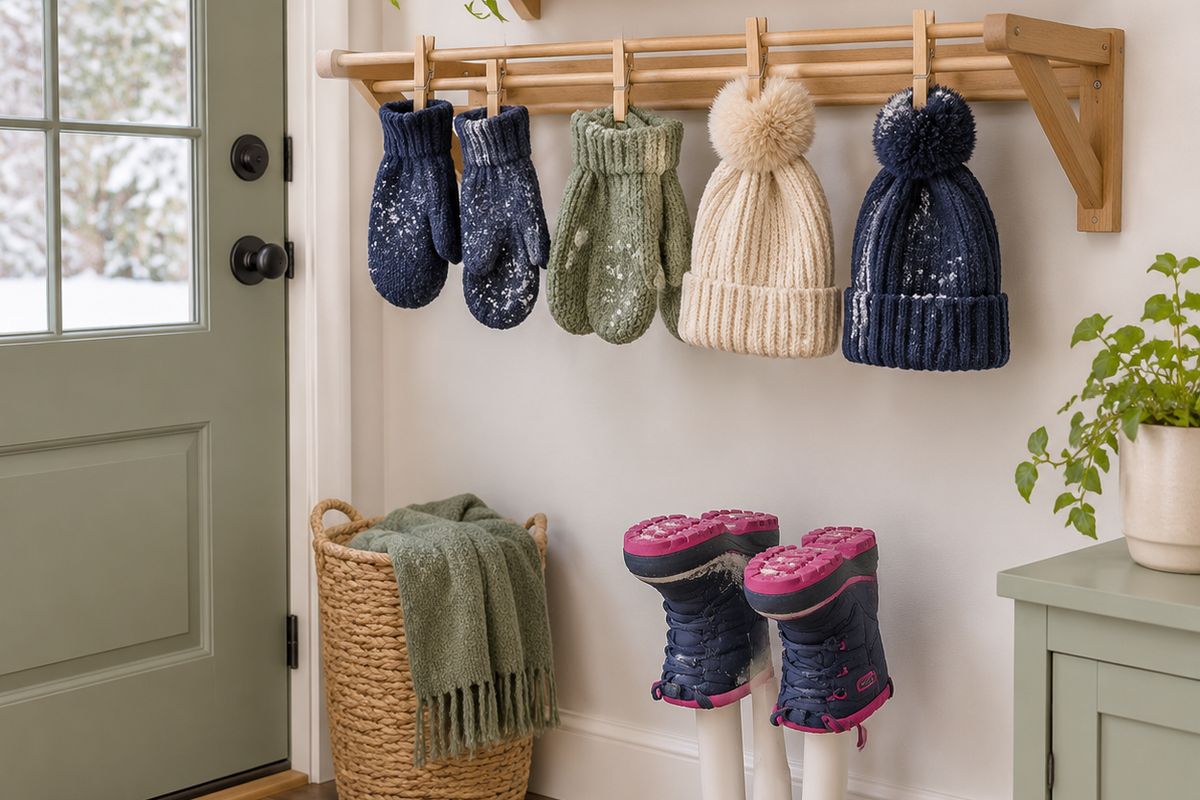
Wet gloves and hats dropped in a bin stay wet and start to smell. Give them a dedicated drying spot near the door. A wall-mounted drying rack, a row of clips on a strip, or a small accordion rack near a heat vent all work.
If you have a radiator or a warm laundry room nearby, a drying rack there is ideal. For boots, an electric boot dryer helps if someone's boots get soaked daily, such as a kid who plays in snow after school. Never put gear directly on a space heater. Once things are dry, they go back into each person's bin.
6Move out-of-season shoes elsewhere
Sandals, sneakers you rarely wear and the summer flip-flops take up space your boots need now. In late fall, move them to a bedroom closet, an under-bed bin or a high shelf.
Leave only the shoes each person wears this season: boots, one pair of everyday shoes and slippers. This often frees up a whole shelf of a shoe rack. When spring arrives, swap them back and store winter boots clean and dry. Wipe salt off boots with a damp cloth before storing so it does not dry out the leather, and stuff them with paper so they keep their shape. A labeled bin for each person's spring shoes makes the swap quick.
7Add a bench for putting on boots
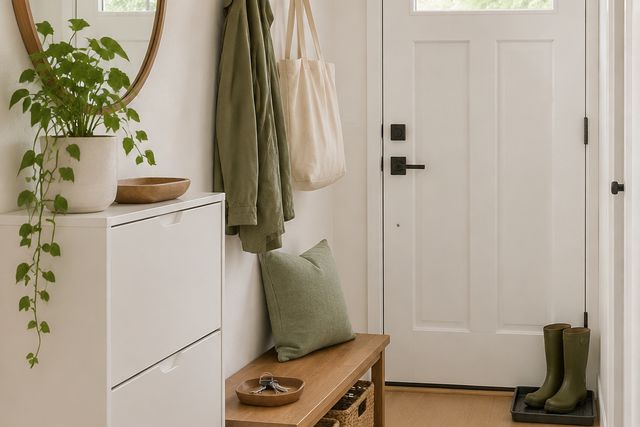
A place to sit makes winter boots easier to pull on and off, and it keeps people from hopping on one foot across a wet floor. A storage bench does two jobs: seating on top and space for baskets or boots below.
Choose a bench with open slats or a rack underneath so wet boots can dry. Lift-top benches are useful for out-of-season gear but not for wet items. In a narrow entry, a slim bench about 12 to 14 inches deep is usually enough. If you have no room for a bench, a sturdy stool you tuck under a console works too.
8Build a small-entry and apartment version
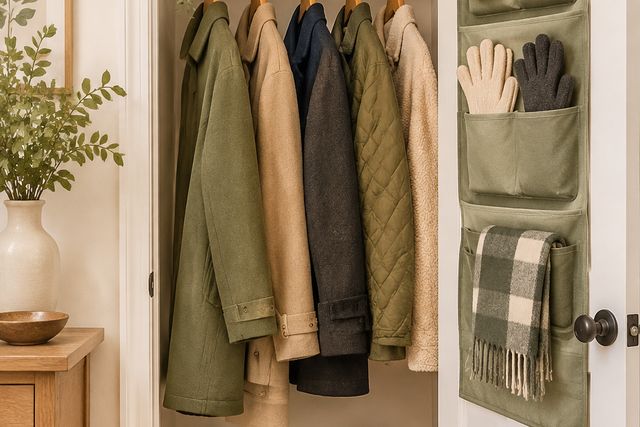
If your door opens straight into the living room, think vertical and compact. Use a narrow boot tray, a slim wall-mounted rack with hooks and a shelf above, and one hanging organizer behind the door for hats and gloves. Over-the-door pockets work well for each person's accessories.
A rug or runner helps define the entry zone, even in a studio. Keep the area to what you use today, and store extra gear in a closet. Our small mudroom ideas and entryway shelf ideas show more ways to make a few square feet hold a lot.
9Do a quick weekly entryway reset
A winter entryway gets messy fast, but a five-minute weekly reset keeps it under control. Once a week, empty the boot tray, shake out the doormats, put stray items back in their bins and check that drying gear has been put away.
Wipe salt stains from the floor with warm water and a bit of white vinegar, then dry it. Return any orphan gloves to a single lost and found basket and check it at the end of the month. Use the storage bin size calculator if you need to find bins that fit a specific shelf or cubby.

Winter entryway setup by space
Use this as a starting point and adjust it for the number of people in your home.
| Item | Mudroom or large entry | Small entry or apartment |
|---|---|---|
| Boot storage | Long tray or two trays, about one per two people | One narrow tray, about 12 by 24 inches |
| Coats | A row of double hooks, one per person | Wall rack with 3 to 5 hooks |
| Hats and gloves | One labeled basket per person on a shelf or cubby | Over-the-door pockets or a hanging organizer |
| Drying | Wall rack or boot dryer | Clip strip near a heat vent |
| Seating | Storage bench with open shelf | Small stool or slim bench |
| Floor protection | Outdoor mat, indoor mat and runner | Outdoor mat and a washable indoor mat |
Measure before you buy. Walkways should stay at least about 36 inches wide so the door opens and people can pass.
Winter entryway checklist
For a whole-house plan that includes the entryway, see how to organize your home in January.
- Boot tray in place, with rocks or a ridged insert
- Outdoor scraper mat and absorbent indoor mat
- One hook per person at the right height
- One hat and glove bin per person, plus one guest basket
- A drying spot for wet gloves, hats and boots
- Out-of-season shoes moved out
- A five-minute weekly reset on the calendar
Keeping it that way
A winter entryway works when water stops at the door, every person has a hook and a bin and wet things have a place to dry. Set those up once, and the daily mess becomes a quick reset.
Want a bigger refresh? Our January cleaning checklist covers the rest of this month's chores, and the free declutter checklist helps you clear the rest of the house.
Get the free Declutter Kit
A 7-page printable: room-by-room checklists, the 30-day challenge calendar and a 10-minute weekly reset. Free, straight to your inbox.
Everything mentioned in this guide
One list, so you can check sizes against your own measurements. Links go to Amazon; we may earn a commission.
Questions people ask
How do I store wet boots in an entryway?
Set them on a boot tray with a raised rim, ideally filled with river rocks or a ridged insert so boots sit above the water. Empty and rinse the tray weekly. For boots that get soaked every day, a boot dryer helps.
Where should I put hats and gloves?
Give each person one labeled basket or bin, on a shelf or bench they can reach. Wet items should go to a drying rack first and back into the bin once dry.
How high should entryway coat hooks be?
About 60 to 66 inches from the floor for adults and about 36 to 48 inches for kids. Mount them into studs or solid anchors, since winter coats are heavy.
How do I organize a winter entryway with no closet?
Use the wall: a rack with hooks and a shelf, a narrow boot tray below and an over-the-door organizer for accessories. Keep only what you wear this season by the door.
How do I protect the floor from road salt?
Use a scraper mat outside and an absorbent mat inside, keep boots on a tray, and wipe salt stains with warm water and a little white vinegar. Check your floor manufacturer's care instructions first.
What should I do with summer shoes in winter?
Move them to a bedroom closet, an under-bed bin or a high shelf. That frees space for boots by the door, and you swap them back in spring.