7 Deep Pantry Shelf Organization Ideas So Nothing Gets Lost
Deep shelves sound generous until you use them. The front row blocks the back row, and anything behind it is forgotten until it expires. Depth without access is just a place to lose food.
The answer is to make the shelf move. Everything on a deep shelf should either slide forward, spin, or step up so the back is as easy to reach as the front.
1Sort by front and back
Empty one shelf at a time and split it in two: things you reach for weekly and backstock. Daily items earn the front half and eye level. Unopened extras go behind their open partner or on the highest shelf. Check dates as you go, and move anything close to expiring to the front.
2Turn bins into drawers
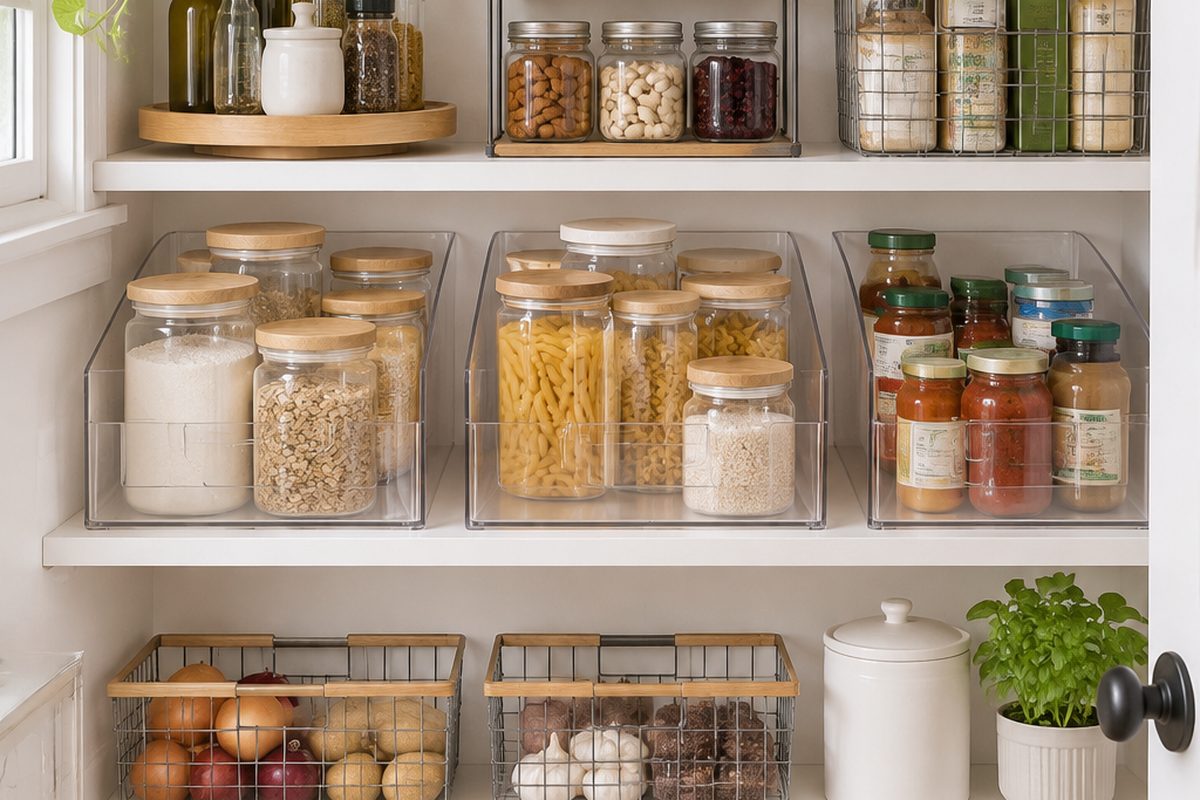
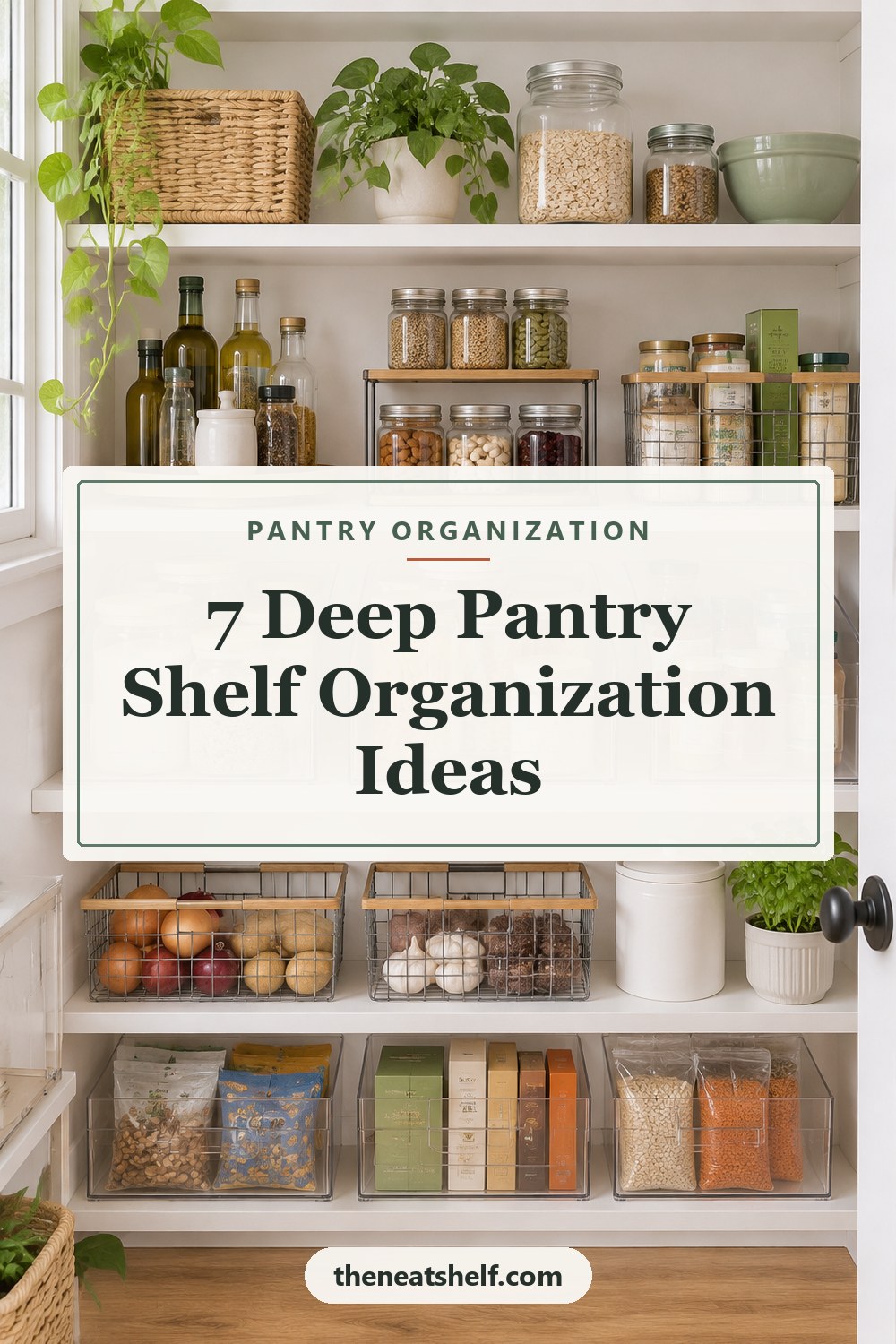
Long, narrow bins that run the full depth of the shelf are the single best fix. Each bin holds one category, such as pasta, snacks or baking, and slides out like a drawer so you can see all the way to the back. Measure the shelf depth and buy bins an inch shorter.
3Spin the bottles
Oils, vinegars and sauces are tall and tippy. A turntable keeps them together and brings the back bottle around with one push. Use a version with a raised edge so nothing flies off, and place it in a corner, where straight bins waste the most space.
4Step up the cans
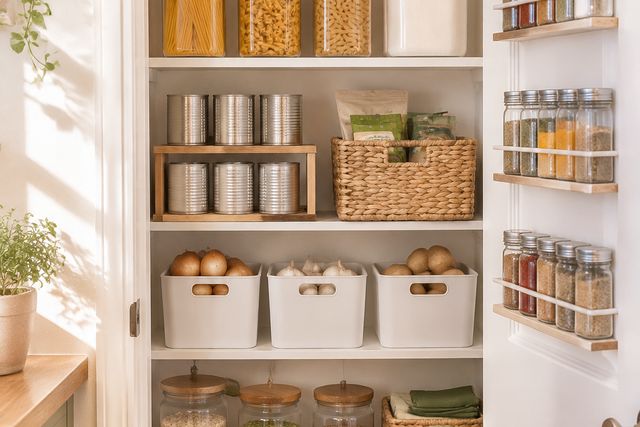
Cans hide each other in a straight row. A tiered riser lifts each row a little higher than the one in front so every label shows. Put the oldest cans at the front edge and add new ones at the back.
5Add pull-out baskets to the lower shelves
Low deep shelves are the hardest to see into. Sliding wire baskets mount to the shelf and pull out fully, which suits heavy things like potatoes, onions, drinks and appliances. They take a few screws to install and change how the bottom of a pantry works.
6Use the height between shelves
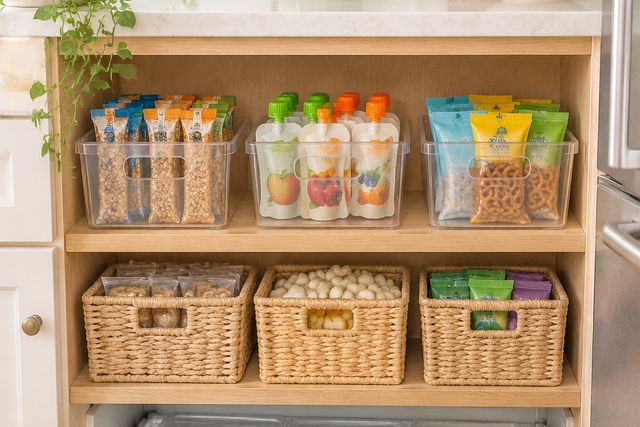
Deep shelves are often tall too, which leaves empty air above short items. A freestanding shelf riser or an under-shelf basket adds a second level for small packets, wraps or snack bars without stacking things on top of each other.
7Label the front of every bin
When a bin slides back into place, its label is all you see. Label the category rather than the contents, so 'Baking' still makes sense when the flour is replaced by cornmeal. Clip-on or wipe-clean labels are easy to change as your shopping does.
Keeping it that way
Before each grocery shop, pull the bins forward and look. It takes a minute, and it is how deep shelves stop producing expired food.
If a shelf is still crowded, lower the count. One open and one backup of each staple is enough for most homes.
Everything mentioned in this guide
One list, so you can check sizes against your own measurements. Links go to Amazon; we may earn a commission.
Questions people ask
How do you organize deep pantry shelves?
Use long bins that slide out like drawers, turntables for bottles, tiered risers for cans and pull-out baskets on the lowest shelves. Keep daily items in front and backstock behind.
How deep should pantry shelves be?
About twelve inches suits most food. Shelves of sixteen inches or more need bins, turntables or pull-outs, or things will get lost at the back.