How to Declutter Your Bathroom and Toss Expired Products
To declutter your bathroom, empty one area at a time and toss anything expired, separated or smelling off. Take old medicine to a drug take-back kiosk or event, check makeup against its open-jar (PAO) symbol, keep two towels per person plus a guest set, and store only daily items on the counter.
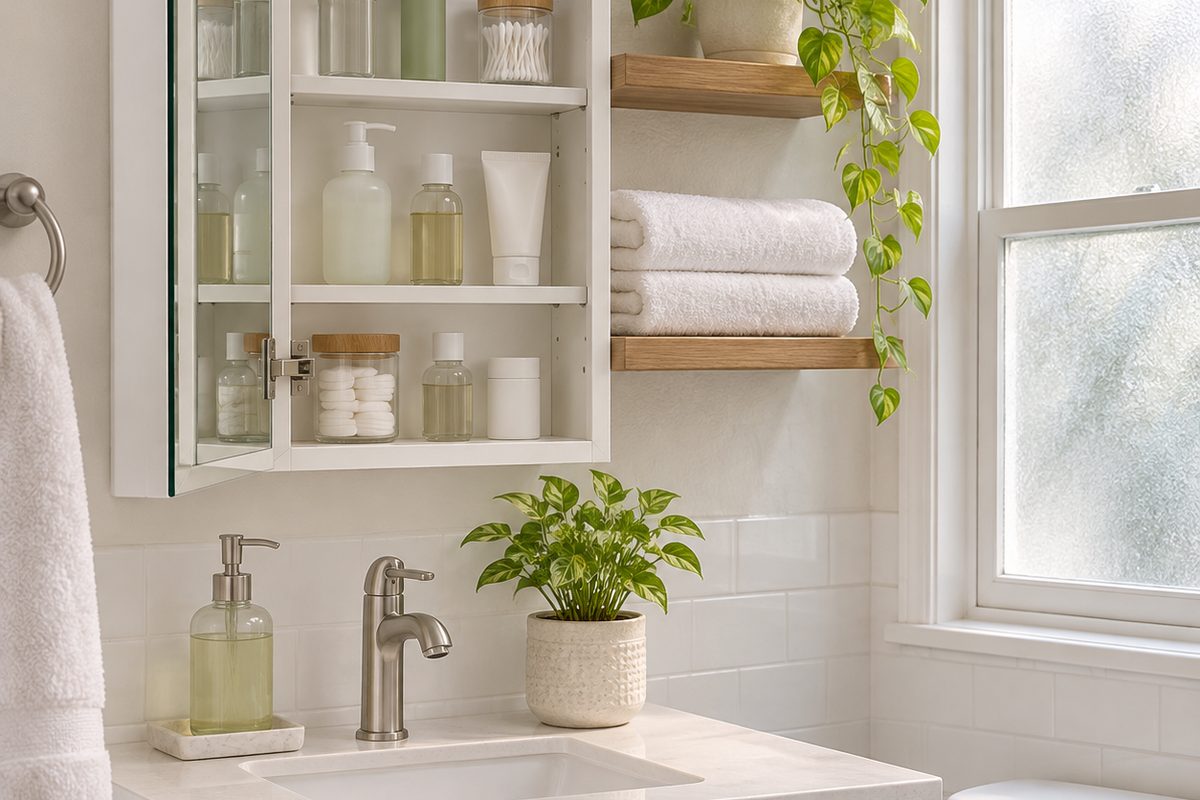
Bathrooms are small, so clutter shows up fast: half-used bottles on the tub ledge, a drawer of hotel shampoo, a medicine cabinet that has not been checked in years. The tricky part is that many bathroom products expire, and some of them, especially medicines, need more care than just tossing them in the trash.
This guide walks through the bathroom one area at a time, with clear guidance on disposing of medicine safely and a shelf-life table for makeup. January is a natural time to do it: holiday guests have come and gone, cold-and-flu supplies need restocking, and the gift sets are still in their boxes. Once the clutter is out, our guide on how to organize a bathroom helps you set up what is left.
| Area | What to remove | How to get rid of it |
|---|---|---|
| Medicine cabinet | Expired or unused medicine, old vitamins | Take-back kiosk or event first; otherwise the FDA at-home method |
| Makeup bag | Products past their PAO, dried-out, smelling off | Trash; empty clean containers may be recyclable locally |
| Shower and tub | Near-empty bottles, rusty razors, old loofahs | Combine only identical products; razors in a closed container |
| Linen shelf | Thin, frayed or stained towels | Animal shelters often accept them; call first |
| Under the sink | Dried-up cleaners, duplicates, samples | Follow label disposal instructions |
Local rules for medicine, sharps and household chemicals differ. Check your city or county website for drop-off options.
1Set up and work one area at a time
Pick one zone per session: the medicine cabinet, the makeup drawer, the shower, the linen shelf and under the sink. Bring a trash bag, a donation bag, and a separate paper bag or box labeled for medicine take-back, so old prescriptions do not end up in the regular trash by accident.
Empty the area completely, wipe the shelves and look at each item in good light. Check dates printed on the package, then check the product itself: has it separated, changed color, dried out or started to smell different? If yes, it goes, whatever the date says. Put keepers aside on a towel until the whole zone is sorted.
2Check every medicine and vitamin date
Go through prescription bottles, over-the-counter medicine, vitamins, first aid creams and eye drops. Pull out anything past its expiration date, anything you no longer take and anything unlabeled that you cannot identify with certainty.
While you are at it, think about where medicine lives. The FDA recommends storing most medicines in a cool, dry place, and a steamy bathroom is often neither. A high cabinet in a bedroom or the kitchen, away from the stove and out of children's reach, usually works better. Keep only what you use daily in the bathroom. For shelf layouts, see medicine cabinet organization ideas.
3Dispose of old medicine the safe way
The best option is a drug take-back site. Many pharmacies and police stations have year-round drop-off kiosks, and the DEA holds National Prescription Drug Take Back Day events, usually in April and October. Some pharmacies also offer mail-back envelopes.
If no take-back option is available, the FDA's at-home method is: mix the medicine, without crushing tablets or capsules, with something unappealing like used coffee grounds, dirt or cat litter, seal it in a plastic bag and put it in the household trash. Scratch out personal information on the empty bottle before recycling or tossing it. Do not flush medicine unless it is on the FDA's flush list, which covers only specific medicines, mainly certain opioids, and only when take-back is not readily available.
4Sort makeup with the open-jar symbol
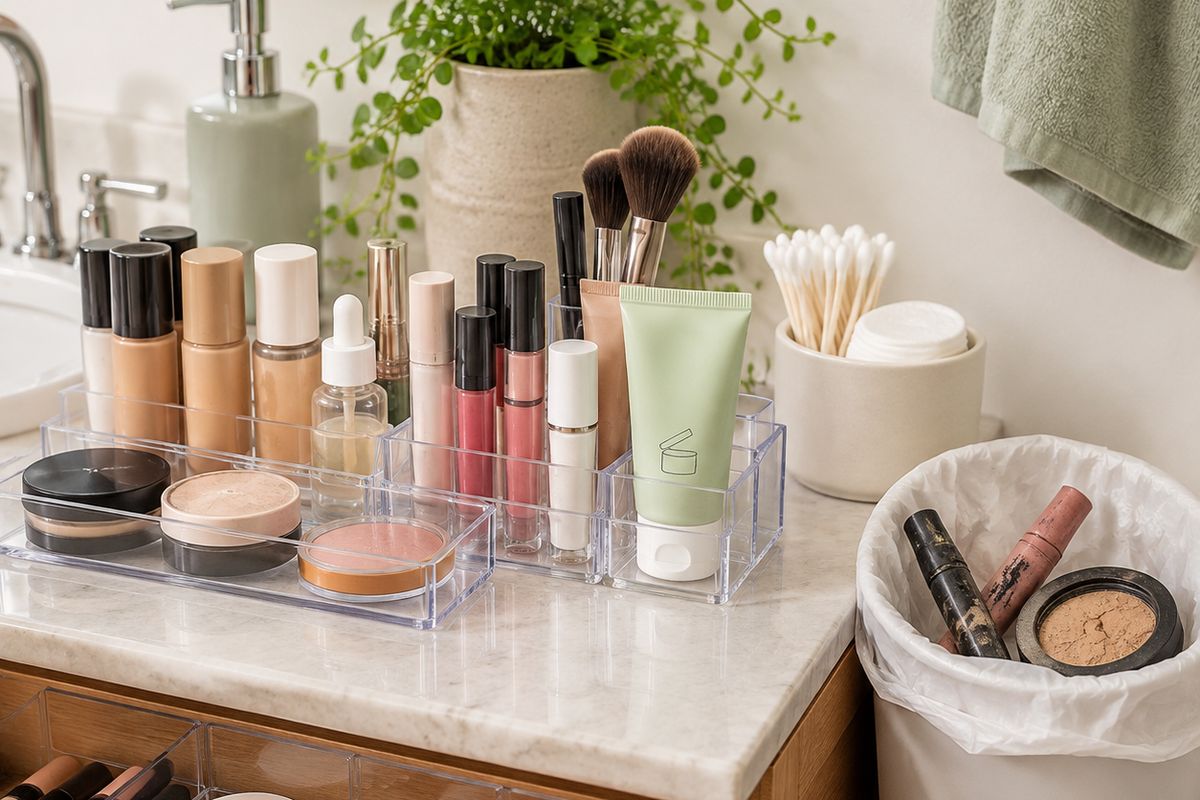
Most makeup has a small open-jar icon with a number and the letter M, such as 6M or 12M. That is the period after opening (PAO): how many months the product is meant to stay good once opened. It is more useful than the purchase date, especially for products that touch your eyes.
Mascara and liquid eyeliner are the ones to watch, commonly cited at about three months, because the wand carries bacteria back into the tube. Toss eye products right away after an eye infection. Powders last longer because they hold little water. If you are not sure when you opened something, look at it: separation, a sour smell or a changed texture means it is done. Our makeup organization ideas help you store what stays.
5Edit skincare, sunscreen and hair products
Skincare follows the same rules. Check the PAO symbol, and be stricter with jars you dip your fingers into than with pumps. Products with active ingredients, like vitamin C serums, can lose strength over time, and a darker color is often a sign.
Sunscreen needs particular attention. The FDA requires sunscreens to stay stable for at least three years, so many do not carry an expiration date; if yours has one, follow it, and if it does not, write the purchase date on the bottle. For hair products, toss anything that has separated or smells off, and combine two half-empty bottles only if they are exactly the same product.
6Decide on samples, minis and gift sets
Hotel toiletries and beauty samples feel free, which is why they pile up. Keep only what fits in one small bin, and use them up first, or pack them in a travel kit or the guest bathroom. If they have been in a drawer for over a year, they are unlikely to get used.
Unopened gift sets from the holidays are easier. If you will use them, open them now and put them into rotation. If not, donate unopened toiletries to a local shelter, which often welcomes travel sizes. Call ahead to check what they need.
7Thin out the towels
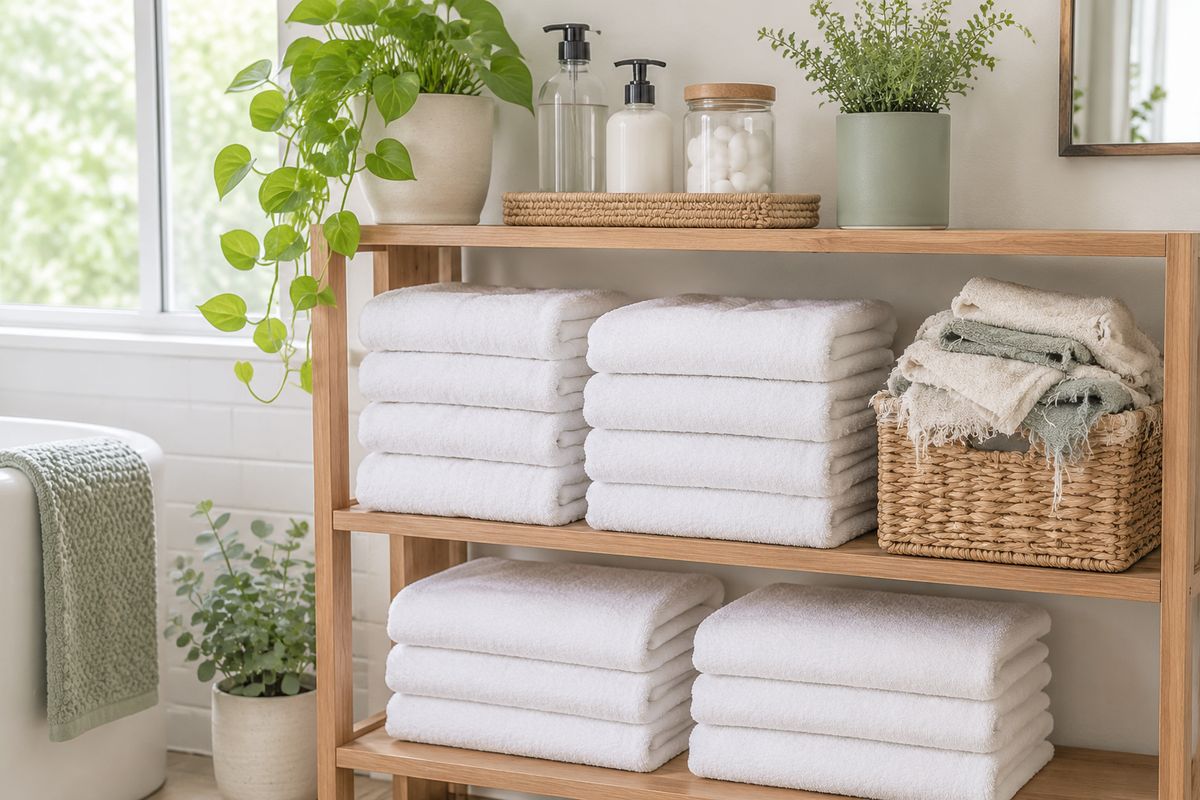
A common rule of thumb is two bath towels per person, one in use and one in the wash, plus one set for guests. Count what you have, keep the best and let go of anything thin, frayed or permanently stained.
Old towels do not have to go in the trash. Animal shelters often accept towels and blankets, though you should call first. You can also cut a few into cleaning rags for the garage. Fold and store the keepers the same way so the stack looks neat and fits the shelf, and move extra sets to a linen closet. See our linen closet organization ideas.
8Clear the shower and tub ledge
Remove every bottle from the shower. Recycle the empties and finish up near-empty ones before opening new ones. Keep one shampoo, one conditioner and one body wash per person, or shared, plus a few special items you use weekly.
Toss rusty razors, worn-out loofahs and mildewed bath toys. Put used razor blades in a closed container, such as a blade bank, before throwing them away so they do not cut anyone handling the trash. Anything that stays in the shower should drain: a caddy or wall rack keeps bottles off the ledge and stops soap scum rings. For setups, see our shower organization ideas.
9Finish under the sink
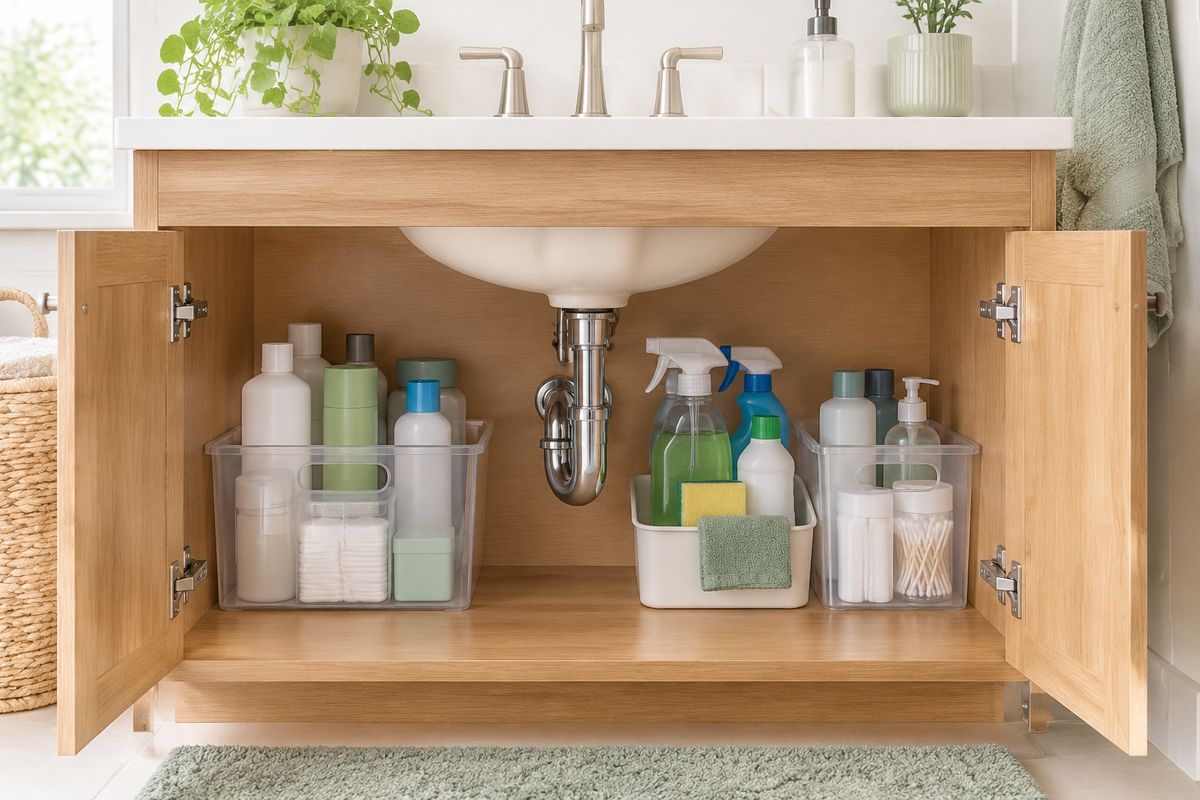
Under the sink is where bathroom clutter goes to hide. Take everything out, check the pipes for leaks and wipe the cabinet floor. Then sort into three groups: backstock of things you use, like toilet paper and spare toothpaste; cleaning supplies; and everything else.
Keep only a reasonable amount of backstock, and store cleaning supplies together in a caddy so you can carry it to the tub. Dried-up products and empty bottles can go. Follow label instructions for disposing of household chemicals. Use bins or a two-tier organizer so the back of the cabinet stays reachable, and measure before you buy; the storage bin size calculator helps you pick bins that clear the pipes.
Makeup and skincare shelf life
These ranges are commonly cited guidelines for products after opening. Always follow the PAO symbol or the date on your product first, and toss anything that changes in smell, color or texture.
| Product | Commonly cited shelf life after opening | Signs it is done |
|---|---|---|
| Mascara | About 3 months | Clumpy, dry, smells different |
| Liquid eyeliner | About 3 months | Dry tip, patchy line |
| Liquid or cream foundation, concealer | About 6 to 12 months | Separating, darker color, odd smell |
| Lip gloss | About 12 months | Sticky, cloudy, smells off |
| Lipstick | About 1 to 2 years | Dry, crumbly, waxy smell |
| Pencil liners (eye and lip) | About 1 to 2 years | Hard to sharpen, skips; sharpen often |
| Powder eyeshadow, blush, bronzer | About 1 to 2 years | Hard, shiny top layer, color will not lift |
| Face moisturizer in a jar | About 6 to 12 months | Changed texture or smell |
| Sunscreen | Expiration date, or about 3 years from purchase if none | Separated, grainy, changed smell |
Replace eye products after an eye infection, and never share mascara or eyeliner.
Bathroom items that need special disposal
A few bathroom items should not go loose in the trash. Check your city or county website for local rules.
- Medicine: take-back kiosk or event first; otherwise the FDA at-home method in a sealed bag.
- Needles and other sharps: an FDA-cleared sharps container, disposed of according to state and local rules.
- Old mercury thermometers: household hazardous waste drop-off.
- Aerosol cans: many programs recycle empty cans; partly full ones may need hazardous waste drop-off.
- Razor blades: a closed blade bank or sealed container before the trash.
Keeping it that way
A decluttered bathroom is calmer to start the day in and faster to clean. You will know every medicine in the cabinet is current, every tube of mascara is fresh and the towels on the shelf are the ones you like. Most bathrooms take only two or three short sessions.
Make it part of a bigger reset with our January cleaning checklist, and do a five-minute date check every season so the cabinet never gets out of hand again.
Get the free cleaning schedule
Free printable cleaning schedule: a daily checklist, weekly tasks by room, a monthly deep-clean list and seasonal jobs. 6-page PDF to print at home.
Everything mentioned in this guide
One list, so you can check sizes against your own measurements. Links go to Amazon; we may earn a commission.
Questions people ask
How do I safely get rid of old medicine?
Use a drug take-back kiosk at a pharmacy or police station, or a DEA Take Back Day event. If none is available, mix the medicine with used coffee grounds, dirt or cat litter, seal it in a plastic bag and put it in the trash. Flush only medicines on the FDA flush list.
Can I flush expired medicine down the toilet?
Only if it is on the FDA's flush list, which covers a short list of specific medicines, mainly certain opioids, and only when take-back is not readily available. Everything else should go to take-back or the trash method.
How long does mascara last after opening?
Mascara is commonly cited at about three months after opening. Check the open-jar symbol on the tube, and toss it sooner if it dries out, smells different or after an eye infection.
What does the 12M symbol on makeup mean?
It is the period-after-opening symbol. 12M means the product is intended to stay good for about 12 months after you open it.
How many towels should I keep?
A common rule is two bath towels per person plus a set for guests. Keep more only if you do laundry less than once a week or have the storage space.
Should I store medicine in the bathroom?
Usually not. The FDA recommends a cool, dry place, and bathrooms get warm and humid. A high cabinet in another room, out of children's reach, is a better spot.