How to Organize Shelving: 9 Steps for Shelves That Stay Neat
Shelves fill up fast because they are the easiest place to put something down. A few months later, nothing is easy to find and every shelf looks crowded.
The fix works the same for a bookcase, open kitchen shelves, a closet shelf or garage shelving: decide what each shelf is for, put things where they are easy to reach, and contain the small stuff.
- Empty one shelving unit completely
- Give every shelf one job
- Put things where you will reach for them
- Adjust the shelf heights
- Contain small items in bins and baskets
- Label anything you cannot see
- Use dividers and bookends to keep stacks upright
- Add hanging storage under deep shelves
- Leave a quarter of each shelf empty
1Empty one shelving unit completely
Take everything off, wipe the shelves and sort what you removed into keep, move to another room and donate. Working on one unit at a time keeps the job small enough to finish in an afternoon.
2Give every shelf one job
Decide what lives on each shelf before you put anything back: books, everyday dishes, craft supplies, paper towels. One category per shelf means you always know where to look and where to put things back.
3Put things where you will reach for them
Eye level to waist level is prime space, so keep what you use every day there. Heavy items go on the lowest shelf, where they are safer and easier to lift. Light, rarely used things go up high.
4Adjust the shelf heights
Most shelves are spaced for nothing in particular. Move the pegs so each shelf is a few inches taller than what sits on it. On fixed shelves, a stackable shelf riser adds a second layer for plates, mugs or short bins.
5Contain small items in bins and baskets
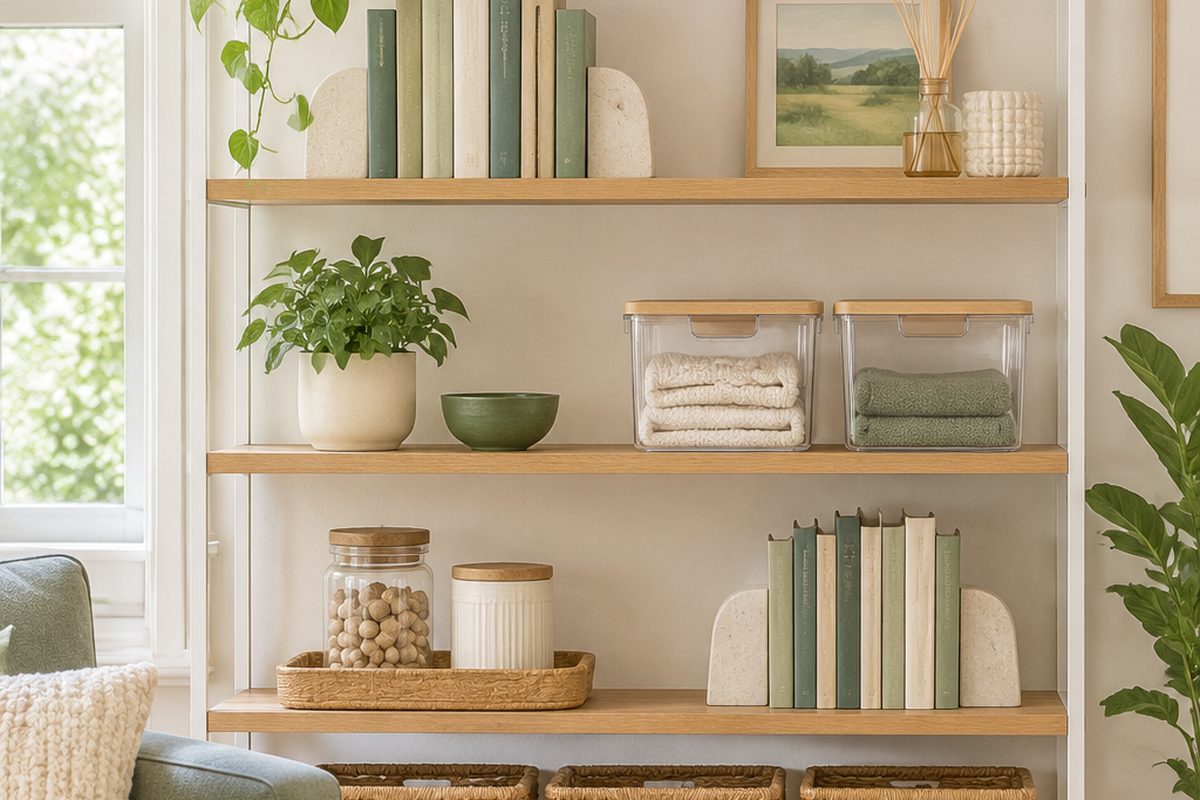
Loose small items are what makes shelves look messy. Group them in bins of the same size and style: woven baskets for living areas, clear bins for pantry, closet and garage shelving so you can see what is inside.
6Label anything you cannot see
Put a label on every opaque bin and on shelves that other people use. Labels are what make a system last, because everyone in the house can put things back in the right place.
7Use dividers and bookends to keep stacks upright
Shelf dividers keep sweaters, towels and linens in neat stacks on closet shelves. Bookends hold books, magazines and cookbooks upright, so a row does not fall over when you pull one out.
8Add hanging storage under deep shelves
Under-shelf baskets clip onto a shelf and use the empty air below it. They work well for wraps and foil in the pantry, for hand towels in a linen closet and for small tools on garage shelving.
9Leave a quarter of each shelf empty
A shelf packed edge to edge looks cluttered even when it is organized, and there is no room for anything new. Leave some space between groups. Open shelves look calmer, and you can put things back without moving everything else.
Keeping it that way
Reset your shelves once a season: put stray items back in their zone and donate what you no longer use.
Have a deep pantry? See our deep pantry shelf organization guide. For towels and sheets, read our linen closet organization ideas.
Everything mentioned in this guide
One list, so you can check sizes against your own measurements. Links go to Amazon; we may earn a commission.
Questions people ask
How do you organize shelving?
Empty the shelves, give each shelf one category, keep everyday items at eye level and heavy items low, and put small things in labeled bins.
What should go on the top shelf?
Light items you rarely use, such as seasonal decor, spare bedding or backup supplies. Keep heavy and breakable things on lower shelves.
How do you make open shelves look less cluttered?
Group similar items, use matching baskets for small things, keep a few inches of empty space between groups and leave part of every shelf empty.
How do you organize deep shelves?
Use bins you can pull out like drawers, add risers so items in back are visible, and keep the things you use most in front.