7 Junk Drawer Organization Ideas That Take 20 Minutes
Every home needs a junk drawer. The trouble starts when it holds everything that has no other home: dead batteries, six takeout menus, a key nobody can identify.
A useful junk drawer is a small, sorted utility drawer. Set a timer for twenty minutes and work through these steps in order.
1Dump it out and sort fast
Empty the whole drawer onto a towel. Make four piles: keep here, belongs elsewhere, trash, and unknown. Do not think for long. Dried pens, expired coupons and mystery cables you have not needed in a year go. Carry the 'elsewhere' pile to the right rooms before you continue.
2Decide what the drawer is for
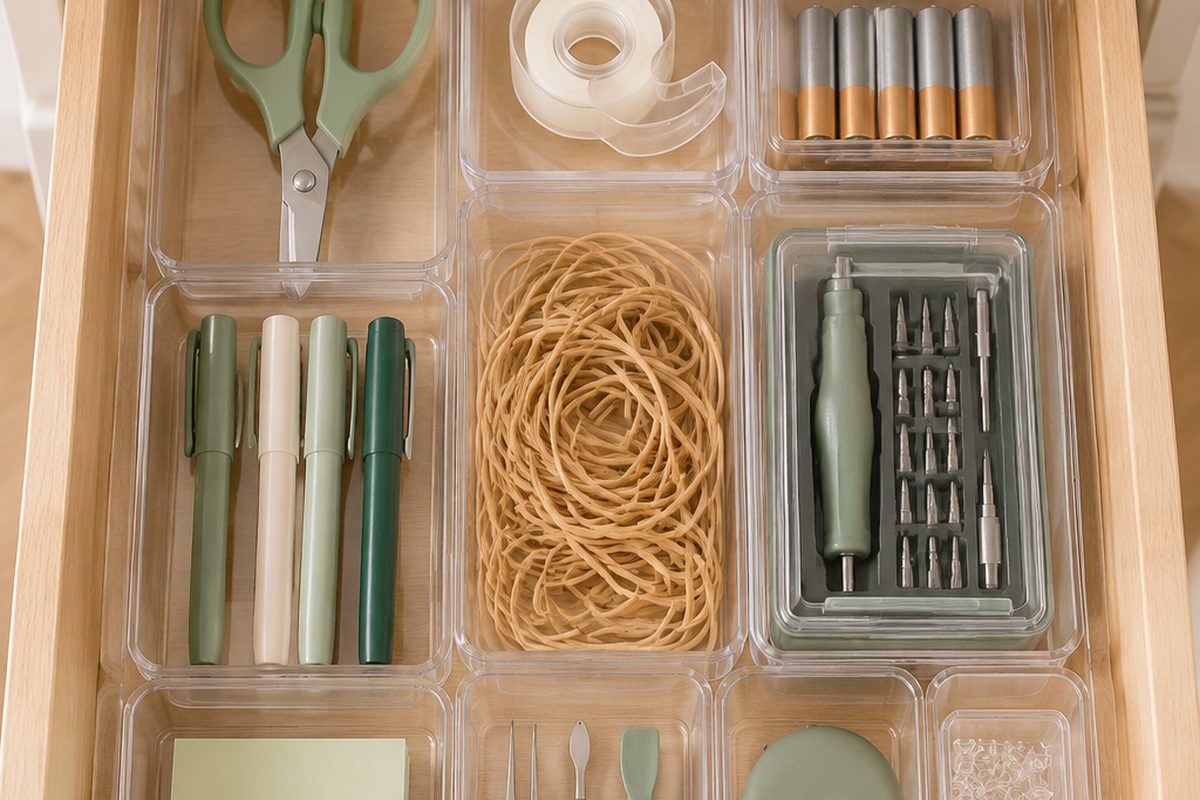
Pick five or six categories and stop. A good list: scissors and tape, pens and a notepad, batteries, a small tool kit, spare keys, and chargers. If something does not fit a category, it probably belongs in another room.
3Fit interlocking trays
Dividers are what stop a utility drawer from sliding back into chaos. Interlocking trays in several sizes let you build a layout that fills the drawer edge to edge. Measure the inside of the drawer first and lay the trays out on the counter before you commit.
4Put batteries in a case
Loose batteries roll, mix old with new and can short against metal. A battery organizer holds each size upright, and many include a small tester so you know which ones still work. Tape the ends of used batteries and keep them in a bag until you can recycle them.
5Tame the cords
Wind each charging cable and close it with a reusable tie, then give cables their own compartment. Label any cable that is not obvious. If you find a charger for a device you no longer own, let it go.
6Keep a small tool kit instead of loose tools
A compact kit with a screwdriver, a tape measure and pliers replaces the handful of loose tools rattling at the back. It handles most small fixes and returns to one slot when you are done.
7Line it and label the lanes
A non-slip liner stops the trays from shifting when the drawer shuts. If several people use the drawer, add small labels to the tray edges. It feels excessive until you notice that things are finally going back where they belong.
Keeping it that way
A utility drawer needs a five-minute clear-out every few months. Tie it to something you already do, such as changing the clocks.
When the drawer is full, the answer is to remove something, not to start a second junk drawer.
Everything mentioned in this guide
One list, so you can check sizes against your own measurements. Links go to Amazon; we may earn a commission.
Questions people ask
What should be in a junk drawer?
Small things the whole household needs quickly: scissors, tape, pens, a notepad, batteries, a basic tool kit, spare keys and chargers. Everything else belongs in the room where it is used.
How do I stop the junk drawer from getting messy again?
Use dividers so each category has a fixed spot, limit the categories to five or six and clear the drawer for five minutes every few months.