7 Paper Clutter Organization Ideas for Mail, Bills and Documents
Paper arrives every day and leaves only when you make it. Mail, school forms, receipts and manuals pile up on the nearest flat surface because they have nowhere to go.
You do not need a filing cabinet and a free weekend. You need one inbox, a few folders and a ten-minute weekly habit.
1Create one inbox for the whole house
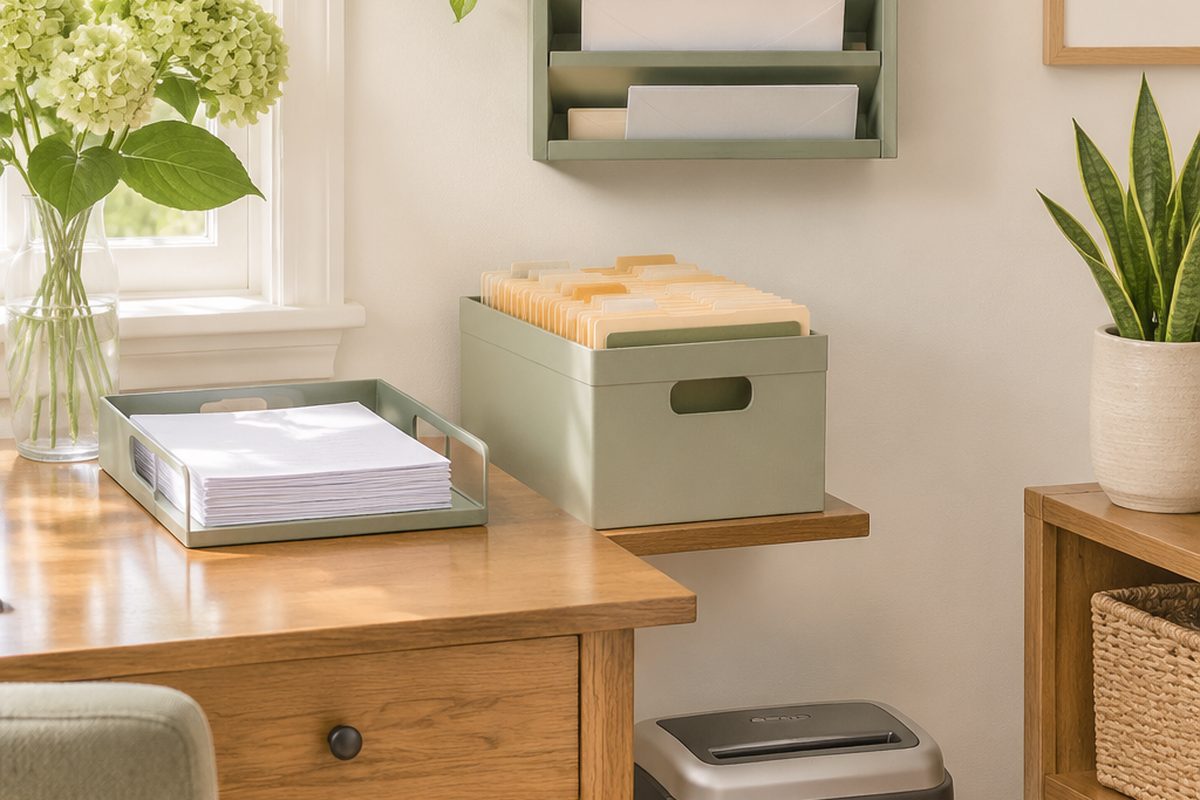
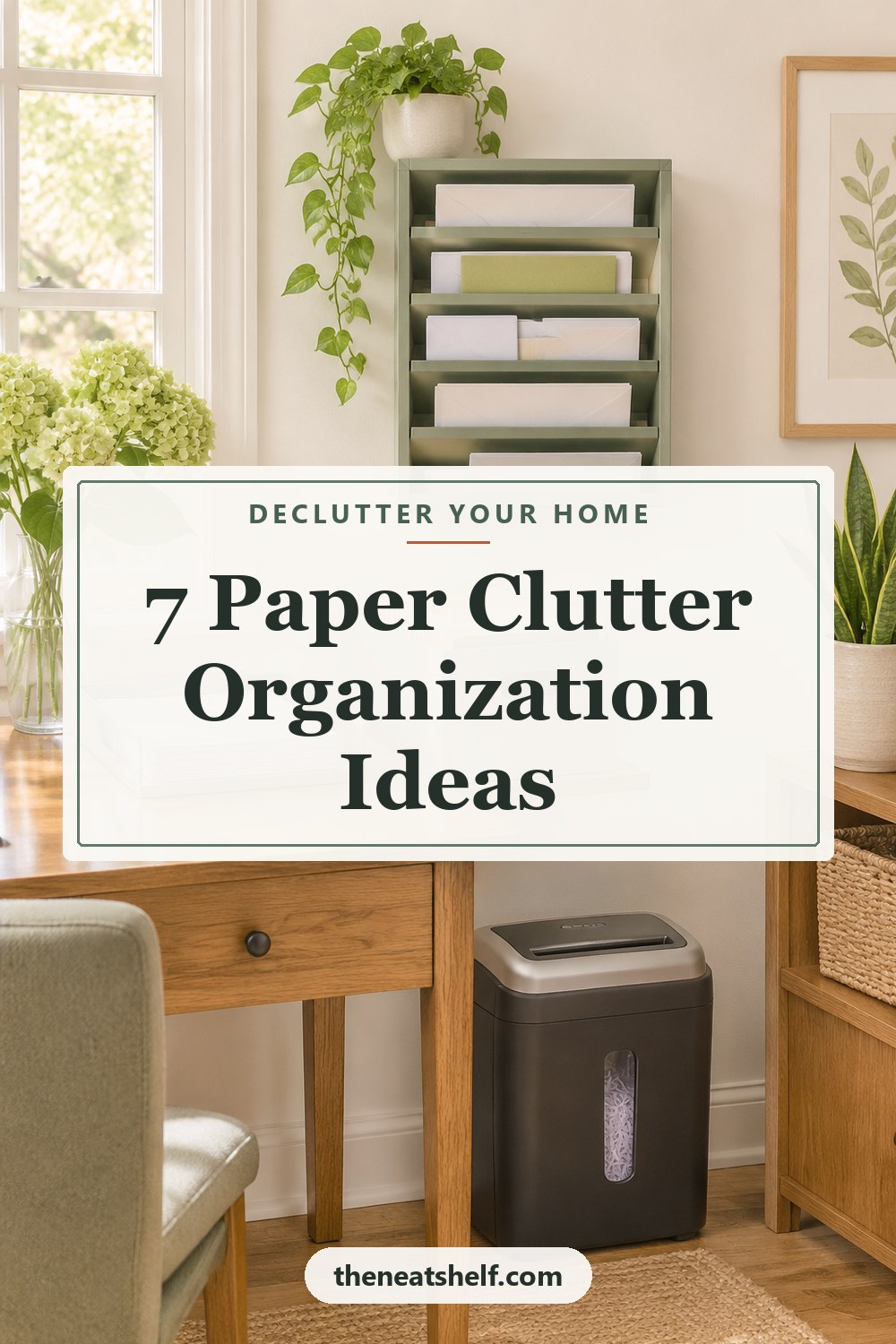
All incoming paper goes to a single spot near the door: one tray or wall pocket. Not the counter, not the table. When there is only one place to look, nothing is lost, and the pile is easy to see when it needs attention.
2Sort into four actions
Once a week, go through the inbox and make four decisions: recycle, shred, act, or file. Open every envelope and throw the envelope away. Anything that needs action, such as a bill or a form to sign, goes into a single 'to do' folder that you clear the same week.
3Keep a small file box, not a cabinet
Most households need fewer than fifteen folders. A portable file box with hanging folders is enough: home, car, medical, taxes, insurance, banking, school, pets, and manuals. Label the tabs clearly and file new papers at the front of each folder so the newest is easy to find.
4Protect the documents you cannot replace
Birth certificates, passports, property papers and social security cards deserve better than a folder. A fire-resistant document bag or small safe keeps them together and easy to grab. Tell one other adult where it is kept.
5Shred what has your details on it
Anything with an account number, signature or full date of birth should be shredded rather than recycled. A small cross-cut shredder beside the inbox makes it a ten-second job. Without one, the 'to shred' pile becomes its own kind of clutter.
6Scan and go paperless where you can
Switch bills and statements to online delivery, one company at a time. For paper worth keeping only as a record, scan it with a phone app and save it in dated folders with a backup. Product manuals are almost always available online, so most can be recycled.
7Give kids' papers a box each
School art and certificates multiply fast. Keep one memory box per child and review it together at the end of each school year. The limit of the box makes the choices easier and saves the pieces that matter.
Keeping it that way
As a general guide, keep tax records for several years and property, identity and insurance documents for as long as they apply. Rules vary, so check the guidance for where you live or ask a tax professional.
The system only works if the weekly sort happens. Ten minutes with the inbox on the same day each week keeps every surface in the house clear.
Everything mentioned in this guide
One list, so you can check sizes against your own measurements. Links go to Amazon; we may earn a commission.
Questions people ask
How do I get rid of paper clutter fast?
Gather all loose paper into one box, then sort it into recycle, shred, act and file. Do the recycle pile first, since it is usually the largest. After that, use a single inbox so piles do not form again.
How long should I keep bills and receipts?
Most everyday bills can go once they are paid and you have confirmed the payment. Keep receipts for warranties, returns and tax-related purchases. For tax documents, follow the official guidance where you live.