7 Food Storage Container Organization Ideas That End Lid Chaos
Open the container cupboard in most kitchens and something falls out. There are bases without lids, lids without bases and three sizes that almost fit each other.
This is one of the quickest organizing jobs in the house, and one of the most satisfying. Twenty minutes fixes it.
1Match every lid to a base
Put all the containers on the counter and pair each base with its lid. Anything without a partner goes to recycling. So does anything stained, warped or cracked. Be strict: an orphan lid will never find its base.
2Keep only what fits your fridge and your week
Count how many containers you fill in a normal week of leftovers and lunches, then add a few. Most households need ten to fifteen, not forty. Keeping fewer is what makes the cupboard stay tidy.
3Standardize on one set
The best long-term fix is a single set in which sizes nest and lids are interchangeable. Glass with snap-on lids goes from fridge to microwave to dishwasher. Square and rectangular shapes use shelf space far better than round ones.
4Nest the bases, file the lids
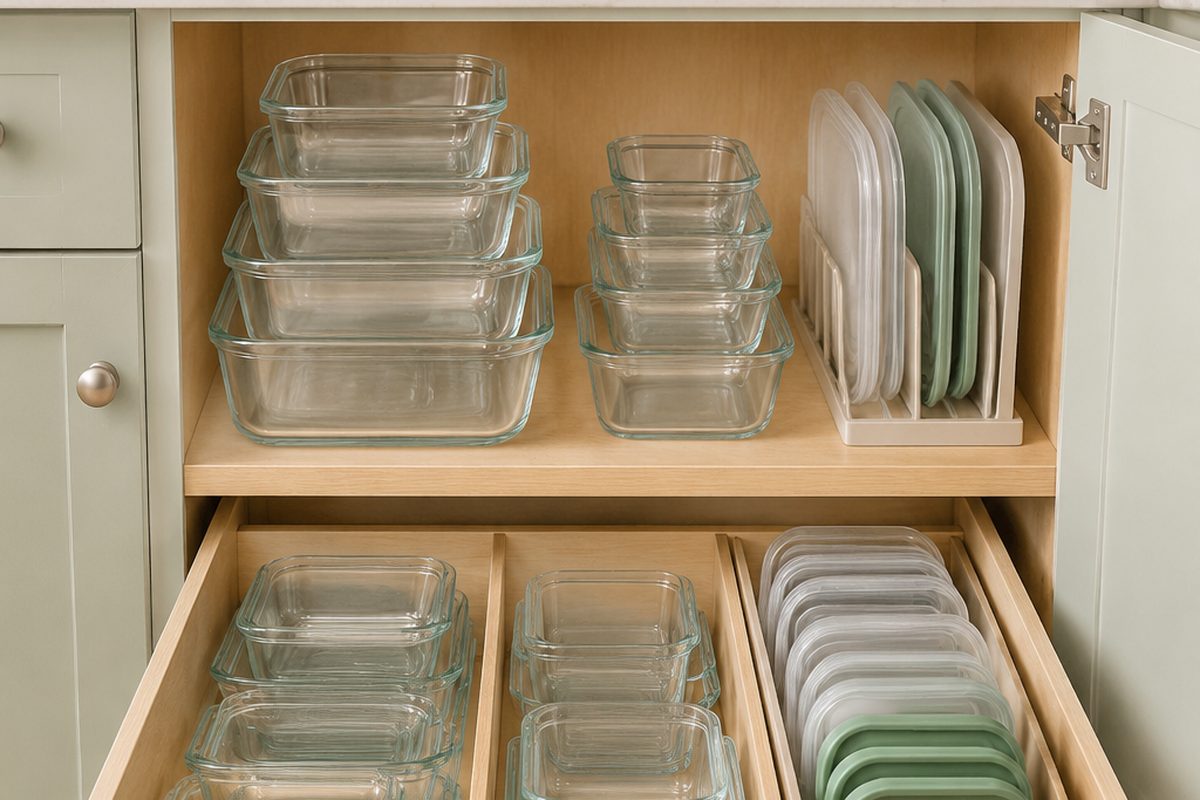
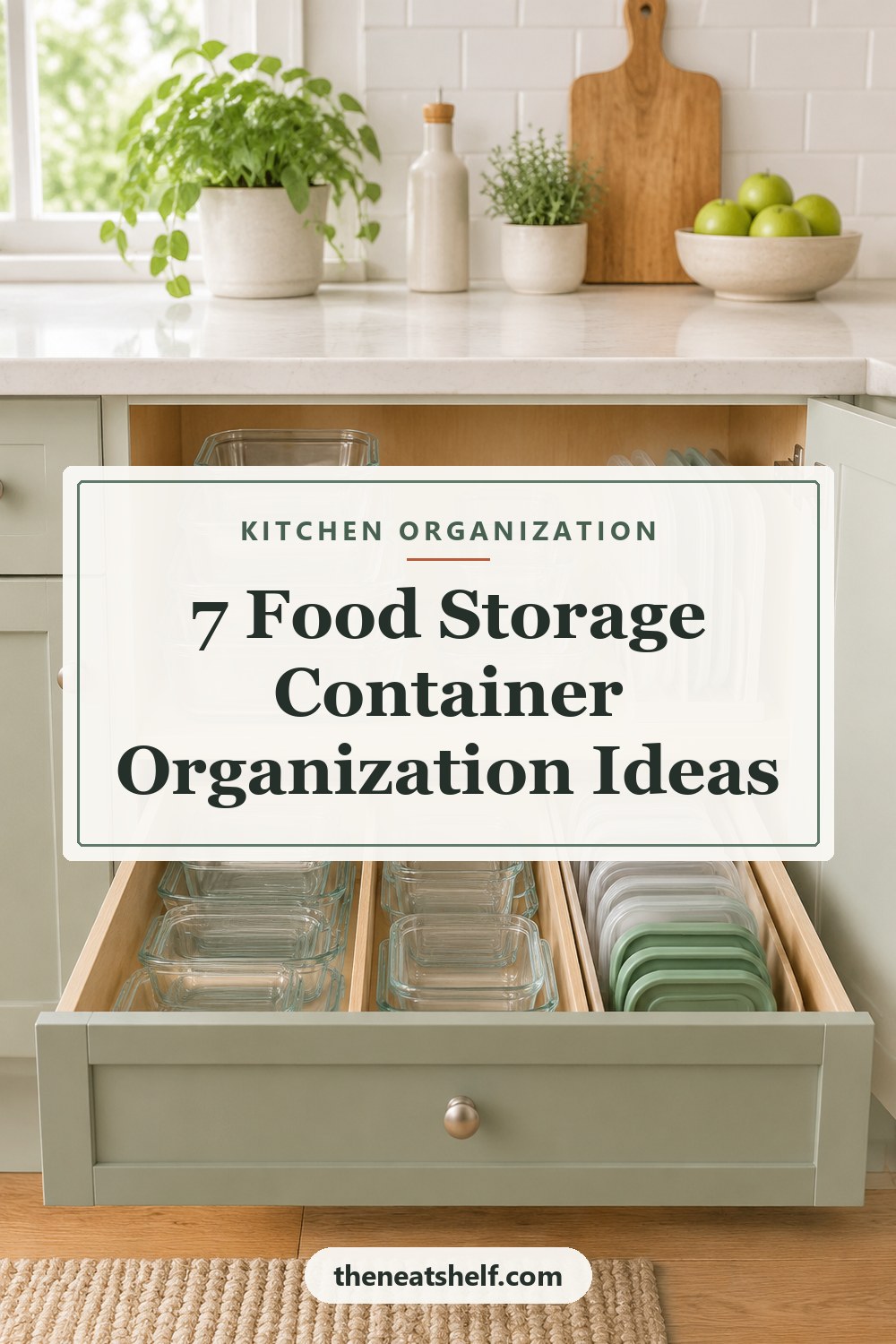
Store bases nested by size and lids separately, standing on edge. A lid organizer with adjustable dividers keeps them upright and sorted by size, so you pull one without disturbing the rest.
5Use a drawer if you have one
A deep drawer near the fridge beats a cabinet for containers. You see everything from above and nothing falls out. Use dividers to keep bases on one side and lids on the other.
6Or add a pull-out to the cabinet
In a lower cabinet, a sliding shelf or basket brings the back of the cupboard out to you, which stops containers from being shoved in and forgotten.
7Keep a small section for lunch boxes and bottles
Lunch boxes, reusable bottles and their lids need a home too. A bottle rack that holds them on their sides stops them rolling, and a bin gathers the small parts such as straws and seals.
Keeping it that way
Put containers away with their lids matched after every wash. It takes seconds, and it keeps orphans from building up.
When a lid cracks, recycle the base at the same moment. One in, one out keeps the set complete.
Everything mentioned in this guide
One list, so you can check sizes against your own measurements. Links go to Amazon; we may earn a commission.
Questions people ask
How do you store food containers and lids?
Nest the bases by size and store the lids upright in a lid organizer beside them. A deep drawer with dividers works best, but a cabinet with a sliding shelf works well too.
Is glass or plastic better for food storage?
Glass resists stains and odors and usually goes in the microwave and dishwasher. Plastic is lighter and less breakable, which suits lunch boxes. Many homes keep a main glass set and a few plastic ones.