How to Clean Out Your Fridge After the Holidays
To clean out your fridge, unplug or turn it off if you can, move food to a cooler, and toss anything expired or leftovers older than 3 to 4 days. Wash shelves and drawers in warm soapy water, wipe the inside with a baking soda solution, dry everything, then refill by zones and keep it at 40°F or below.
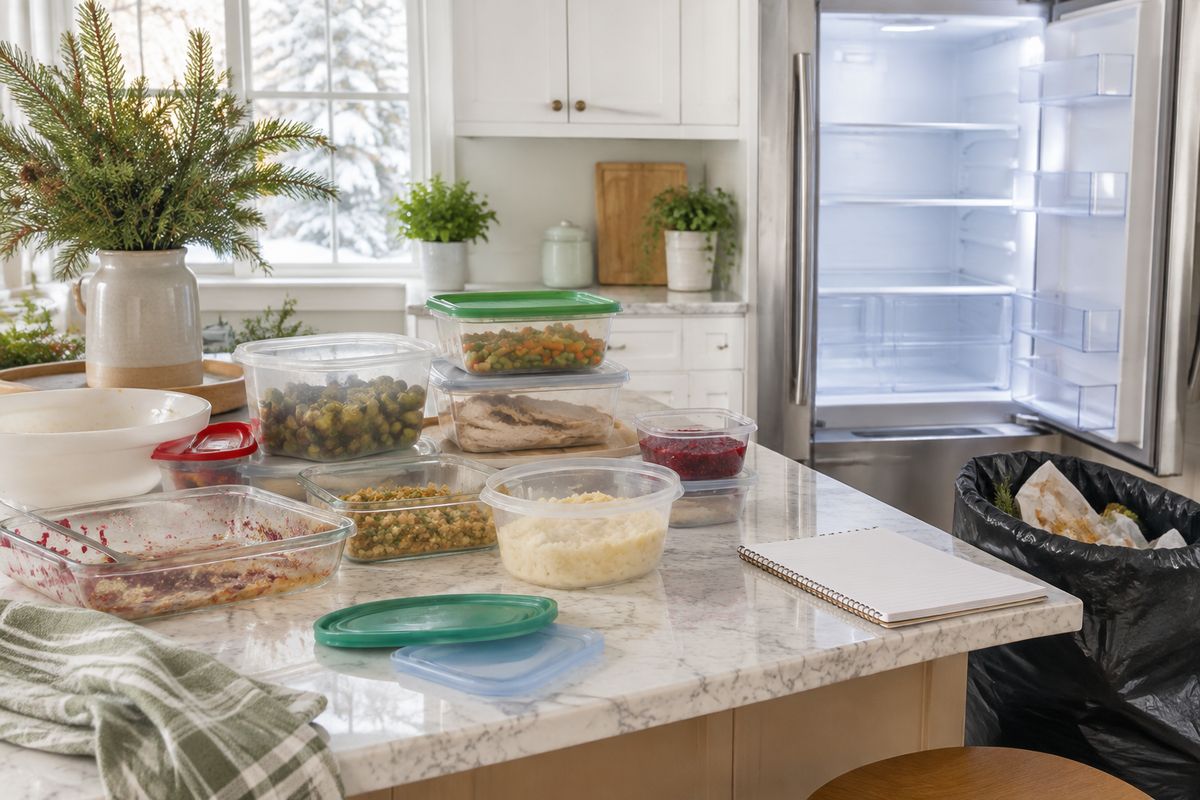
After the holidays, the fridge is usually the fullest and least organized it will be all year. Half a ham, three kinds of dip, a stack of foil-covered plates and a mystery container at the back that nobody wants to open.
A good clean-out takes about an hour and makes everyday cooking easier for weeks. Below is the step-by-step process, the safe way to clean the inside, how long common leftovers really keep and how to put food back so it stays organized. For more shelf-by-shelf ideas, see our fridge organization ideas.
| Food | How long it keeps in the fridge |
|---|---|
| Cooked leftovers (meat, casseroles, stuffing) | 3 to 4 days |
| Cooked turkey, chicken or ham slices | 3 to 4 days |
| Soups and stews | 3 to 4 days |
| Leftover pizza | 3 to 4 days |
| Gravy and meat broth | 1 to 2 days |
| Raw ground meat, raw poultry, fresh fish | 1 to 2 days |
| Raw steaks, roasts and chops | 3 to 5 days |
| Opened lunch meat | 3 to 5 days |
| Egg, chicken, tuna or macaroni salad | 3 to 5 days |
| Hard-cooked eggs | 1 week |
| Raw eggs in the shell | 3 to 5 weeks |
| Opened hard cheese, such as cheddar | 3 to 4 weeks |
Times are conservative guidelines based on FoodSafety.gov and USDA charts for a fridge at 40°F or below. When in doubt, throw it out.
- Pick the right time and set up a cooler
- Empty the fridge one shelf at a time
- Check dates and toss what is past its prime
- Wash shelves and drawers in warm soapy water
- Wipe the inside with a baking soda solution
- Deal with lingering odors
- Check the temperature before refilling
- Refill by zones
- Label leftovers and keep a running list
1Pick the right time and set up a cooler
The easiest time to clean out your fridge is right before a grocery trip, when it is as empty as it gets. Set aside about an hour and clear a stretch of counter.
Put a cooler with ice packs next to the fridge for milk, meat, eggs and anything else that needs to stay cold. Perishable food should not sit at room temperature for more than 2 hours, so work in batches if your kitchen is warm. Have a trash bag, a compost bin if you use one, dish soap, baking soda, clean cloths and a towel ready before you open the door.
2Empty the fridge one shelf at a time
Work from the top shelf down so drips fall on areas you have not cleaned yet. Take everything out, including the door shelves and drawers, and group items on the counter: leftovers, dairy, condiments, produce and drinks.
Seeing every jar together helps you spot duplicates, like two open bottles of the same salad dressing. Combine them where it is safe to do so, and note what you need to buy. If your fridge has a separate freezer, do it on another day or at the end, so you are not juggling frozen food at the same time.
3Check dates and toss what is past its prime
Go through each group and decide what stays. Throw out leftovers older than 3 to 4 days, the USDA guideline for most cooked food, along with anything with mold, an off smell or slimy texture. Do not taste food to check if it is still good.
For packaged food, use-by and best-by dates are about quality more than safety for many items, except infant formula, but they are a useful starting point. Opened condiments last a while but not forever; check the label for how long to keep them after opening. Wilted produce that is still safe can go into a soup pot or the compost.
4Wash shelves and drawers in warm soapy water
Pull out every removable shelf and drawer and wash them in the sink with warm water and dish soap, then rinse and dry them completely. Let cold glass shelves sit on a towel for a few minutes before running warm water over them, because a sudden temperature change can crack the glass.
Avoid harsh solvent cleaners, abrasive powders and scouring pads inside the fridge. They can leave odors that transfer to food or scratch the plastic. If a drawer has sticky spills, let it soak in soapy water for ten minutes and wipe with a soft sponge.
5Wipe the inside with a baking soda solution
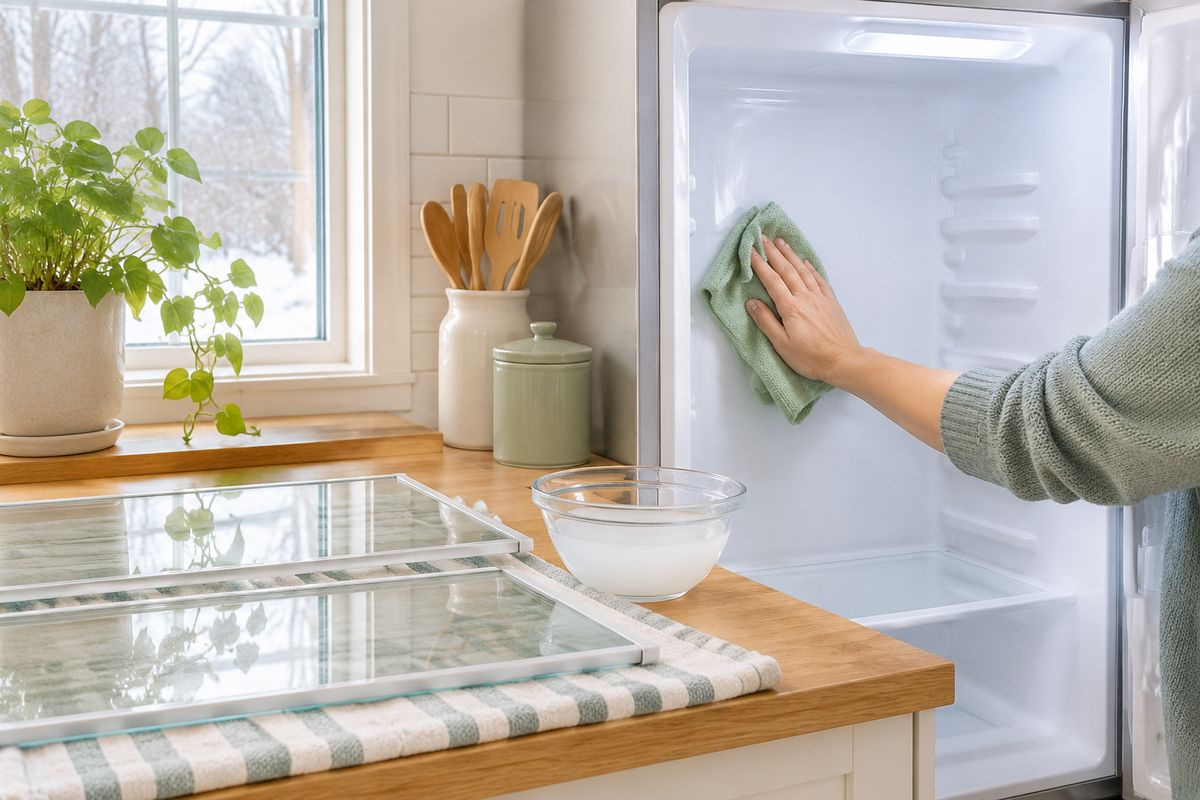
With the shelves out, clean the inside walls, the ceiling, the door gaskets and the shelf supports. A simple solution of about 1 tablespoon of baking soda per quart of warm water cleans gently and helps remove odors.
Dip a soft cloth, wring it out well and work top to bottom. Use an old toothbrush on the rubber seals and in the grooves where crumbs collect. Wipe with clean water, then dry everything with a towel so moisture does not build up. Clean door handles and the outside of the fridge last, since they get touched the most.
6Deal with lingering odors
If a smell remains after cleaning, it is usually from food that spilled under a drawer or soaked into a seal, so look there first. Once the source is gone, set an open box of baking soda on a back shelf to absorb leftover odors, and replace it every few months.
For stubborn smells, a shallow dish of fresh coffee grounds or activated charcoal on a shelf for a day or two can help. Keep the door closed as much as possible while it works. Strong-smelling foods like cut onions and fish should go back in sealed containers to stop the problem from returning.
7Check the temperature before refilling
Keep your refrigerator at 40°F or below and your freezer at 0°F, the temperatures the USDA and FDA recommend for food safety. Many built-in dials do not show actual degrees, so place an appliance thermometer on the middle shelf and check it after a few hours.
If it reads above 40°F, adjust the control a little colder and check again the next day. Make sure nothing blocks the air vents at the back, and do not overpack the shelves, since cold air needs room to circulate. Clean, dry door seals also help the door close tightly.
8Refill by zones
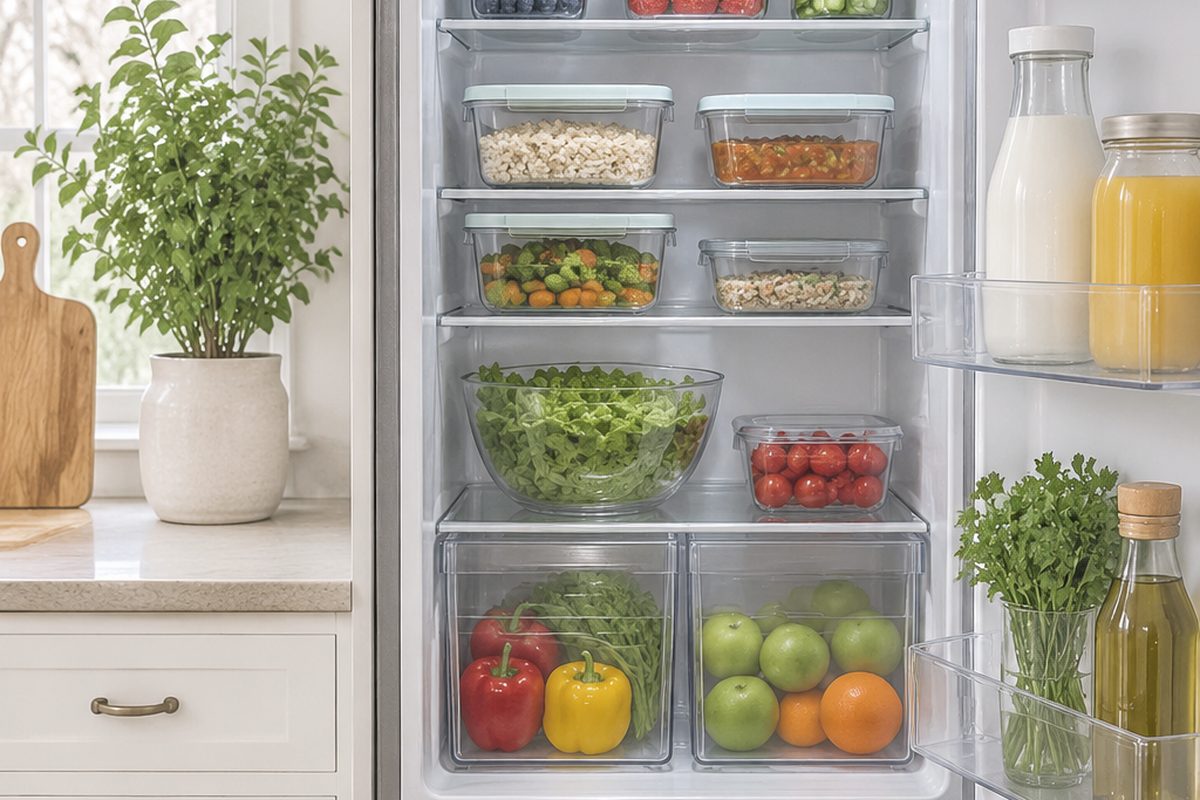
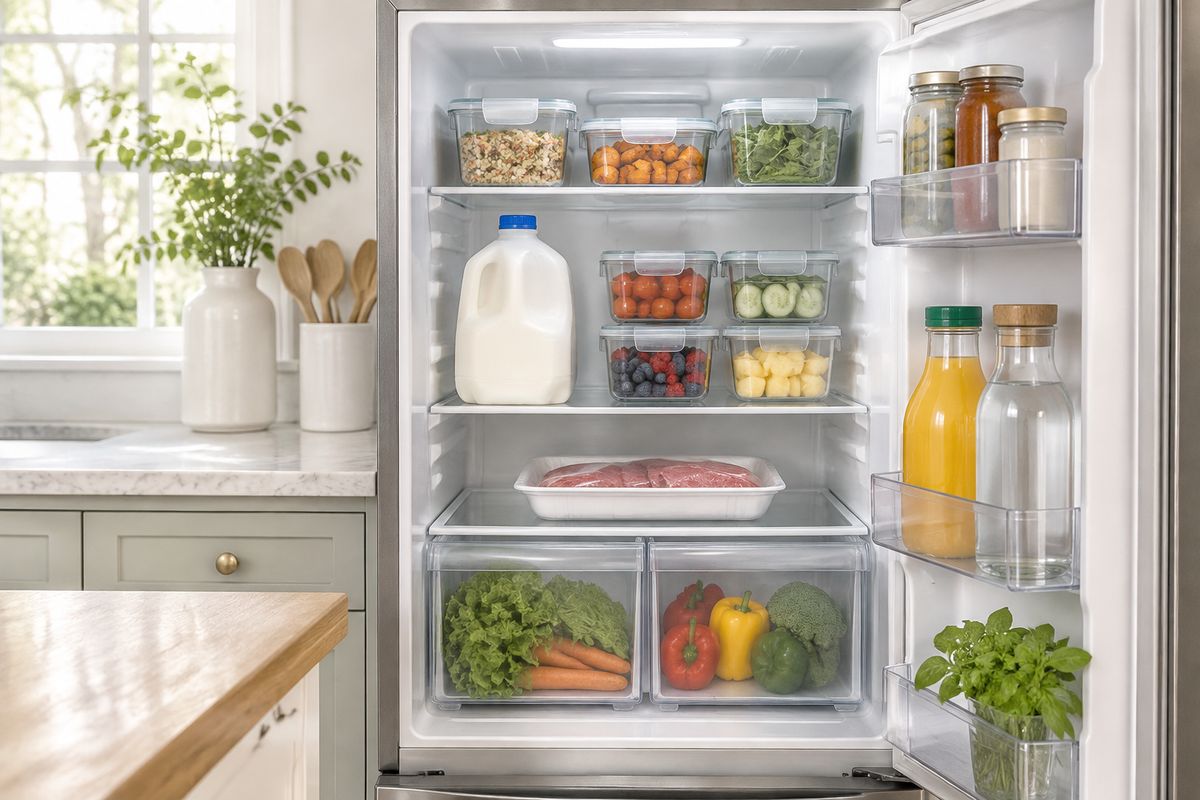
Put food back in zones so everyone in the house knows where things go. Leftovers and ready-to-eat food go on the upper shelves at eye level. Raw meat, poultry and fish go on the bottom shelf in a container or tray, so juices cannot drip onto other food.
Milk and eggs belong on a main shelf, not the door, because the door is the warmest part of the fridge. Save the door for condiments, juice and butter. Produce goes in the crisper drawers, with fruits in one and vegetables in the other if your drawers have humidity settings. Clear bins keep small items from disappearing to the back.
9Label leftovers and keep a running list
Labeling is what keeps the fridge from turning back into a mystery shelf. Write the contents and the date on each leftover container with a piece of masking tape and a marker, then follow the 3 to 4 day rule. Anything you will not eat in time can go straight into the freezer.
Keep a list on the fridge door of what needs to be used up first, and plan one leftovers dinner a week. Our free fridge inventory printable makes this easy: note what goes in and cross it off when it is eaten. Wipe up spills as they happen, and repeat the full clean-out every few months.
Where food goes in the fridge
Temperatures vary slightly from top to bottom and front to back. This layout works for most top-freezer, bottom-freezer and French-door models.
| Zone | Best for | Avoid storing |
|---|---|---|
| Upper shelves | Leftovers, drinks, ready-to-eat food, herbs | Raw meat |
| Middle shelves | Milk, eggs, yogurt, cheese | Anything that drips |
| Bottom shelf | Raw meat, poultry and fish in a tray | Ready-to-eat food below or beside it |
| Crisper drawers | Vegetables in high humidity, fruit in low humidity | Raw meat |
| Door shelves | Condiments, juice, butter, water | Milk and eggs |
Keep an appliance thermometer in the fridge and check that it stays at 40°F or below.
Holiday leftovers you can freeze
If you cannot eat leftovers within 3 to 4 days, freeze them. Food kept frozen at 0°F stays safe, though quality slowly declines, so most cooked leftovers taste best within 2 to 6 months. Thaw them in the fridge, not on the counter. Our freezer organization ideas help you keep track of what you put in.
- Sliced turkey, ham and roast, packed flat in freezer bags
- Casseroles and stuffing in portion-size containers
- Soups, stews and broth with headroom for expansion
- Cooked rice and mashed potatoes in small portions
- Baked breads, rolls and cookies, wrapped airtight
Keeping it that way
A fridge clean-out comes down to five steps: empty, check, wash, chill and refill by zone. Do it after the holidays and again every few months, and the weekly upkeep is only a few minutes.
While you are in the kitchen, the rest of the room is a natural next step. Our January cleaning checklist covers the other jobs worth doing this month, and the guide to decluttering your kitchen helps clear the cabinets and counters around the fridge.
Get the free kitchen inventory
Free fridge inventory printable with use-by dates, plus freezer and pantry inventory sheets, a weekly meal plan and a grocery list. 5-page PDF.
Everything mentioned in this guide
One list, so you can check sizes against your own measurements. Links go to Amazon; we may earn a commission.
Questions people ask
How often should I clean out my fridge?
Do a quick check of leftovers every week, ideally before grocery shopping, and a full clean-out with the shelves removed every three to four months or after big holidays. Wipe spills as soon as they happen.
How long are leftovers good in the fridge?
Most cooked leftovers keep 3 to 4 days at 40°F or below, according to the USDA. Gravy and broth are shorter at 1 to 2 days. Freeze anything you will not eat in time.
What is the best thing to clean the inside of a fridge?
Warm water with dish soap for removable parts, and a solution of about 1 tablespoon of baking soda per quart of warm water for the inside walls. Avoid harsh solvents and abrasive scrubbers that can leave odors or scratches.
Do I need to unplug the fridge to clean it?
It is not required for a routine clean, but turning it off or unplugging it saves energy while the door is open and is safer when you clean near the light or controls. Check your manual for your model.
What temperature should my fridge be?
Keep the refrigerator at 40°F or below and the freezer at 0°F. Use an appliance thermometer to check, because built-in dials often do not show actual temperature.
Can I use bleach to clean my fridge?
Most cleaning jobs do not need it. If you want to sanitize after a spill from raw meat, a diluted bleach solution can be used, followed by a clean water rinse, but follow the label directions and your fridge manual.