Best Drawer Organizers for Kitchen, Bathroom and Dresser
The best drawer organizer depends on the drawer. Choose an expandable tray for cutlery, spring-loaded dividers for utensils and long tools, clear modular trays for junk and bathroom drawers, pegs for plates in deep drawers, fabric bins for dresser drawers and an in-drawer block for knives. Measure the inside first and add a non-slip liner.
A good drawer organizer is the cheapest upgrade in a home, and the easiest one to get wrong. Most returns happen for one of two reasons: the organizer does not fit the drawer, or it has the wrong compartments for what you keep in it.
Below are the types of drawer organizers that work best in each kind of drawer, what each one is good and bad at, and how to measure so the first one you buy is the right one. We do not list prices, which change daily; the buttons take you to the current listing so you can compare sizes and reviews.
Our picks at a glance
Slides wider to fit drawers of different sizes, so there is no wasted gap at the sides.
Check priceTension dividers fit almost any length and turn one big drawer into lanes.
Check priceMix and match sizes like puzzle pieces to fit exactly what you own.
Check priceMovable pegs hold plates and bowls upright in deep kitchen drawers.
Check priceSoft bins keep folded clothes, socks and underwear in rows without scratching.
Check priceKeeps blades covered and frees counter space taken by a knife block.
Check price1Measure before you buy
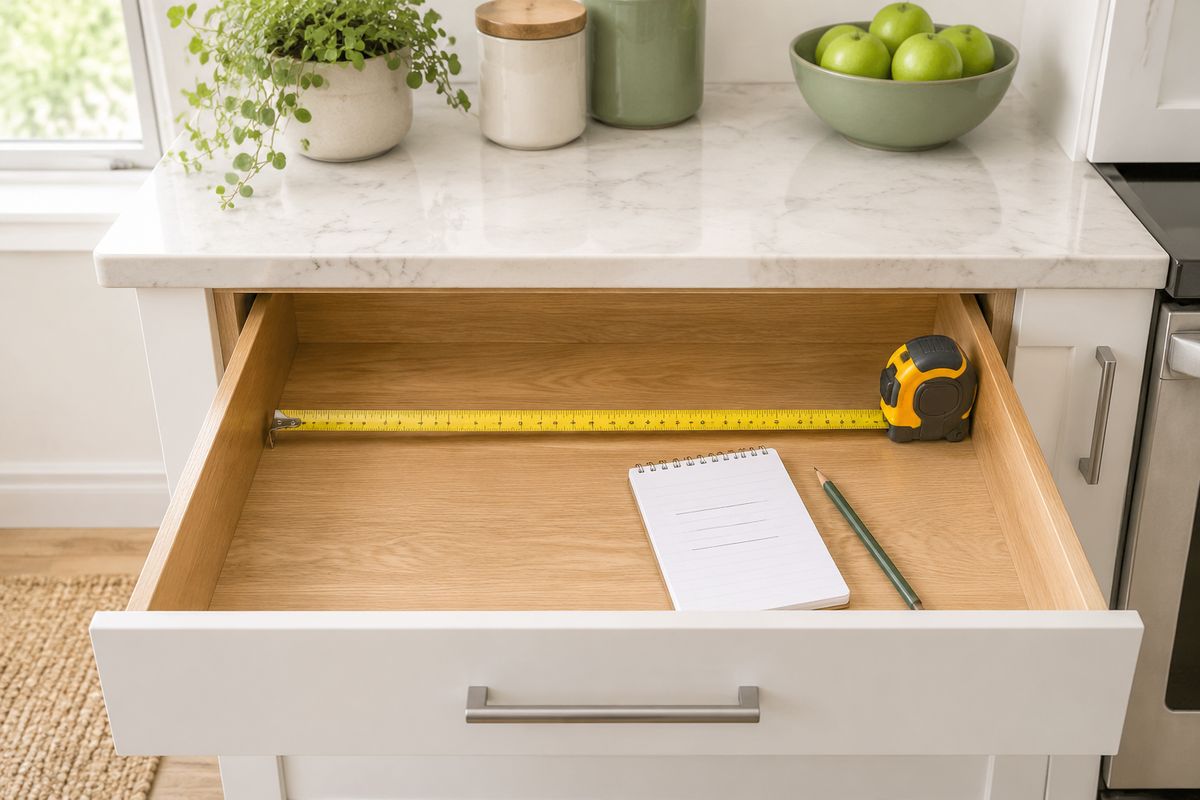
Measure the inside of the drawer, not the front: width, depth and height, at the narrowest point. Many drawers are narrower at the back or have a lip at the front. Write the numbers down and subtract a quarter inch on each side so the organizer slides in without forcing.
Then empty the drawer and group what goes back in. The groups tell you how many compartments you need and how big they should be, which matters more than any brand.
2Cutlery drawers: an expandable tray
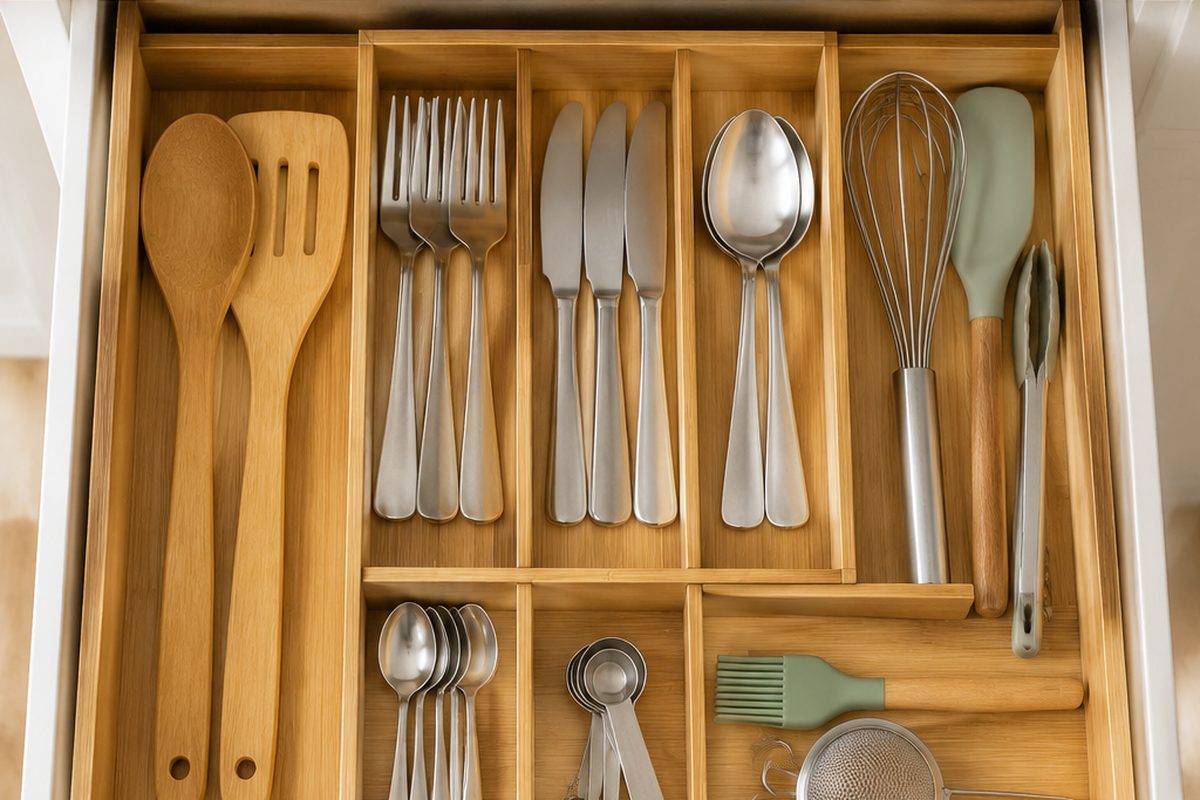
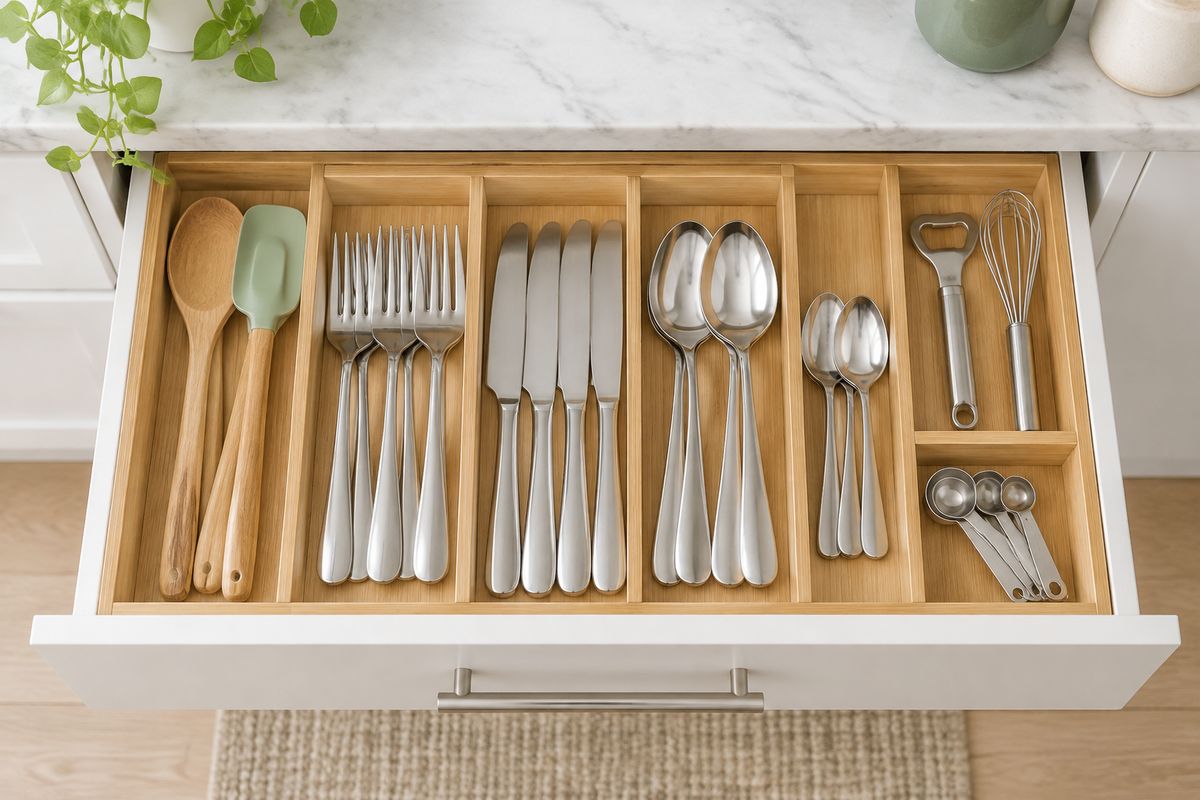
For forks, knives and spoons, an expandable tray is the most reliable choice. The side sections slide out so the tray fills the full width of the drawer, which stops it from moving every time you open the drawer. Bamboo looks warm, is easy to wipe and does not crack like thin plastic.
Check the slot length: serving spoons and long tongs need a long compartment, and some trays only fit table cutlery.
3Utensil and tool drawers: adjustable dividers
Spatulas, whisks, ladles and peelers do not fit fixed trays. Spring-loaded dividers press against the drawer sides and create long lanes in any length. Put the tools you use daily in the front lanes and the rarely used ones at the back.
Dividers also work well in dresser drawers for rolled T-shirts and in office drawers for files and notebooks.
4Junk and bathroom drawers: clear modular trays
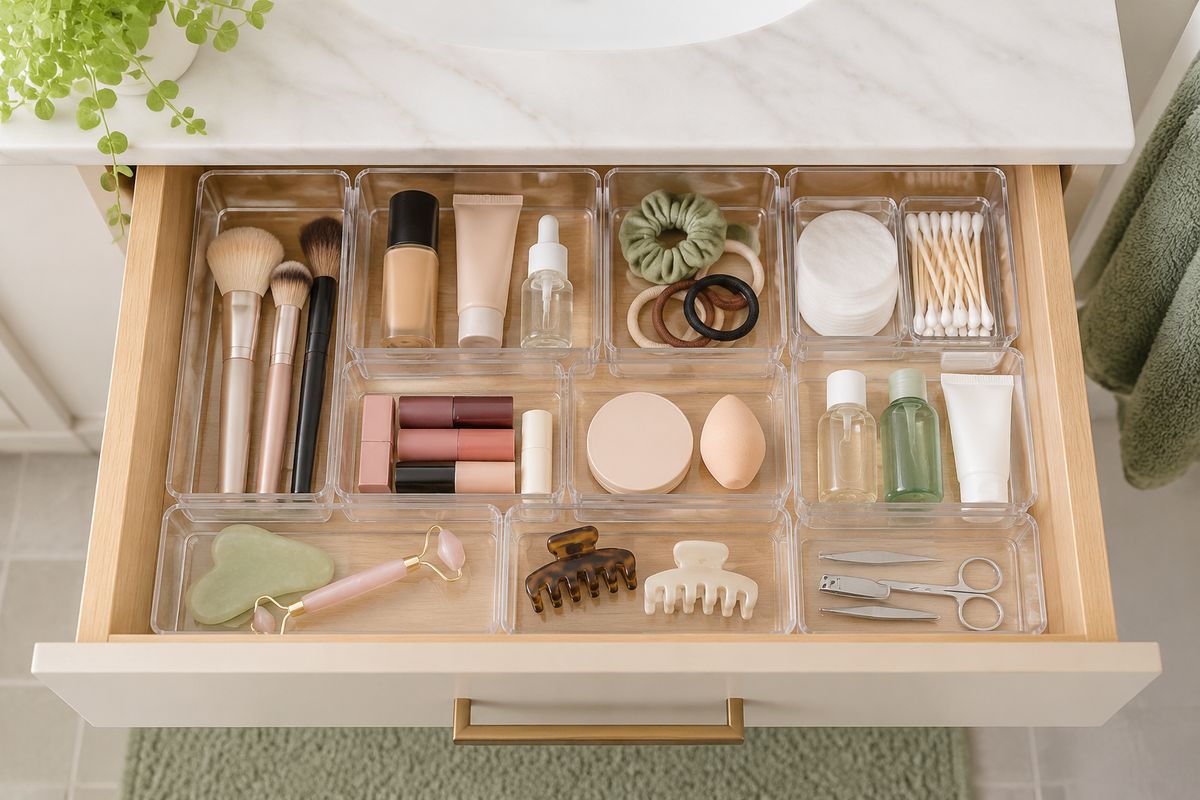
Small things need small compartments. Clear interlocking trays in mixed sizes let you build a layout around what you actually keep: batteries, tape and pens in a junk drawer, hair ties and makeup in a bathroom drawer. Clear plastic shows everything at a glance and goes in the dishwasher.
Choose sets with non-slip feet or add a drawer liner underneath, so the trays do not shift.
5Deep drawers: pegs for plates and bowls
Deep kitchen drawers are often better than upper cabinets for dishes, because you lift plates down instead of reaching up. A pegboard insert holds stacks of plates and bowls in place so they do not slide when the drawer opens. The pegs move, so the layout can change when your dishes do.
6Dresser drawers: soft fabric bins
Clothes drawers need lanes more than compartments. Fabric bins in a few sizes keep socks, underwear, T-shirts and leggings in rows, and you can lift a whole bin out when you swap seasons. Fold clothes and stand them upright in the bins, so you see every piece at once.
7Knives: an in-drawer block
Loose knives in a drawer are dangerous and get dull quickly. An in-drawer knife block holds blades in slots, safely covered, and frees the counter space a standing block takes. Measure the drawer depth: most in-drawer blocks need about 2.5 inches of height.
8Line the drawer first
A non-slip drawer liner protects the wood, keeps organizers and loose items from sliding, and is easy to wipe. Cut it to size with scissors and put it in before the organizers. It is the cheapest step and the one most people skip.
Bamboo, plastic or fabric?
- Bamboo: sturdy, looks good, easy to wipe. Best for kitchen and office drawers. Dry it after washing.
- Clear plastic: shows everything, dishwasher-safe, cheap. Best for bathroom, junk and craft drawers.
- Fabric: soft and light. Best for clothes and linens. Not for anything wet or sharp.
- Metal mesh: durable but noisy and harder to clean. Best for offices and garages.
Mistakes to avoid
Buying a set before emptying the drawer is the classic one: you end up with six tiny compartments and nowhere for the pizza cutter. Choosing an organizer that does not fill the drawer is another; it slides around and the drawer looks messy within a week. And filling every compartment to the top makes it hard to grab anything, so leave a little space in each section.
If a drawer still overflows after the organizer goes in, the problem is the amount of stuff, not the organizer. Edit duplicates first.
Keeping it that way
Do one drawer at a time, starting with the one you open most, and live with the layout for a week before buying more.
For step-by-step drawer layouts, see kitchen drawer organization ideas, junk drawer organization ideas and dresser drawer organization ideas. To size trays and bins before you order, try our free storage bin size calculator.
Get the free Declutter Kit
A 7-page printable: room-by-room checklists, the 30-day challenge calendar and a 10-minute weekly reset. Free, straight to your inbox.
Everything mentioned in this guide
One list, so you can check sizes against your own measurements. Links go to Amazon; we may earn a commission.
Questions people ask
What is the best material for drawer organizers?
Bamboo for kitchen and office drawers, clear plastic for bathroom and junk drawers, and fabric for clothes. Choose the material that suits what goes inside.
How do I stop drawer organizers from sliding?
Choose one that fills the drawer width, such as an expandable tray, and put a non-slip liner underneath.
Should drawer organizers fit exactly?
Close to it. Leave about a quarter inch on each side so it slides in easily, but not so much that it moves when you open the drawer.
Are expandable drawer organizers worth it?
Yes, for cutlery and utensil drawers. They fill the full width, so nothing slides around, and they still fit if you move house.