7 Kitchen Drawer Organization Ideas That Stop the Rummaging
A kitchen drawer fails in a predictable way. Everything slides to the back when you close it, the whisk jams the track, and the one tool you need is under six you do not.
Drawers stay organized when each one has a single job and the contents cannot move. These seven ideas go from the top drawer down.
1Give each drawer one job
Before buying dividers, decide what each drawer is for. Cutlery nearest the dishwasher, cooking tools nearest the stove, wraps and bags near the prep area. Take everything out, sort it into those groups, and let go of duplicates. Most kitchens have three spatulas too many, and no divider fixes that.
2Fit an expandable tray for cutlery
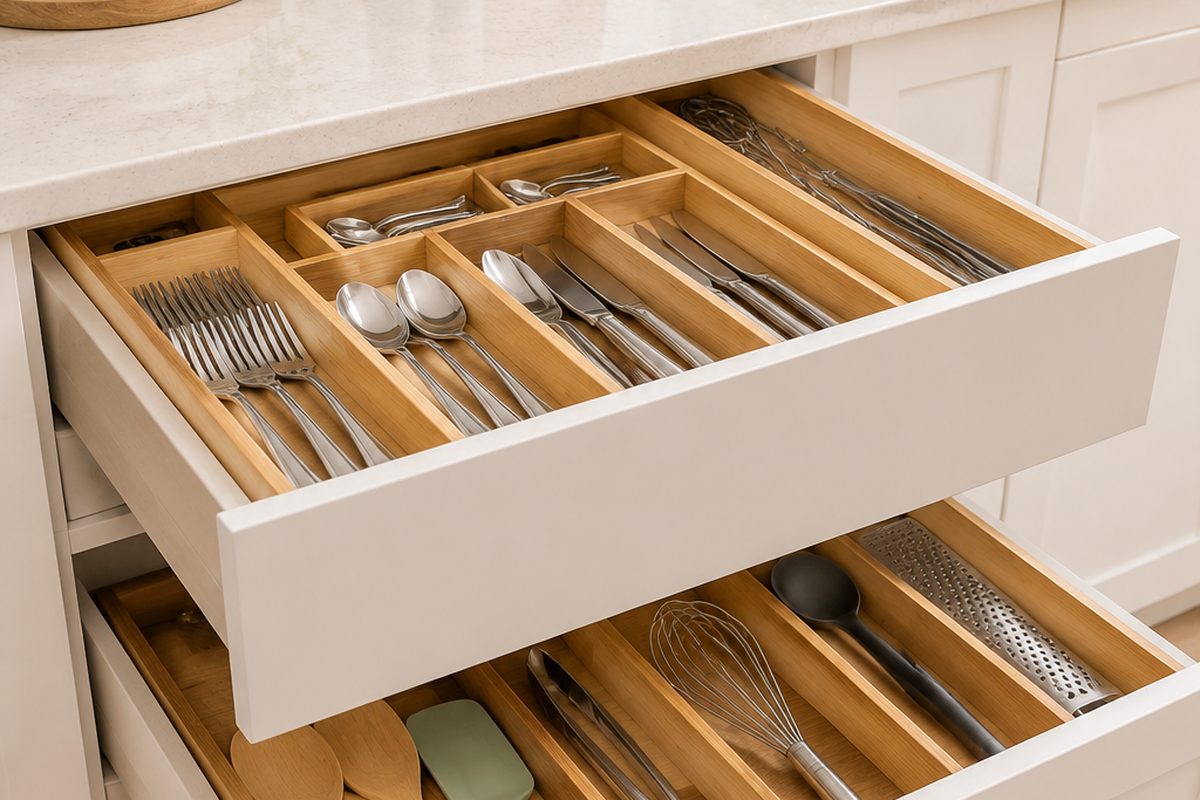
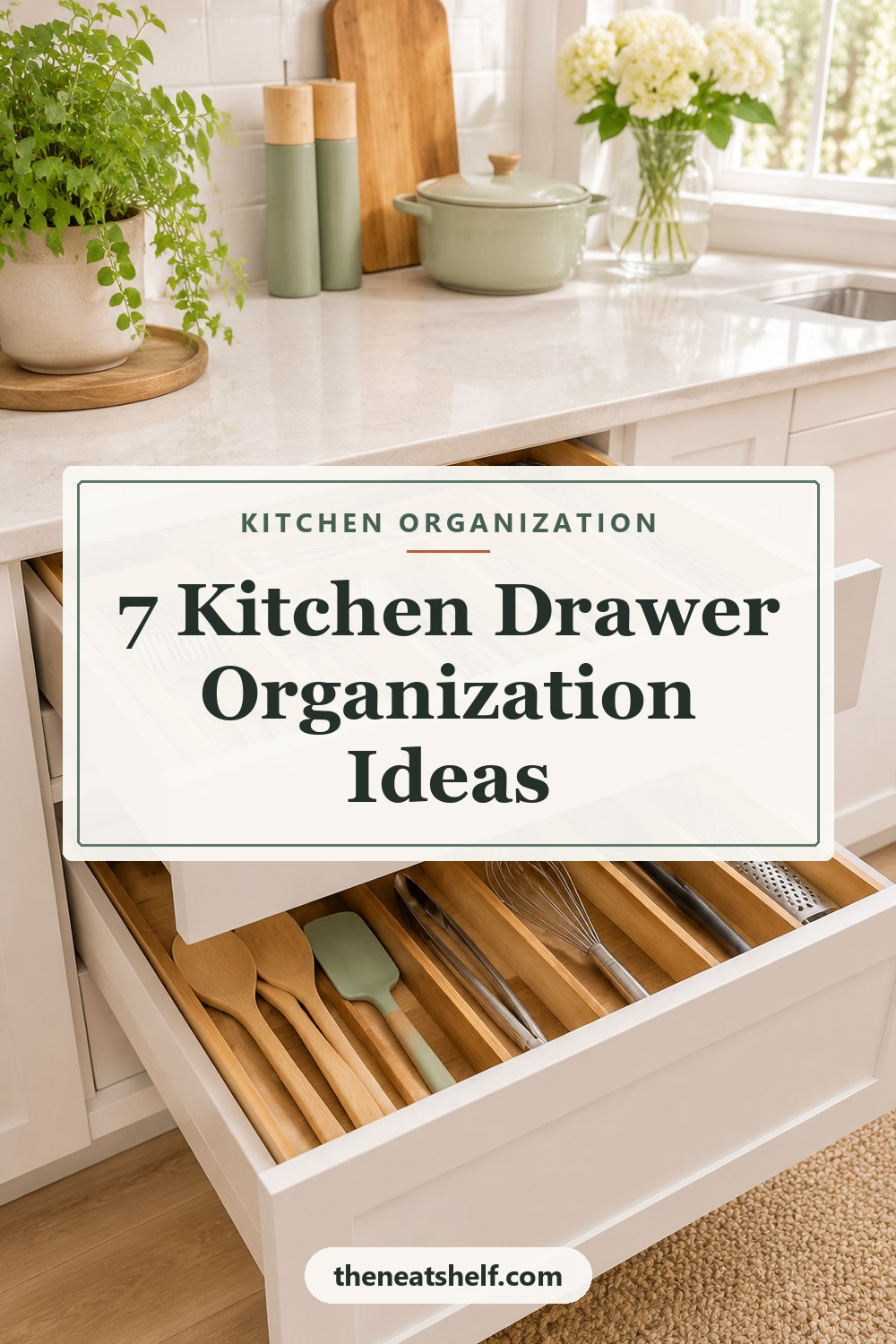
A fixed tray rarely matches the drawer, which leaves a gap where things collect. An expandable bamboo tray stretches to the full width so there is no dead space. Look for one with a long compartment at the side for serving spoons and a deep one for small tools.
3Use adjustable dividers for cooking tools
Spatulas, tongs and ladles are too long and too varied for a tray. Spring-loaded dividers press against the front and back of the drawer and create lanes of any width. Group tools by task: flipping, stirring, measuring. If the drawer will not close, the tallest tool belongs in a crock on the counter.
4Store knives in a drawer block
Loose knives in a drawer are dull and dangerous. An in-drawer knife block holds each blade in its own slot, edge down, and frees the counter space a standing block takes. Measure the drawer height first, because a block with a chef's knife in it needs about two and a half inches.
5Stand wraps and bags upright
Boxes of foil, parchment and food bags tip over and tear. A wrap organizer holds the rolls in a row with built-in cutters, and a bag dispenser files each size of zip bag in its own slot. Both let you grab what you need with one hand while the other holds the food.
6File the deep drawers
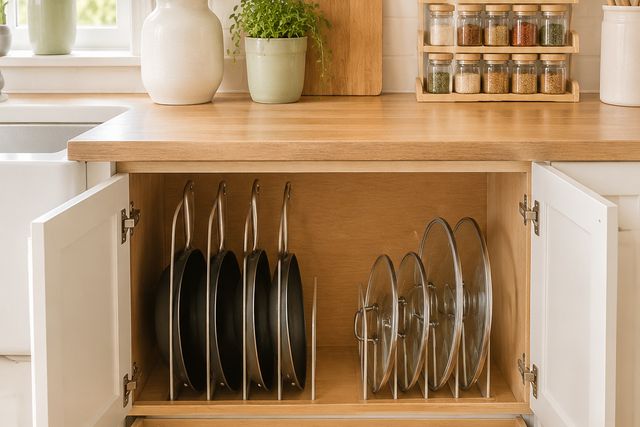
Deep drawers work best when things stand on edge. File food containers and their lids like records, and stand pot lids and cutting boards between dividers or pegs. A pegboard insert lets you move the pegs as your cookware changes, and it stops stacks from sliding when the drawer opens.
7Line the bottom so nothing slides
A grippy liner keeps trays and dividers in place and makes crumbs easy to lift out. Cut it to size with scissors. It is a small detail, but it is the difference between a drawer that looks organized on day one and one that still does in month six.
Keeping it that way
Leave one small section of one drawer empty on purpose. New tools arrive, and without a spare slot they get dropped on top of the system.
Twice a year, take out anything you have not used since the last check. A drawer with room in it is a drawer that stays tidy.
Everything mentioned in this guide
One list, so you can check sizes against your own measurements. Links go to Amazon; we may earn a commission.
Questions people ask
How do I organize a kitchen with very few drawers?
Use a counter crock for tall cooking tools, a wall rail for the ones you use daily and an in-drawer knife block to free counter space. Keep only one drawer for cutlery and one for everything else, divided into lanes.
What should go in the top drawer?
The things you reach for most. For many kitchens that is cutlery next to the dishwasher and cooking tools next to the stove. Rarely used gadgets belong lower down or in a cabinet.