11 Bookshelf Organization Ideas That Look Calm, Not Cluttered
To organize a bookshelf, take every book off, donate what you will not reread, then sort by how you look for books: genre, author or reading status. Put heavy and oversized books on the bottom shelves, mix vertical rows with a few horizontal stacks, hold rows with bookends, hide loose items in baskets and leave space on each shelf.
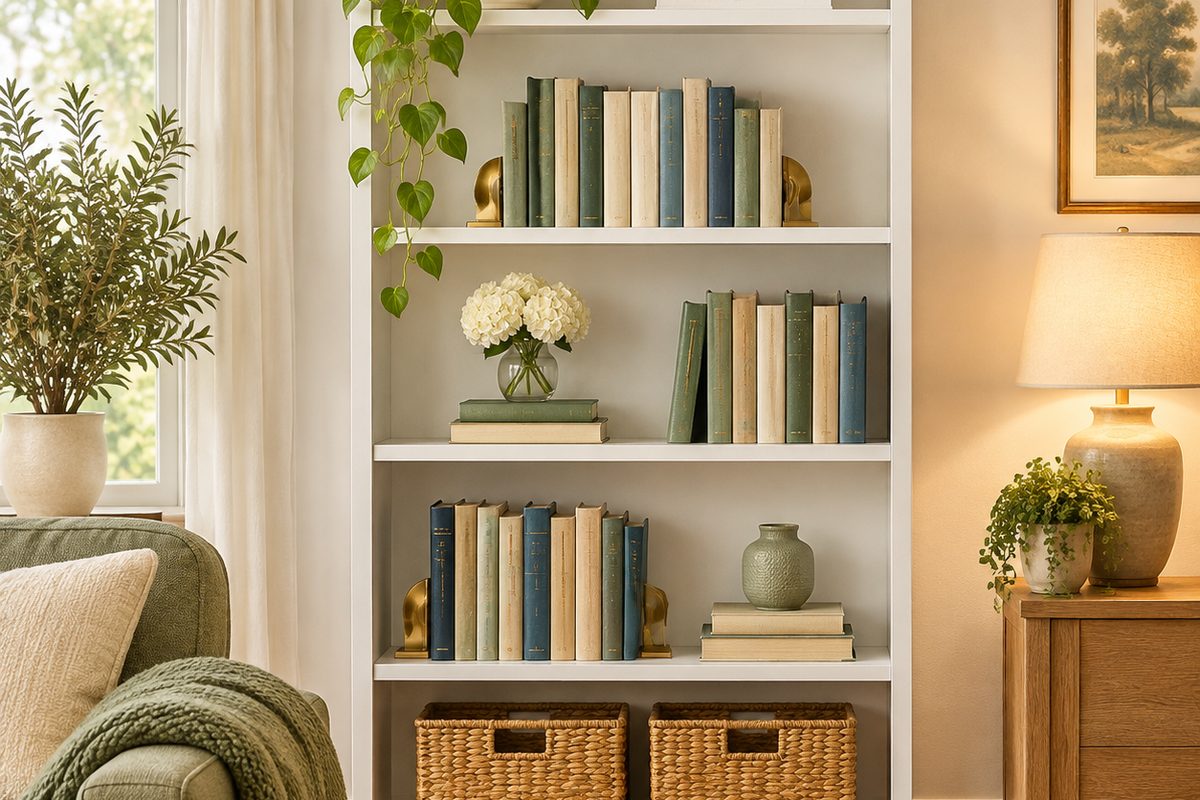
A bookshelf can hold a lot before it looks messy, and then one day it tips over into chaos: books jammed sideways on top of other books, paperbacks lost behind hardcovers and a shelf of random objects nobody remembers putting there.
The ideas below fix both the function and the look. They work for a single bookcase in a studio apartment or a whole wall of shelves, and they start where every shelf project should, with editing. For the general method that applies to any shelving unit, see how to organize shelving.
- Take every book off and edit first
- Sort by how you actually look for books
- Put heavy and oversized books on the bottom shelves
- Mix vertical rows with a few horizontal stacks
- Use bookends to keep partial rows upright
- Line books up at the front edge
- Try color order only if you remember books by their covers
- Hide small items in baskets or bins
- Style with fewer, bigger objects
- Anchor every tall bookcase to the wall
- Plan for growth and reset once a season
1Take every book off and edit first
You cannot organize a bookshelf around books that should not be there. Empty the whole unit onto the floor or a bed, wipe the shelves and handle each book once. Keep books you love, reference books you use and books you plan to read in the next year or so.
Everything else goes into a donate box: duplicates, outdated guides, books you did not enjoy and gifts you kept out of guilt. Libraries, thrift stores and little free libraries take most titles. Editing first usually frees enough space that the remaining ideas become easy. If the whole house needs this treatment, our declutter checklist by room keeps it manageable.
2Sort by how you actually look for books
There is no correct system, only the one that matches how you search. If you think 'I want a mystery,' sort by genre. If you think 'where is my Toni Morrison,' sort alphabetically by author within broad sections such as fiction and nonfiction. Families often do best with a simple split by reader: kids' books low, adult books higher.
A useful extra section is a to-be-read shelf at eye level. Unread books are the ones you are most likely to forget, and putting them in plain sight makes it easier to read what you own before buying more. Write the system down on a sticky note inside the cabinet until it sticks.
3Put heavy and oversized books on the bottom shelves
Coffee-table books, atlases, cookbooks and textbooks belong on the lowest shelves. Weight low makes the bookcase more stable, is easier on the shelves themselves and saves you from lifting a heavy book down from overhead.
Oversized books often do not fit standing upright on standard shelves, which usually leave about 10 to 12 inches (25 to 30 cm) of height. Lay them flat in stacks of three to five instead, largest on the bottom. If you can adjust the shelves, set the bottom one taller to fit the big books upright and the upper ones shorter for paperbacks. Our guide to how far apart shelves should be has spacing for each book size.
4Mix vertical rows with a few horizontal stacks
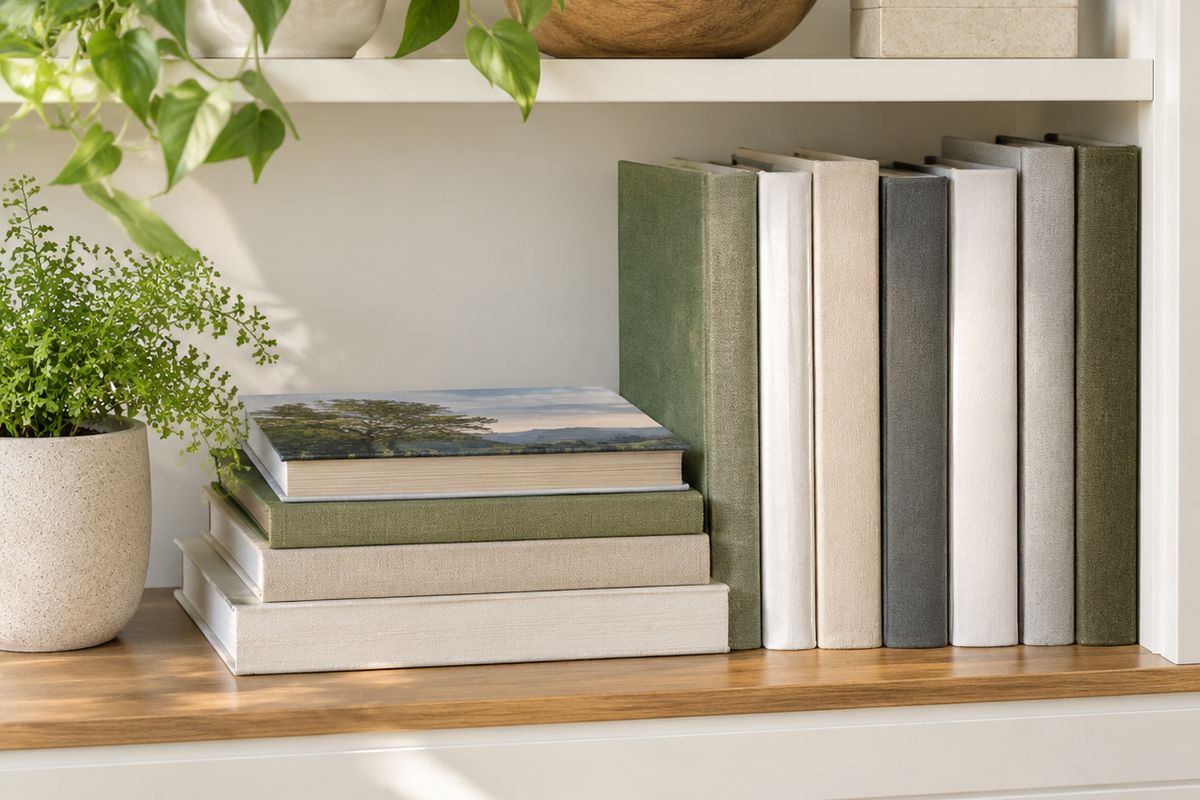
Rows of upright books from end to end look like a library; it works, but it can feel heavy. Breaking a row with a short horizontal stack of three to five books adds rhythm and gives you a natural bookend at the same time. The stack can hold a small object on top, such as a candle, a small plant or a framed photo.
Keep it to one or two horizontal stacks per shelf. More than that and the books become hard to pull out, because you have to lift the ones on top. Put books you rarely open in the stacks and the ones you reach for often in the upright rows.
5Use bookends to keep partial rows upright
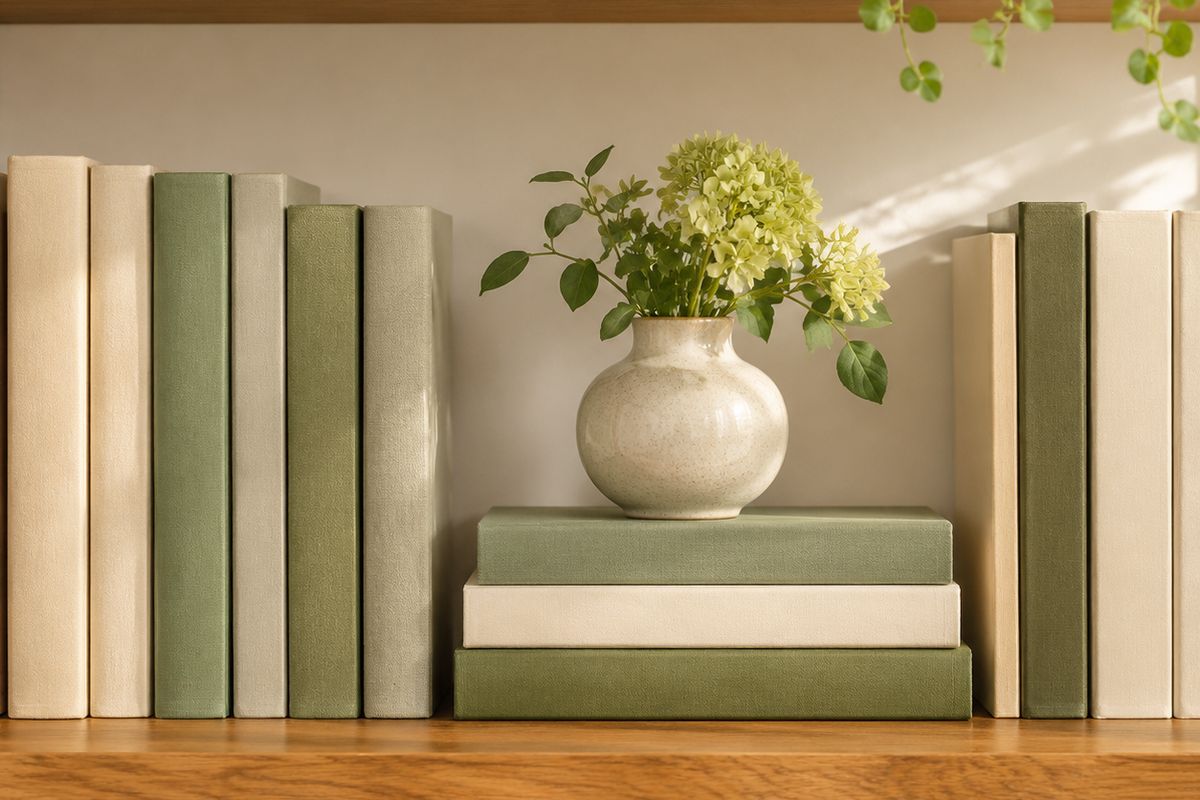
A row that only fills half a shelf will lean and slide unless something holds it. Heavy bookends, metal L-shaped ones hidden under the first book or weighted decorative ones, keep rows straight and stop the domino effect when you pull one title out.
For a clean look, choose bookends in one finish throughout the bookcase, such as black metal or brass. Thin metal bookends that slide under the end book disappear completely, which is ideal on a busy shelf. On a styled shelf, a pair of solid stone or wood bookends doubles as decoration.
6Line books up at the front edge
Pull every book forward so the spines line up about half an inch (1 cm) from the shelf edge. It is a small detail that makes a big difference: an even line of spines looks tidy even when the books are different heights and colors.
Front alignment also keeps dust from settling on the top edges of books pushed to the back, and it leaves a gap behind the books for air. On deep shelves, avoid double rows of books, front and back. The back row becomes invisible and forgotten. Use a small riser at the back instead if you truly need two rows of paperbacks.
7Try color order only if you remember books by their covers
Sorting by spine color makes a striking rainbow wall, and some people genuinely remember books by color. If you are one of them, it is a valid system. If you remember books by title or author, rainbow order will slow you down every time you look for something.
A middle path works for many homes: sort by genre or author, then keep a single color-sorted shelf for decorative hardcovers or a children's section, where kids often find books by color anyway. You can also turn a few spines inward for a neutral look, but only for books you never need to find quickly.
8Hide small items in baskets or bins
Chargers, remotes, notebooks, games and kids' craft supplies end up on bookshelves because they have no other home. Give them one. Matching baskets or fabric bins on the lowest or highest shelf hide the loose stuff and make the whole unit look calmer.
Measure the shelf height and depth before you buy, and leave about an inch (2.5 cm) at the top and front so you can grip and slide the bin out. In a cube-style bookcase, standard bins of roughly 11 or 13 inches (28 or 33 cm) fit most units, but measure yours, since sizes vary. Label opaque bins so everyone in the house knows what goes back where.
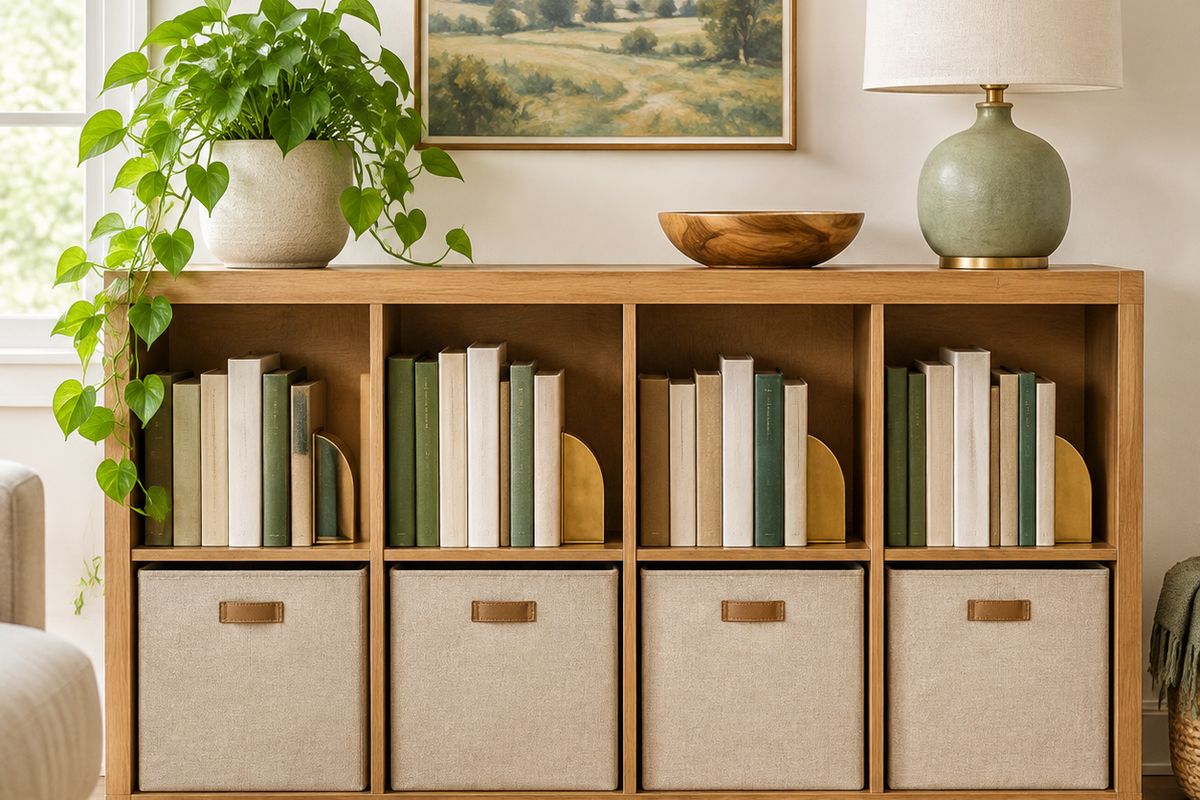
9Style with fewer, bigger objects
If your bookcase also holds decor, choose a few objects that are larger than a paperback rather than many small trinkets. A ceramic vase, a framed print leaning at the back, a plant or a sculptural bowl reads as a deliberate accent. A dozen tiny figurines read as clutter and collect dust.
Place objects in a loose zigzag across shelves so the eye moves around the unit: left on the top shelf, right on the next, center below. Leave some empty space on every shelf; about a quarter of the length bare is a good target. The empty space is what makes the books look chosen rather than stored.
10Anchor every tall bookcase to the wall
A loaded bookcase is top-heavy, and tip-overs are a real danger, especially in homes with children who climb shelves. Secure any bookcase taller than about 30 inches (76 cm) to the wall with an anti-tip kit, ideally screwed into a wall stud. Many bookcases come with a strap or bracket in the box; if yours did not, inexpensive kits fit almost any unit.
Anchoring is quick: screw one end of the strap to the back or top of the bookcase, the other into the wall, and keep heavy books on the lowest shelves. Renters can use anti-tip kits too; the small screw holes are easy to patch when you move out.
11Plan for growth and reset once a season
A bookshelf packed to the last inch has no room for new books, so the next purchase ends up stacked sideways on top. Leave room at the end of each section, or keep one shelf partly empty as an overflow zone.
Once a season, do a ten-minute reset: put strays back into their sections, move finished books from the to-read shelf into the main collection and pull a few for the donate box. A one-in, one-out habit for books keeps the collection at a size the shelf can hold. If space is the real problem, our small apartment storage ideas cover where else books can go.

Book sizes and shelf spacing
Measure your tallest books in each section before you set the shelf heights. These common sizes are a good starting point; leave about an inch (2.5 cm) of clearance above the books so you can tilt them out.
| Book type | Typical height | Shelf opening to allow |
|---|---|---|
| Mass-market paperbacks | About 7 in (18 cm) | 8 to 9 in (20 to 23 cm) |
| Trade paperbacks and novels | 8 to 9 in (20 to 23 cm) | 10 in (25 cm) |
| Standard hardcovers | 9 to 10 in (23 to 25 cm) | 11 to 12 in (28 to 30 cm) |
| Cookbooks and textbooks | 10 to 11 in (25 to 28 cm) | 12 to 13 in (30 to 33 cm) |
| Coffee-table and art books | 12 to 14 in (30 to 36 cm) | 15 in (38 cm), or lay flat |
Long shelves of particleboard or MDF can sag under a full row of books. If a shelf bows, move the heaviest books to a shorter span or add a center support.
Bookshelf mistakes to avoid
- Double-rowing books on deep shelves. The back row disappears; use a riser or edit instead.
- Stacking books sideways on top of upright rows. It looks messy and damages spines over time.
- Packing shelves tight. Books get bent pulling them out and there is no room for new ones.
- Leaving tall bookcases unanchored. Loaded shelves are top-heavy; strap them to a stud.
- Putting books in direct sunlight. Spines fade quickly in a sunny window.
Keeping it that way
Start with editing, then put heavy books low, sort the rest by how you search and finish with bookends and baskets. The styling comes last, and it is easiest when the shelf has room to breathe.
If your bookcase doubles as a desk hutch or office storage, our home office organization ideas show how to keep papers and books from mixing.
Get the free Declutter Kit
A 7-page printable: room-by-room checklists, the 30-day challenge calendar and a 10-minute weekly reset. Free, straight to your inbox.
Everything mentioned in this guide
One list, so you can check sizes against your own measurements. Links go to Amazon; we may earn a commission.
Questions people ask
What is the best way to organize a bookshelf?
Edit first, then sort by how you look for books: genre, author or reader. Put heavy books on the bottom shelves, use bookends for partial rows and keep loose items in baskets.
How do you make a bookshelf look aesthetic?
Line spines up at the front edge, break rows with a few horizontal stacks, add a handful of larger decor pieces in a zigzag and leave about a quarter of each shelf empty.
Should books be organized by color?
Only if you remember books by their covers. Otherwise sort by genre or author and keep color order for a single decorative shelf or a kids' section.
How many books should go on a shelf?
Fill a shelf to about three quarters of its length. That leaves room to pull books out easily, add new ones and place a bookend or small object.
How do you organize a bookshelf with lots of books?
Use the full height: adjust shelves to fit each book size, lay oversized books flat and add a riser for paperbacks. See how far apart shelves should be for spacing.
Do bookshelves need to be anchored to the wall?
Yes, tall bookcases should be. A loaded bookcase is top-heavy and can tip, especially if a child climbs it. Use an anti-tip strap screwed into a wall stud.