10 Floating Shelf Ideas for Small Spaces (Every Room)
Floating shelves suit small spaces as narrow 6 to 10 inch ledges for light everyday items: books above a sofa, towels over a toilet, mugs in a kitchen, a nightstand ledge by the bed and a catch-all with hooks in an entry. Screw brackets into studs, use rated anchors otherwise and keep heavy items near the wall.
Floating shelves are one of the best tools for small homes. They add storage without a footprint on the floor, they look lighter than a bookcase and a narrow shelf fits places nothing else can, like the strip of wall beside a door or above a toilet.
The catch is that a floating shelf hides its bracket inside the board, so it is only as strong as what holds it to the wall. Below are floating shelf ideas for each room, followed by what they can safely hold, which anchors to use and what renters can do. For spacing and height in more detail, see how high to hang shelves, and for keeping any shelf tidy, how to organize shelving.
- Living room: staggered shelves above the sofa
- Living room: a picture ledge for a rotating display
- Bathroom: shelves over the toilet
- Bathroom: a narrow ledge beside the sink
- Kitchen: a coffee or mug shelf
- Kitchen: a spice or oil ledge near the stove
- Bedroom: a floating shelf as a nightstand
- Bedroom or office: a shelf above the desk
- Entry: a catch-all shelf with hooks
- Corners: a floating corner shelf
1Living room: staggered shelves above the sofa
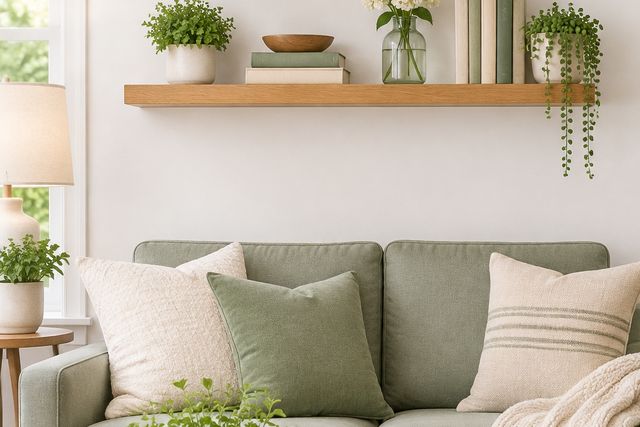
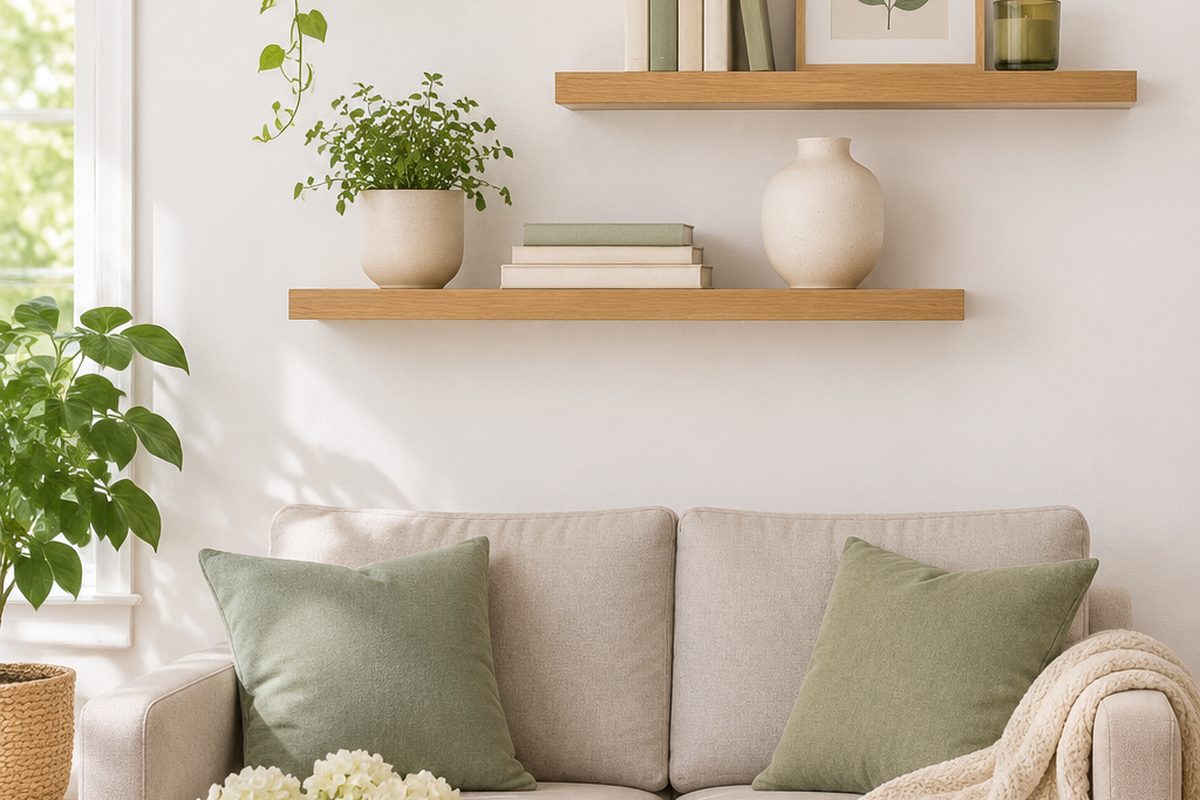
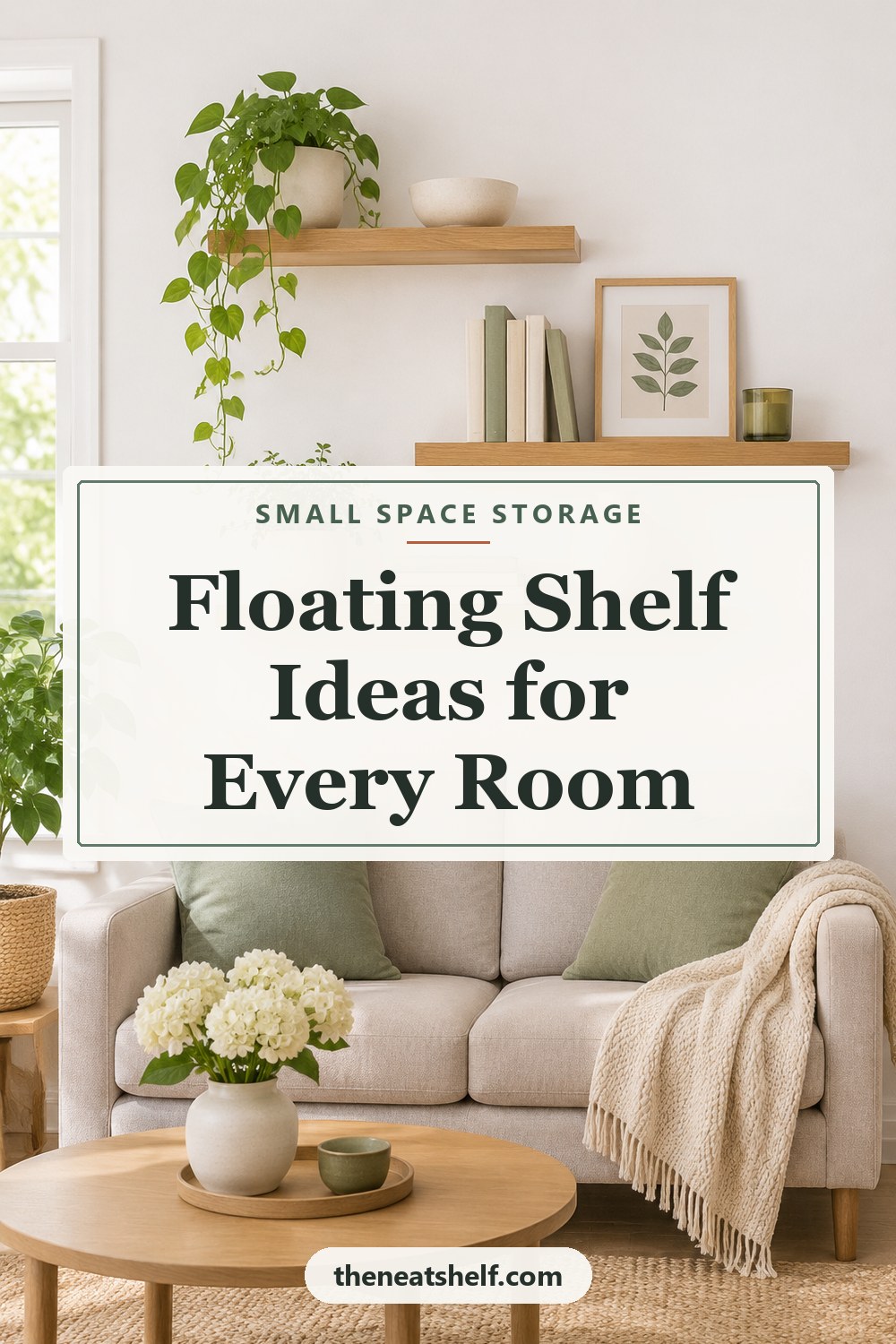
The wall above a sofa is often the biggest empty surface in a small living room. Two or three floating shelves, staggered or stacked, give you a place for books, plants and photos without crowding the room. Hang the lowest shelf about 10 to 12 inches (25 to 30 cm) above the sofa back so heads do not bump it.
Keep the arrangement narrower than the sofa, roughly two-thirds of its width, so it looks anchored to the furniture. Shelves 8 to 10 inches (20 to 25 cm) deep hold paperbacks and small plants comfortably. Leave space between objects; floating shelves look their best when they are not full.
2Living room: a picture ledge for a rotating display
A picture ledge is a very shallow floating shelf, usually 3 to 4 inches (8 to 10 cm) deep, with a lip at the front. It holds framed photos, art prints and kids' drawings without nails in the wall for each frame. You can rearrange the whole display in a minute.
Ledges also work for slim book displays in a kids' room, with covers facing out so children can see and choose. Because they carry so little weight, picture ledges are a good first floating shelf for anyone nervous about wall mounting, and they are easy to hang level with a single pair of screws into a stud.
3Bathroom: shelves over the toilet
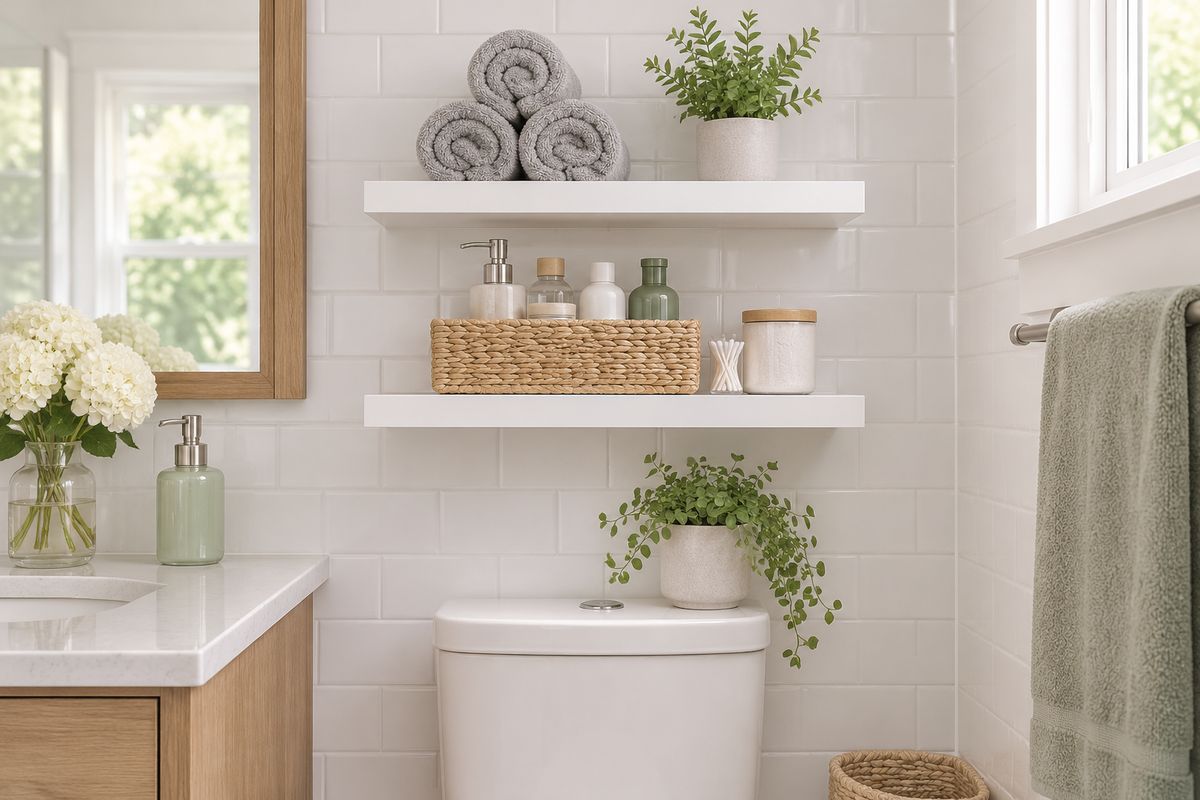
In a small bathroom, the wall above the toilet is the most useful unused space. Two floating shelves there hold spare towels, extra toilet paper and a small basket of everyday toiletries. Hang the lowest shelf at least 20 to 24 inches (51 to 61 cm) above the tank so you can still lift the lid for repairs.
Choose shelves with a sealed, water-resistant finish, since bathrooms are humid, and leave a little space between shelves for rolled towels. A lidded jar or small basket keeps cotton pads and spare soap from looking scattered. See our over the toilet shelf ideas for more layouts and our small bathroom storage ideas for the rest of the room.
4Bathroom: a narrow ledge beside the sink
If the vanity has no counter space, a single floating shelf about 5 to 6 inches (13 to 15 cm) deep on the side wall, or directly above the faucet below the mirror, holds a toothbrush cup, hand soap and a skincare bottle or two.
Keep it shallow so you do not hit your head when you lean over the sink, and keep anything glass close to the wall. A shelf in this spot gets splashed, so use a sealed wood, painted or solid surface shelf and wipe it weekly. Glass or acrylic shelves are good here too, because they disappear visually in a tiny room.
5Kitchen: a coffee or mug shelf
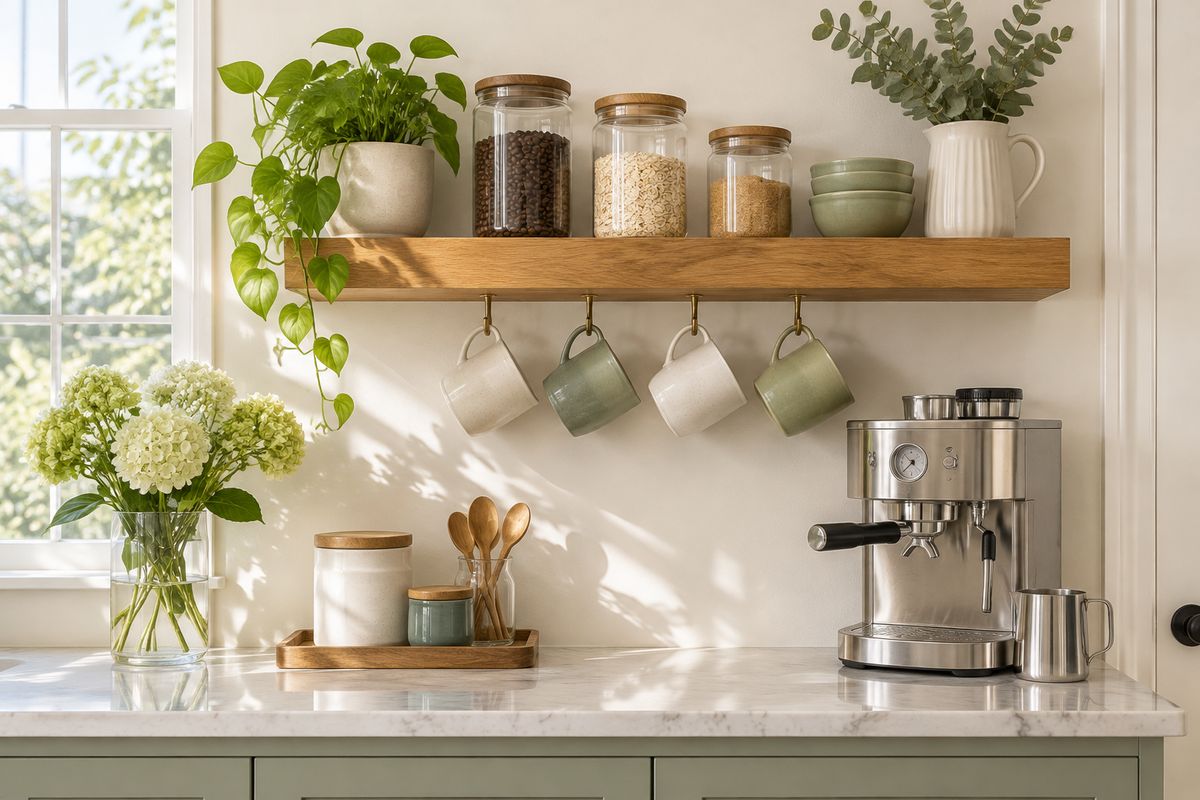
A small floating shelf above a coffee station turns a corner of counter into a dedicated zone. Keep mugs, a canister of beans or pods and a sugar jar together, so the morning routine happens in one place.
Add screw-in hooks under the shelf to hang mugs and free the shelf top for canisters. Mugs are light, but a row of ceramic ones adds up, so mount the shelf into studs. Keep it away from the stove so grease does not build up. For a whole wall of kitchen shelving, see how to style open kitchen shelves.
6Kitchen: a spice or oil ledge near the stove
A shallow floating shelf, 4 to 5 inches (10 to 13 cm) deep, mounted beside the range but not directly over it, holds the oils, salt and four or five spices you use daily. Everything stays within reach while you cook, in a single row so nothing hides.
Use a finish you can wipe easily, since cooking splatter reaches it. Keep the rest of the spice collection in a drawer or cabinet; a ledge with twenty jars looks cluttered and collects grease. Choose bottles with pour spouts and jars with shaker lids so you can season with one hand while you stir with the other.
7Bedroom: a floating shelf as a nightstand
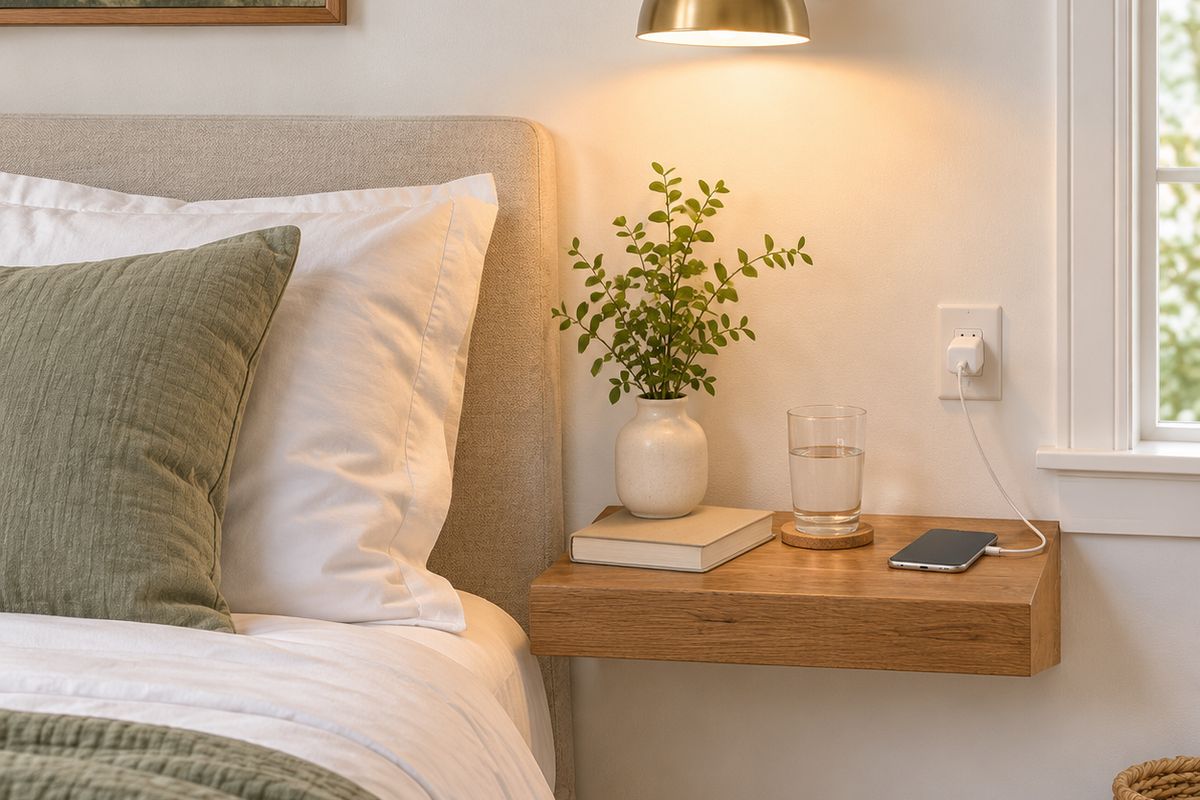
In a bedroom too small for a nightstand, a floating shelf beside the bed does the job without blocking the floor. Mount it at roughly the height of the mattress top, often 24 to 28 inches (61 to 71 cm) from the floor, so you can reach a glass of water or your phone without sitting up.
A depth of 10 to 12 inches (25 to 30 cm) holds a small lamp, a book and a charger. Choose a shelf with a small drawer or add a slim tray to keep earbuds and hair ties together. A plug-in wall sconce above it frees the shelf from a lamp entirely.
8Bedroom or office: a shelf above the desk
A floating shelf 15 to 20 inches (38 to 51 cm) above a desk keeps reference books, a pencil cup and a plant off the work surface while staying in view. Mount it high enough that a monitor or laptop screen fits underneath.
Use it for things you use weekly, not daily; daily items belong on the desk or in a drawer. A pair of shelves offset left and right looks lighter than one long board, and it leaves room for a lamp or a pinboard between them. Keep the shelf at least 2 inches (5 cm) narrower than the desk on each side so it does not feel top-heavy.
9Entry: a catch-all shelf with hooks
A small entryway often has no room for a console table. A floating shelf mounted about 60 to 66 inches (152 to 168 cm) from the floor, with a row of hooks below or a hook rail attached underneath, gives you a landing spot for keys, sunglasses and mail and a place for bags and coats.
A small tray or dish on the shelf keeps keys from scattering. Choose a depth of 6 to 8 inches (15 to 20 cm) so it does not stick out into a narrow hall. For more layouts, see our entryway shelf ideas.
10Corners: a floating corner shelf
Corners are the hardest spots to use in a small room, and a triangular or quarter-round floating shelf fits them neatly. In a bathroom shower corner, a corner shelf holds shampoo; in a living room, a stack of two or three holds plants and small books; in a kitchen, it holds cookbooks at the end of a counter.
Corner shelves usually mount into two walls, which makes them sturdy even with a modest bracket. In a shower, choose a rust-resistant metal or a rated adhesive shelf designed for wet areas, and keep glass bottles off it so a slip does not end in broken glass on tile.
How much can a floating shelf hold?
The honest answer is: whatever the bracket and the wall allow, and the package rating is the ceiling. A hidden bracket screwed into wall studs can carry books and dishes. The same shelf on drywall anchors may only be suitable for decor. Studs in most US homes are 16 inches (41 cm) apart on center, sometimes 24 inches (61 cm), so a 24- or 32-inch shelf can usually catch two studs.
Depth matters as much as the fastener. The deeper the shelf, the more leverage a heavy object at the front edge puts on the bracket, so keep heavy things close to the wall.
| Mounting method | Good for | Notes |
|---|---|---|
| Screws into wood studs | Books, dishes, heavier loads | Strongest option; use a stud finder and at least two studs |
| Toggle or snap-toggle bolts in drywall | Medium loads between studs | Follow the package rating and use one per bracket hole |
| Self-drilling drywall anchors | Light decor, small plants | Check the rating; many are meant for light loads only |
| Plastic expansion anchors | Very light items only | Not recommended for floating shelves that hold books |
| Masonry anchors in brick or concrete | Most loads | Use a masonry bit and anchors matched to the wall |
Use the lower of the bracket rating and the anchor rating, and stay well under it. Never hang floating shelves above a bed or crib with heavy or breakable items on them.
Renter-friendly floating shelf options
Many leases allow small nail or screw holes, which patch easily with spackle when you move out. Check your lease, and if drilling is out, these work without big holes:
- Picture ledges hung with two small screws: tiny holes, easy to patch.
- Adhesive shelves rated for the load, best for bathrooms and very light items.
- Leaning ladder shelves, which rest against the wall and need only a small anti-tip strap.
- Tension-pole shelving units that press between floor and ceiling.
- Over-the-door shelves for bathrooms and closets.
Keeping it that way
Pick one wall, decide what the shelves need to hold, and choose the depth and mounting method from that, not the other way around. A narrow, well-anchored shelf that holds exactly what you need beats a deep one that sags.
For more ways to make a small home work harder, see our small apartment storage ideas.
Get the free Declutter Kit
A 7-page printable: room-by-room checklists, the 30-day challenge calendar and a 10-minute weekly reset. Free, straight to your inbox.
Everything mentioned in this guide
One list, so you can check sizes against your own measurements. Links go to Amazon; we may earn a commission.
Questions people ask
How much weight can a floating shelf hold?
It depends on the bracket, the shelf depth and the wall. Shelves screwed into studs can carry books and dishes; shelves on drywall anchors are often only for light items. Always check the rating on the package and stay under it.
Do floating shelves need to go into studs?
For anything heavy, yes. Use at least two studs if the shelf is long enough. Between studs, use toggle bolts rated for the load and keep items light.
How deep should floating shelves be?
Most work best between 6 and 10 inches (15 to 25 cm). Use 3 to 4 inches (8 to 10 cm) for picture ledges and 10 to 12 inches (25 to 30 cm) for a nightstand or kitchen plates.
How high should floating shelves be above a sofa?
Hang the lowest shelf about 10 to 12 inches (25 to 30 cm) above the sofa back. See how high to hang shelves for other furniture.
Can renters install floating shelves?
Often, yes. Many leases allow small screw holes that are easy to patch. Without drilling, try adhesive shelves for light items, a leaning ladder shelf or a tension-pole unit.
Why is my floating shelf sagging?
Usually the anchors are pulling out of drywall or the load sits too far forward. Remount into studs or toggle bolts, check the bracket is level and move heavy items toward the wall.