How Far Apart Should Shelves Be? Shelf Spacing Guide
Most shelves should be 10 to 15 inches (25 to 38 cm) apart. Space them 9 to 10 inches for paperbacks, 11 to 12 inches for hardcovers, 13 to 15 inches for oversized books and cereal boxes, and 12 to 16 inches for linens. The rule: the tallest item plus 1 to 2 inches of finger room.
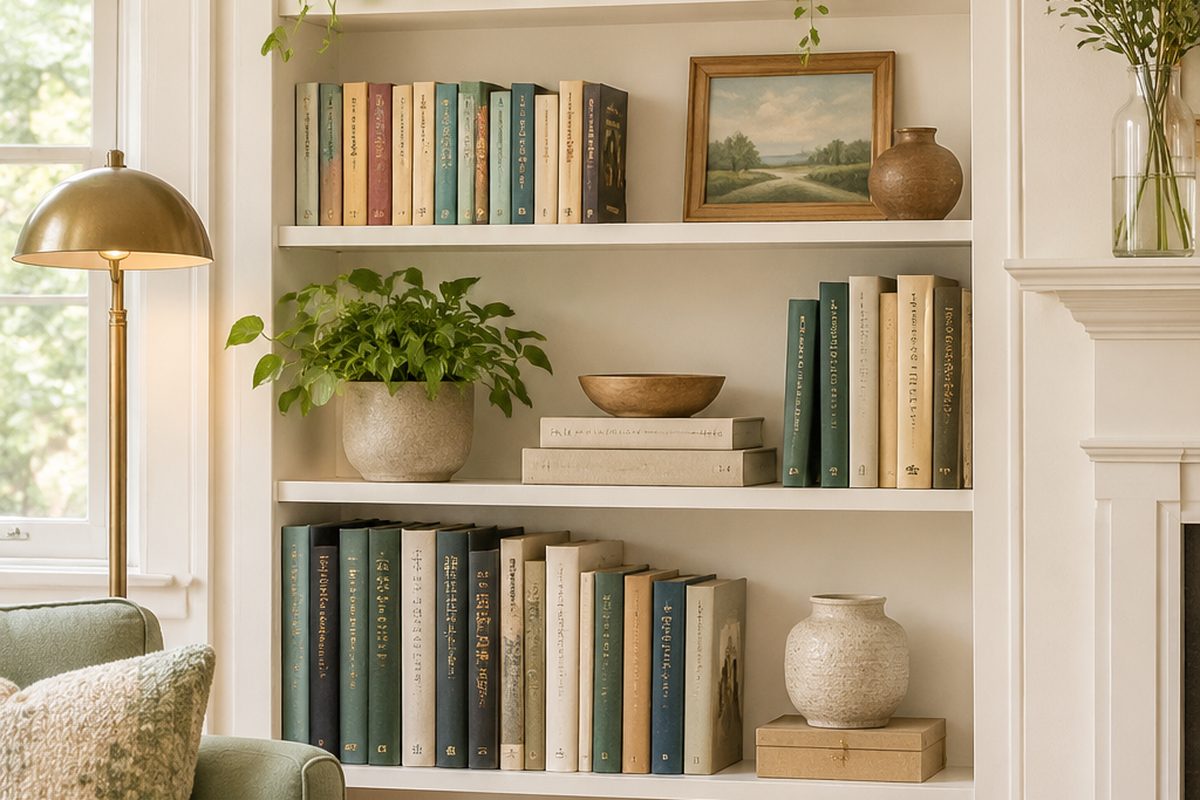
Shelf spacing is the most overlooked part of shelving. Most bookcases and closets come with shelves spaced evenly for no reason at all, which leaves a gap of air above short things and no room at all for tall ones.
The fix takes ten minutes on adjustable shelves: measure your tallest item for each shelf, add finger room, and move the pins. Below are the spacing numbers that work for books, pantry food, kitchen cabinets, linens and garage bins, and how to plan spacing when you are building shelves from scratch.
| What goes on the shelf | Spacing between shelves | Typical item height |
|---|---|---|
| Paperback books | 9 to 10 in (23 to 25 cm) | 7 to 9 in |
| Hardcover books | 11 to 12 in (28 to 30 cm) | 9 to 10.5 in |
| Oversized and art books | 13 to 15 in (33 to 38 cm) | 12 to 14 in |
| Pantry cans | 7 to 8 in (18 to 20 cm) | About 4.5 in, or 9 in stacked two |
| Cereal and tall boxes | 13 to 16 in (33 to 41 cm) | About 12 in |
| Kitchen upper cabinets | 8 to 12 in (20 to 30 cm) | Glasses, mugs, stacked plates |
| Linen closet | 12 to 16 in (30 to 41 cm) | Stacks of 3 to 5 towels |
| Garage storage bins | Bin height + 2 to 3 in, often 16 to 20 in | Most large lidded bins are 12 to 17 in tall |
Measure from the top of one shelf to the underside of the shelf above.
1The rule: tallest item plus 1 to 2 inches
Every spacing number in this guide comes from one rule. Measure the tallest thing that will live on the shelf, then add 1 inch (2.5 cm) if you slide items out, like books, or 2 inches (5 cm) if you tilt or lift them out, like jars and boxes. Bins with handles need 2 to 3 inches so you can grip and tilt them.
Group items of similar height on the same shelf. One tall vase on a shelf of paperbacks forces the whole shelf to be tall, which wastes space across its full width. Our guide on how to organize shelving covers zoning shelves by category.
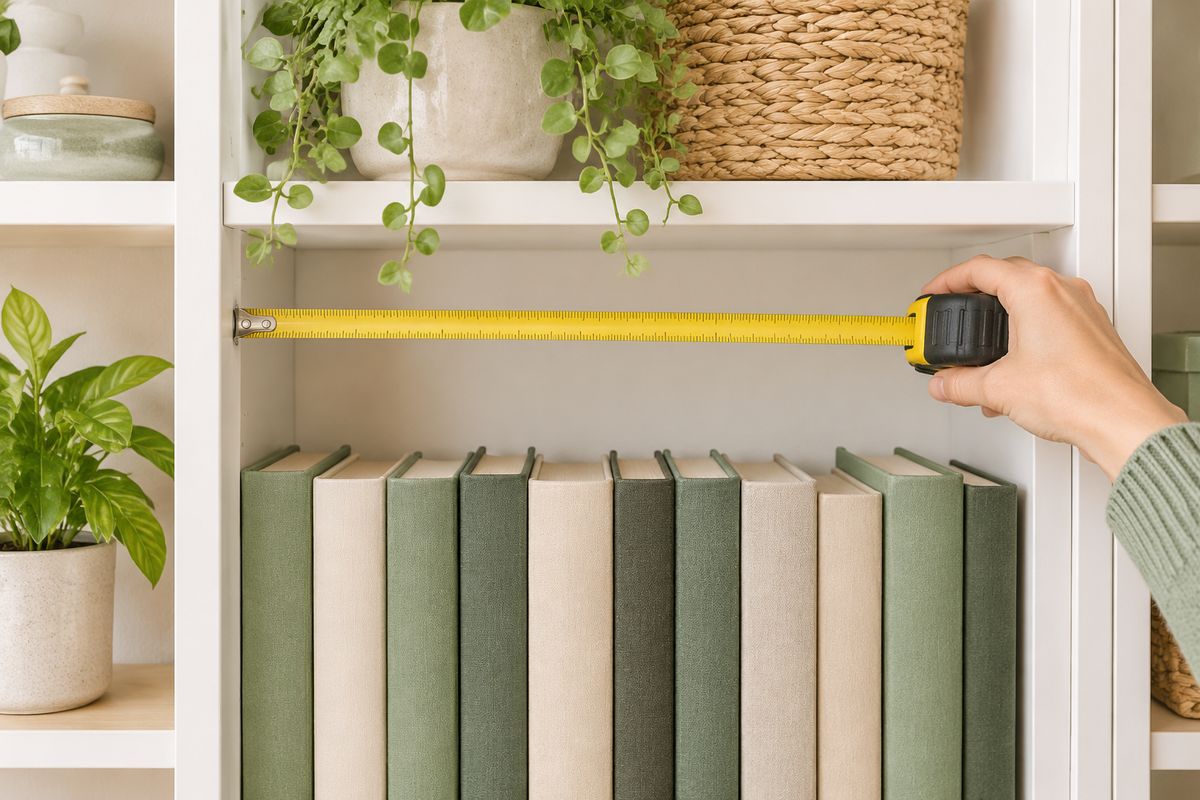
2Books: 9 to 15 inches
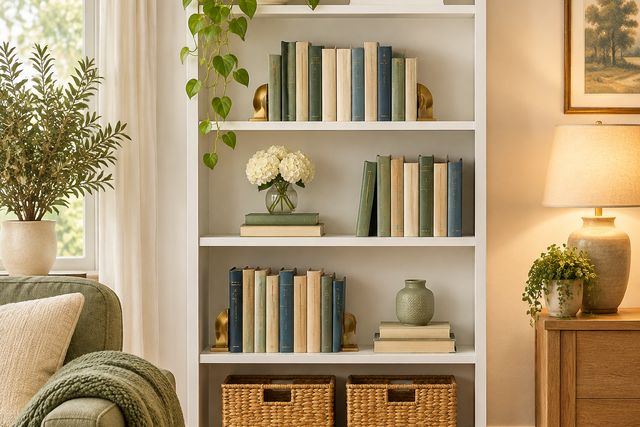
Mass-market paperbacks are about 7 inches (18 cm) tall and trade paperbacks 8 to 9 inches (20 to 23 cm), so 9 to 10 inches of spacing fits them neatly. Standard hardcovers run 9 to 10.5 inches (23 to 27 cm), so plan 11 to 12 inches. Coffee table and art books are often 12 to 14 inches tall and belong on the lowest shelf with 13 to 15 inches of space, where their weight is also safest.
A bookcase 10 to 12 inches (25 to 30 cm) deep fits nearly all books. Ideas for arranging them in bookshelf organization ideas.
3Pantry: 7 inches for cans, 14 for cereal
A standard 15-ounce can is a little over 4 inches tall, so a shelf for single cans can be just 7 to 8 inches (18 to 20 cm) from the shelf above, and a tiered can riser fits in about 10 inches. Two cans stacked need about 10 to 11 inches. Cereal boxes are roughly 12 inches tall and need 13 to 16 inches.
Plan your pantry from top to bottom: light backstock high, cans and jars at eye level on close-set shelves, boxes below, and 18 inches or more at the bottom for bulk packs. Depth matters too; see how deep pantry shelves should be.
4Kitchen cabinets: set each shelf to its job
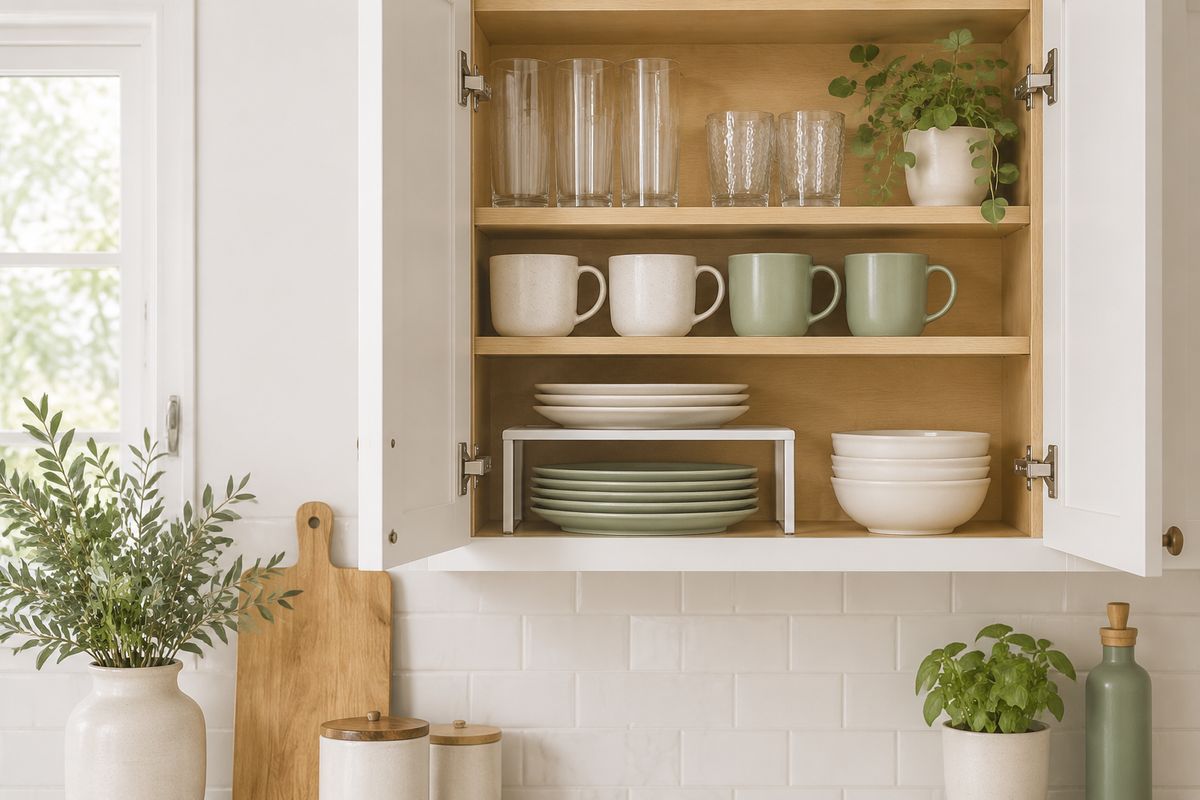
Standard upper cabinets are 30 to 42 inches (76 to 107 cm) tall with two or three adjustable shelves. Drinking glasses and mugs need 6 to 8 inches (15 to 20 cm); a stack of dinner plates, 8 to 10 inches; tall glasses, wine glasses and pitchers, 10 to 12 inches.
Put everyday dishes on the lowest shelf, which on a cabinet mounted 18 inches above the counter sits around 54 inches from the floor, and save the top shelf for serving pieces you use a few times a year. When you cannot add another shelf, a shelf riser creates a second level for plates or mugs in the extra air. More layouts in kitchen cabinet organization ideas.
5Linen closets: 12 to 16 inches
Linen stacks look neat at three to five folded towels or two folded sheet sets, which comes out to 10 to 14 inches tall. Spacing shelves 12 to 16 inches (30 to 41 cm) apart keeps stacks short enough not to topple and leaves room to pull one towel out without the stack sliding.
If your linen closet came with shelves 20 inches or more apart, add a shelf or use shelf dividers and bins. Bulky items like comforters and spare pillows go on the top shelf, which can be taller, 18 to 20 inches, since you only reach up there a few times a year. Store sheet sets folded inside one of their own pillowcases so each set stays together in one short stack.
6Closet shelves and shoes
Folded sweaters and jeans stack well at 10 to 12 inches tall, so space closet shelves 12 to 14 inches (30 to 36 cm) apart. Flat shoes, sneakers and sandals need 6 to 8 inches (15 to 20 cm) between shoe shelves; heels 8 to 10 inches; ankle boots about 10 to 12 inches; tall boots 16 inches or more, or a bottom shelf with no shelf above.
The shelf above a closet rod is different: it usually sits 2 to 3 inches above the rod, around 68 to 70 inches from the floor, and the space above it is open to the ceiling. Keep stacks there short and light, and use bins with handles for anything above shoulder height. Closet shelves are typically 12 to 16 inches deep, which suits folded clothes and shoe boxes alike.
7Garage and basement: size to the bin
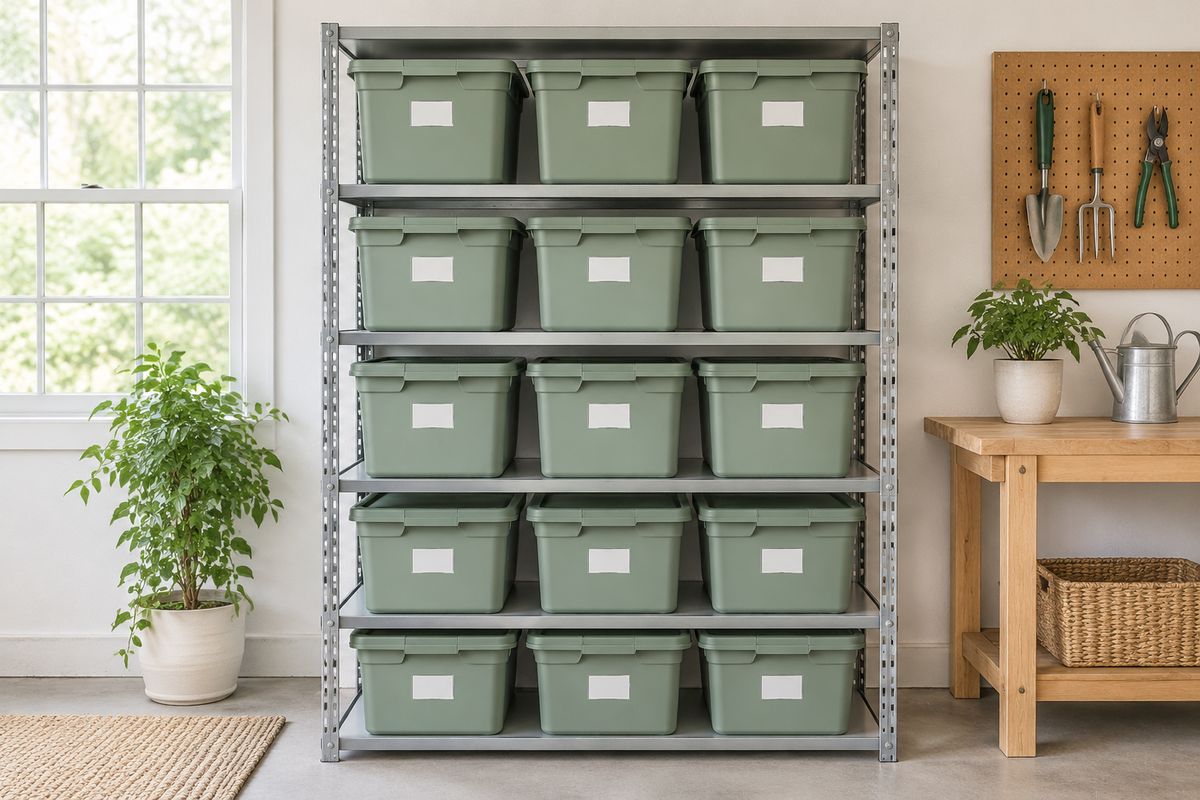
In the garage, the bin decides everything. Buy your bins first, then measure their height with the lid on and add 2 to 3 inches (5 to 8 cm) so you can tilt them out. Many large lidded bins are 12 to 17 inches tall, which usually means shelves 16 to 20 inches (41 to 51 cm) apart. Leave the bottom open or set it 24 inches or more for paint cans, tool cases and bags of soil.
Using one bin size for a whole unit means one spacing works everywhere, and bins can swap places without moving a single shelf.
Planning spacing when you build shelves
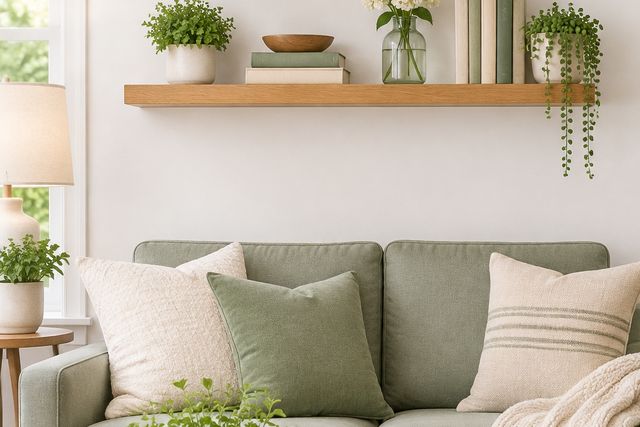
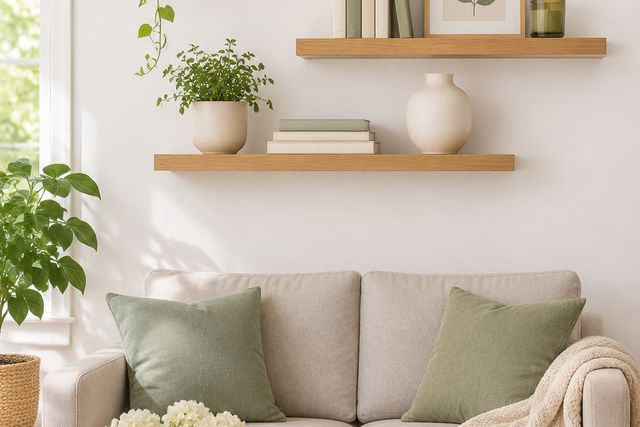
Choose adjustable shelf standards or a line of shelf-pin holes whenever you can, so the spacing can change. If you are building fixed shelves, plan from the bottom: the heaviest, tallest items first, then lighter and shorter items above. Open wall shelves look best at 10 to 14 inches apart with even gaps.
Shelf thickness and span matter as much as spacing. For books, a 3/4-inch (19 mm) particleboard shelf should span no more than about 30 inches (76 cm); solid wood and plywood can go a little farther. On long spans, add a center support or a front edge strip to stop sagging. For mounting heights, see how high to hang shelves.
Common shelf spacing mistakes
- Spacing every shelf evenly. Uneven spacing that matches your items stores far more.
- Leaving no finger room. If you have to tilt a book to remove it, add an inch.
- Putting tall, heavy items up high. Oversized books and bins belong low.
- Ignoring the top shelf reach. Most adults can reach a shelf at about 72 inches (183 cm) without a step stool; above that, store only light items.
- Too many shelves in a pantry. Very close spacing on deep shelves hides food; use risers instead.
Keeping it that way
Start by measuring the tallest thing on each shelf, add an inch or two, and move the pins. Most people gain a full extra shelf in a bookcase or pantry this way, without buying anything.
For wire units in the pantry or garage, our wire shelving organization ideas show how to fit bins and baskets to the spacing.
Get the free Declutter Kit
A 7-page printable: room-by-room checklists, the 30-day challenge calendar and a 10-minute weekly reset. Free, straight to your inbox.
Everything mentioned in this guide
One list, so you can check sizes against your own measurements. Links go to Amazon; we may earn a commission.
Questions people ask
What is the standard distance between shelves?
There is no single standard, but most shelves are spaced 10 to 15 inches (25 to 38 cm) apart. Bookcases often use 11 to 12 inches, and pantries 12 to 16 inches.
How far apart should bookshelves be?
9 to 10 inches for paperbacks, 11 to 12 inches for hardcovers and 13 to 15 inches for oversized books. Put the tallest, heaviest books on the bottom shelf.
How much space do you need above items on a shelf?
About 1 inch for items you slide out, like books, and 2 to 3 inches for jars, boxes and bins you need to tilt or lift.
How far apart should floating shelves be?
10 to 14 inches apart for books and decor. Closer looks crowded, and farther than about 16 inches makes the group look disconnected.
How far apart should garage shelves be?
Measure your bins with the lid on and add 2 to 3 inches. For many large bins that means 16 to 20 inches between shelves, with a taller bottom section for heavy items.