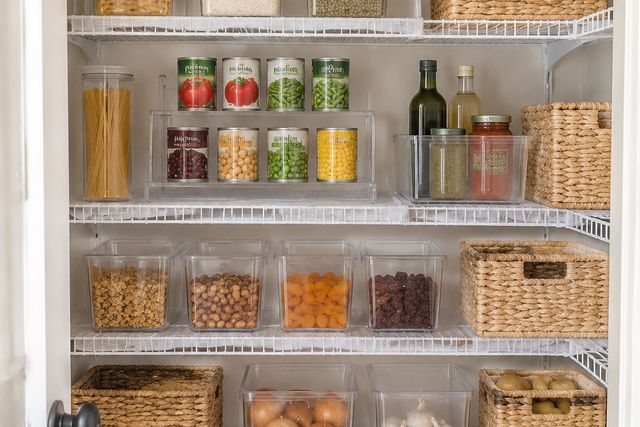
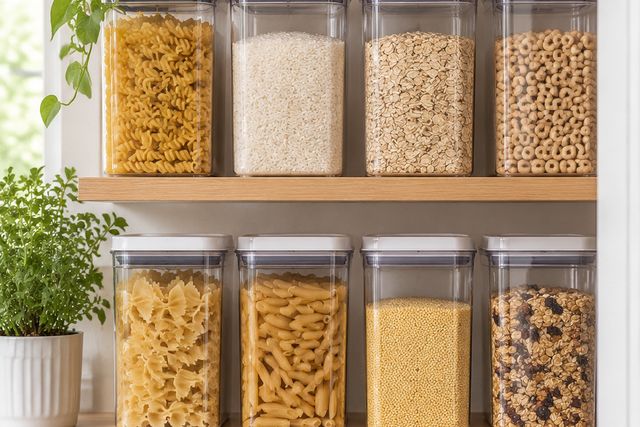
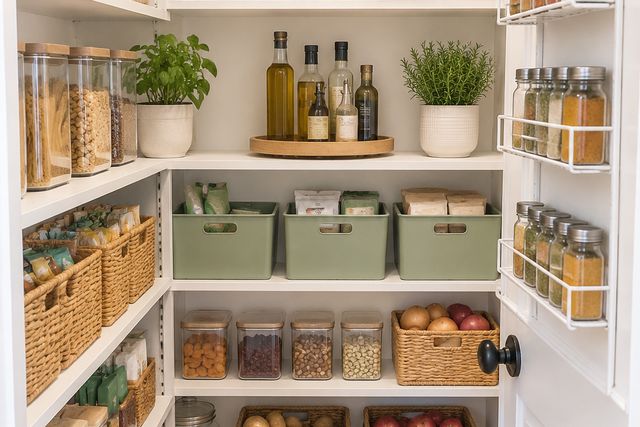
How Deep Should Pantry Shelves Be? Ideal Depths by Type
Pantry shelves should be 12 to 16 inches (30 to 41 cm) deep. Twelve inches is ideal for cans, jars and spices because nothing hides behind another item, while 16 inches suits cereal boxes and bulk packs. Go up to 20 to 24 inches (51 to 61 cm) only on bottom shelves for appliances and bins.
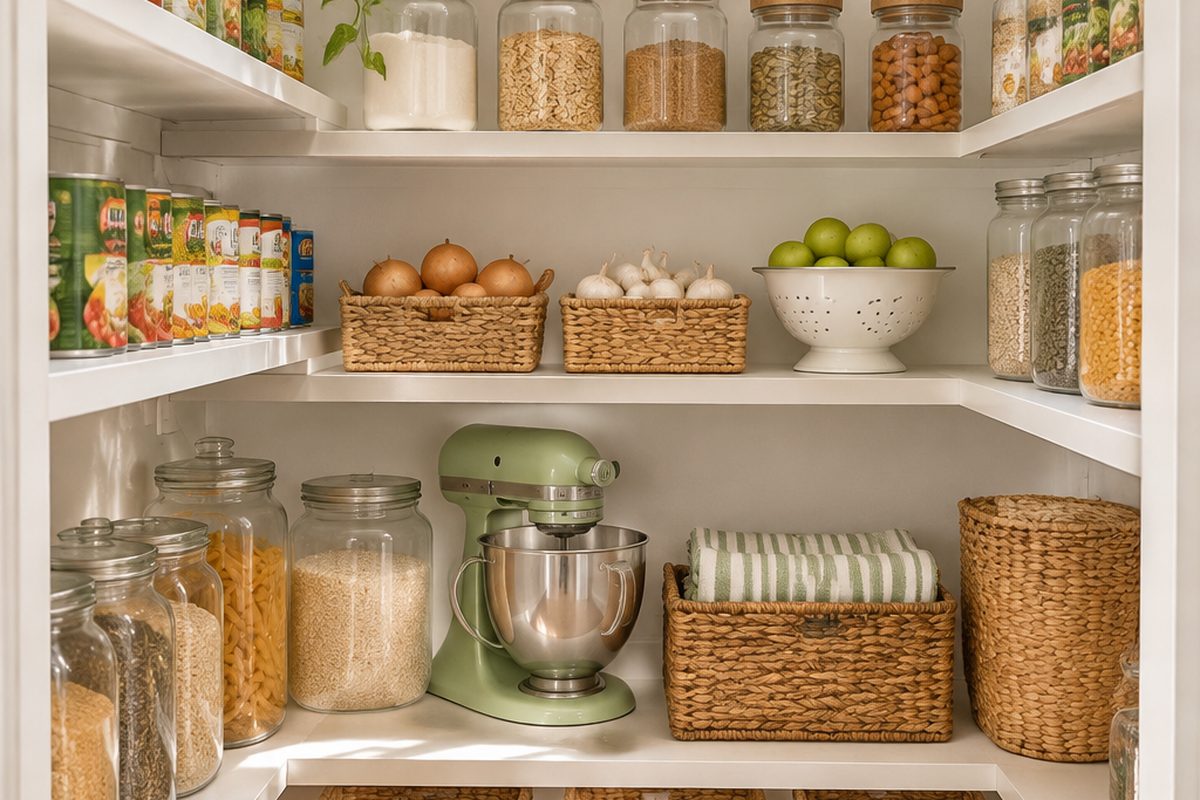
Pantry shelf depth decides whether your pantry works or turns into a cave. Too shallow and cereal boxes hang over the edge. Too deep and the can of beans you bought in March is still hiding behind three newer ones.
The good news is that the right depth is not a guess. Food packaging comes in fairly standard sizes, and once you match the shelf to the package, everything stays visible. Below are the depths that work for each kind of pantry, the spacing between shelves, and what to do if you are stuck with shelves that are already too deep.
| Pantry or shelf type | Recommended depth | Best for |
|---|---|---|
| Cans, jars and spices | 8 to 12 in (20 to 30 cm) | Single or double rows you can see at a glance |
| Reach-in pantry shelves | 12 to 16 in (30 to 41 cm) | Boxes, cans and snacks behind a standard door |
| Walk-in pantry side walls | 12 to 16 in (30 to 41 cm) | Everyday food, keeps the aisle wide |
| Walk-in pantry back wall | 16 to 20 in (41 to 51 cm) | Bulk packs, baskets, small appliances |
| Bottom shelf or floor level | 20 to 24 in (51 to 61 cm) | Stand mixer, drinks cases, pet food bins |
| Door-mounted racks | 3 to 5 in (8 to 13 cm) | Spices, sauces, packets |
Deeper than 16 inches works only with bins, turntables or pull-out drawers you can slide forward.
- Start from the size of what you store
- Reach-in pantries: 12 to 16 inches
- Walk-in pantries: shallow sides, deeper back
- Use the bottom shelf for heavy and bulky things
- Space shelves 12 to 16 inches apart
- Mind the span as well as the depth
- Already have deep shelves? Make them slide
- Plan door storage and the top shelf last
1Start from the size of what you store
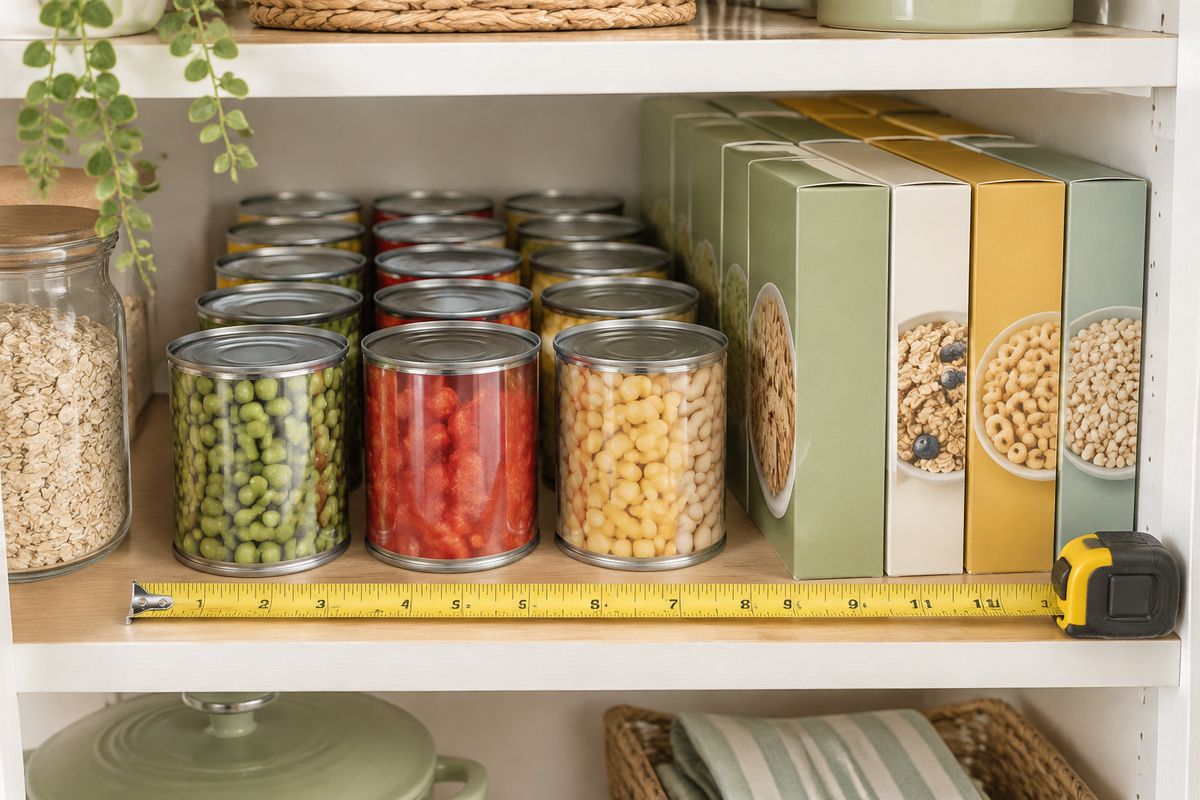
A standard 15-ounce can is about 3 inches (8 cm) across and a little over 4 inches (11 cm) tall. A family-size cereal box is roughly 12 inches (30 cm) tall and 8 inches (20 cm) wide, but only 2.5 to 3 inches deep when it faces forward, or about 8 inches deep when it stands sideways. Pasta boxes, flour bags and snack boxes land in the same range.
That is why 12 inches is the magic number. It holds four cans front to back, a cereal box turned sideways with room to grab it, or one row of canisters. Anything deeper starts creating a second row that you cannot see.
2Reach-in pantries: 12 to 16 inches
A reach-in pantry is a closet with a door, usually 24 inches (61 cm) deep from wall to door. If you install shelves deeper than 16 inches in that space, you lose room for door racks and you have to lean in to reach the back.
A good layout is 12-inch shelves at eye level for cans and jars, and one or two 16-inch shelves lower down for cereal, baking supplies and snack bins. If the door swings in, measure the clearance first: the shelves must stop short of the door's arc. For more layouts, see our small pantry organization ideas.
3Walk-in pantries: shallow sides, deeper back
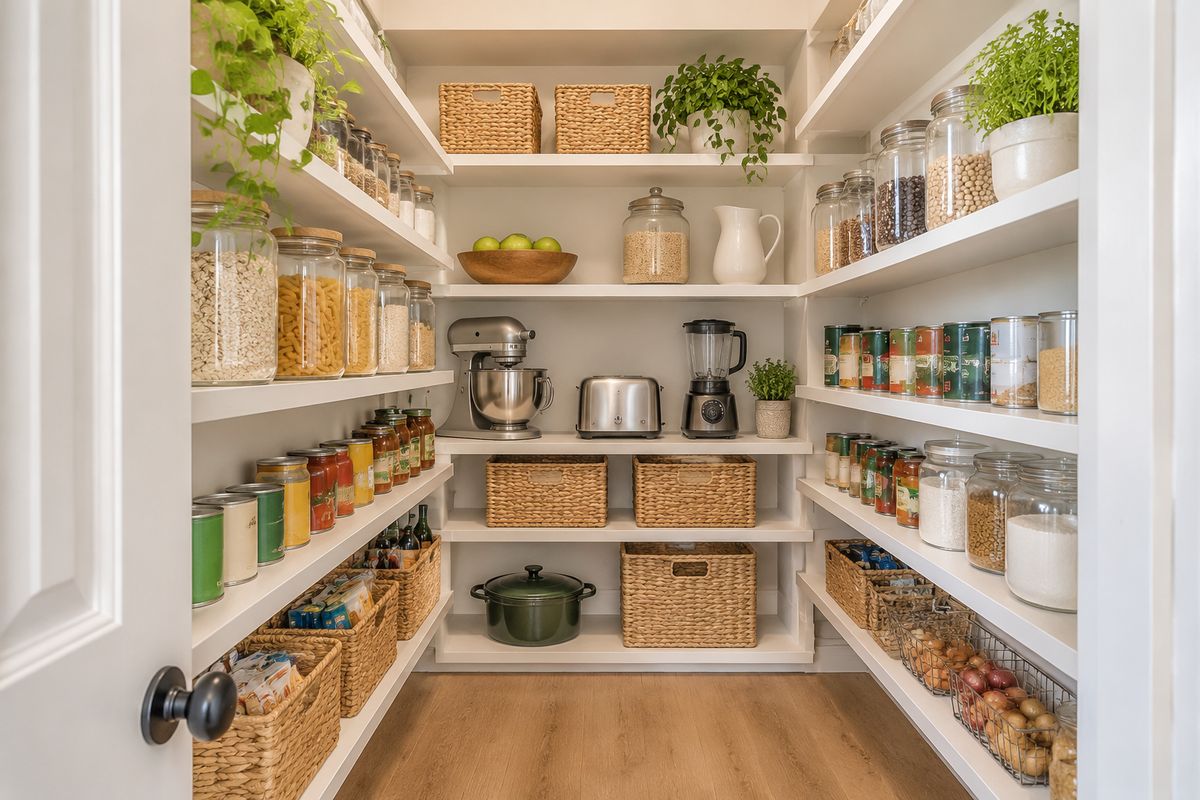
In a walk-in pantry, the classic plan is a U shape: shelves on both side walls and across the back. Keep the side shelves at 12 to 16 inches so the aisle stays at least 36 inches (91 cm) wide, which is the comfortable minimum for one person to turn around with an armful of groceries.
The back wall can go deeper, 16 to 20 inches, because you face it straight on. Use it for things you buy in bulk, baskets of potatoes and onions, and small appliances you use every week. The corners of a U-shaped pantry are dead zones; a turntable or a corner shelf keeps them useful.
4Use the bottom shelf for heavy and bulky things
The lowest shelf is the one place a deep shelf makes sense. A stand mixer, a case of sparkling water, a 20-pound bag of rice or a pet food bin needs 18 to 24 inches (46 to 61 cm) of depth, and you want heavy items low anyway so you never lift them over your head.
Keep the bottom shelf 6 to 12 inches (15 to 30 cm) off the floor so you can sweep underneath, or skip it and use rolling bins on the floor. Rolling bins are easier to pull out than anything sitting on a deep fixed shelf.
5Space shelves 12 to 16 inches apart
Depth and height work together. Most pantry shelves are spaced 12 to 16 inches (30 to 41 cm) apart, which clears a cereal box with a couple of inches to spare. A shelf just for cans can be as close as 7 to 8 inches (18 to 20 cm), or about 10 inches if you use a riser. Lower shelves for bulk items and appliances usually need 18 inches (46 cm) or more.
Adjustable standards let you change this later, which is worth a lot. Our guide on how far apart shelves should be has spacing for every room.
6Mind the span as well as the depth
A deep shelf carries more weight, and a long shelf sags in the middle. A 3/4-inch (19 mm) plywood shelf full of cans should be supported at least every 32 to 36 inches (81 to 91 cm); particleboard and MDF need support more often. Wire shelving brackets usually follow the manufacturer's spacing, often every 24 to 36 inches, depending on the system.
If you are adding a front lip or face frame, a 1x2 strip along the front edge stiffens the shelf noticeably and keeps round jars from rolling off.
7Already have deep shelves? Make them slide
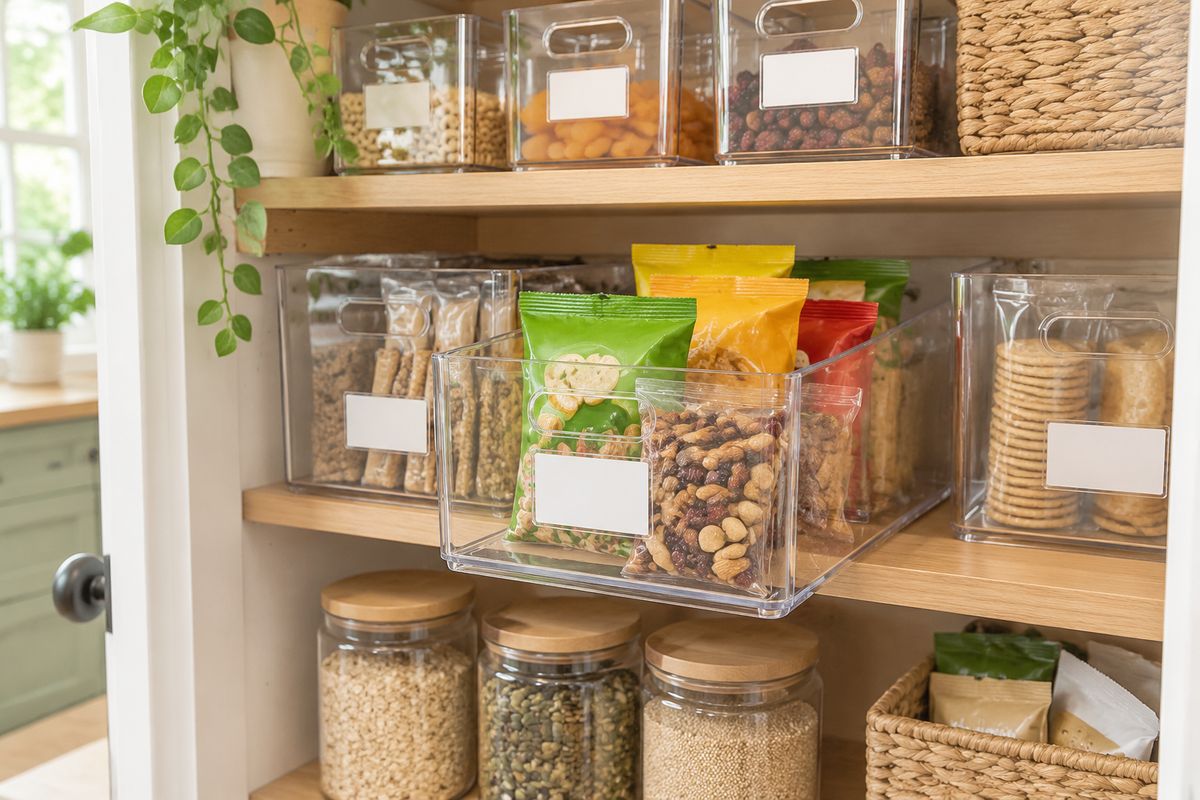
Many builder pantries come with 20- or 24-inch shelves. You do not need to rip them out. The fix is to treat each shelf as two zones and make the back zone move: clear bins with handles, pull-out wire drawers, or a turntable that brings the back to the front.
Group items by category in each bin, put the label on the front, and pull the whole bin out like a drawer. Keep the bins an inch shorter than the shelf opening so they slide without catching, and leave the very back of the shelf for backstock of things you already use up front. We go through this method in detail in deep pantry shelf organization.
8Plan door storage and the top shelf last
Door racks are only 3 to 5 inches (8 to 13 cm) deep, which makes them perfect for spices, sauces, foil and packets. They only fit if the shelves inside stop about 4 to 6 inches (10 to 15 cm) short of the closed door.
The top shelf, usually above 72 inches (183 cm), is for backstock, party platters and seasonal baking pans. Keep it 12 inches deep at most; anything deeper up there is out of reach and out of mind. A labeled bin with a handle makes it easy to bring down.
Pantry shelf depth for special cases
| Situation | Depth | Why |
|---|---|---|
| Pantry cabinet (base cabinet size) | 21 to 24 in (53 to 61 cm) | Use pull-out shelves; fixed shelves this deep hide food |
| Shallow wall pantry between studs | 3.5 to 4 in (9 to 10 cm) | One can deep; great for spices and cans in a hallway |
| Kitchen upper cabinet used as pantry | 11 to 12 in (28 to 30 cm) | Standard upper cabinet depth, ideal for jars |
| Corner shelves | 12 to 16 in on each wall | Add a turntable in the corner itself |
| Wire shelving kits | 12 or 16 in (30 or 41 cm) | The two most common stock depths |
Measure inside the frame: face frames and door hinges can steal half an inch or more.
Common mistakes
- Making every shelf the same depth. Mix 12- and 16-inch shelves so each item has a shelf that fits it.
- Going deep to gain storage. Extra depth adds hidden storage, which usually means duplicate purchases and expired food.
- Forgetting the aisle. In a walk-in, two 16-inch sides plus a 36-inch aisle need a room at least 68 inches (173 cm) wide.
- Fixed shelves everywhere. Adjustable standards cost a little more and let the pantry change as your family does.
- Putting heavy items up high. Keep cans, bottles and appliances between knee and shoulder height or lower.
Keeping it that way
If you remember one number, make it 12 inches. Use it for most shelves, go to 16 inches where boxes live, and save anything deeper for the floor-level shelf and things that slide.
Once the shelves are right, fill them well: our guides on how to organize a pantry and the best pantry storage containers cover what goes where and what to put it in.
Get the free pantry labels
Free printable pantry labels: 48 jar labels with a best-by line, 20 bin and shelf labels and blank labels. 7-page PDF, print at home on sticker paper.
Everything mentioned in this guide
One list, so you can check sizes against your own measurements. Links go to Amazon; we may earn a commission.
Questions people ask
What is the standard depth for pantry shelves?
Most pantry shelves are 12 to 16 inches (30 to 41 cm) deep. Twelve inches is the most common for cans and jars, and 16 inches is common in stock wire shelving and for cereal boxes and bulk items.
Is 24 inches too deep for a pantry shelf?
For a fixed shelf, yes. At 24 inches you store items two or three rows deep and lose sight of the back. It works only with pull-out drawers, bins or a turntable, or on a floor-level shelf for appliances and cases.
Are 12-inch pantry shelves deep enough?
Yes, for most food. A 12-inch shelf holds four cans front to back, standard jars and canisters, and cereal boxes turned sideways. Add one or two 16-inch shelves for bulky packages.
How much space should be between pantry shelves?
Usually 12 to 16 inches. Shelves for cans only can be 7 to 10 inches apart, and lower shelves for appliances and bulk bags need 18 inches or more.
How wide should a walk-in pantry aisle be?
Plan for at least 36 inches (91 cm) between shelves, and around 42 to 48 inches if two people use the pantry at the same time. See how high to hang shelves for planning the vertical layout too.