Wire Shelving Organization: 10 Ideas That Stop the Tipping
To organize wire shelves, first cover them with a shelf liner so small items stop tipping and falling through. Then use flat-bottom bins sized to the shelf depth, add risers or under-shelf baskets to use the empty height, and keep heavy items on the lowest shelves near the wall brackets.
Wire shelving is in almost every builder-grade pantry, linen closet and laundry room, and it has two well-known problems. Narrow bottles and jars wobble on the bars and tip over, and anything small slips through the gaps or leaves ring marks on whatever is below. The shelves are also usually spaced far apart, so half the height above each one sits empty.
The good news is that you do not need to rip the wire out. A liner, the right kind of bin and a couple of height tricks solve most of it in an afternoon. The same rules from our shelving organization guide apply here: give each shelf one job, keep heavy things low and contain the small stuff.
- Cover the wire with a shelf liner first
- Or lay a cut board on heavy-duty shelves
- Choose bins with flat, solid bottoms
- Use bins as drawers on deep shelves
- Add a riser to use the empty height
- Hang under-shelf baskets from the wire
- Hook small items onto the front edge
- Stop sweaters and towels from sliding in closets
- Move the shelves if your system allows it
- Keep the heavy things low and near the supports
1Cover the wire with a shelf liner first
A liner turns a row of bars into a flat surface, and it is the single change that makes the biggest difference. Clear or frosted plastic liners made for wire shelving are the easiest option: they are rigid enough to bridge the gaps, they wipe clean, and they let light and air through the closet if you choose the ventilated kind.
Measure the shelf depth, since wire shelves usually come in 12, 16 or 20 inches (30, 41 or 51 cm), and buy liners that match. Most can be cut with sturdy scissors. Fit them snugly from wall to front lip so they do not slide when you pull a bin out.

2Or lay a cut board on heavy-duty shelves
For a garage or laundry shelf that holds paint cans, detergent jugs or small appliances, a thin plywood or hardboard panel works better than plastic. Ask the hardware store to cut it to the shelf size, round the front corners with sandpaper and seal it with a coat of paint so it wipes clean and does not soak up spills.
A board adds weight of its own, so only use it on shelves that are properly supported into studs, and keep the total load within what the manufacturer lists for your system. For bigger garage setups, see garage shelving organization.
3Choose bins with flat, solid bottoms
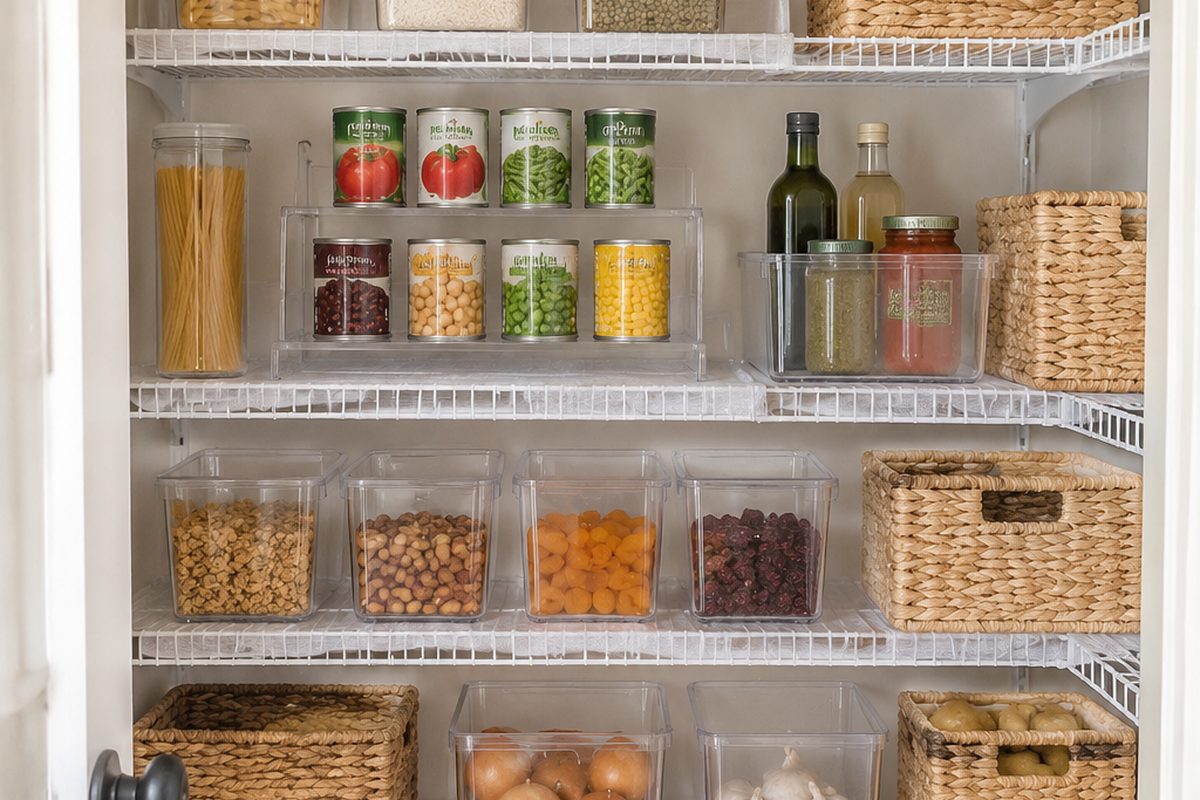
Bins with small feet, ridges or open-weave bottoms rock on wire bars even with a liner. Look for bins with a flat, solid base and straight sides. Clear plastic is the most practical in a pantry because you can see what is inside without pulling it out, and it rinses clean if something leaks.
Size the bin to the shelf: on a 16-inch (41 cm) shelf, a bin about 14 to 15 inches (36 to 38 cm) deep leaves room to grip it and keeps the front edge clear of the lip. Our pantry storage containers guide covers which shapes stack best.
4Use bins as drawers on deep shelves
On 16- and 20-inch shelves, items at the back disappear. Instead of lining up cans two or three rows deep, put each category in a bin and pull the whole bin forward like a drawer. One bin for snacks, one for baking, one for pasta and grains, one for backstock.
This is also the easiest way to keep wire shelves looking neat, because the mess is hidden inside the bins rather than spread along the bars. If your shelves feel too deep for what you store, see how deep pantry shelves should be before you buy more bins.

5Add a riser to use the empty height
Builder wire shelving is often spaced 14 to 18 inches (36 to 46 cm) apart, which is far more than a row of cans needs. A wire or metal shelf riser creates a second level for cans, spices, mugs or small bottles. Choose one with flat feet or set it on a liner so it does not straddle the bars and wobble.
A tiered can riser at the front of a shelf works the same way: three short steps let you read every label from the doorway, and the bins can sit behind it on the same shelf.
6Hang under-shelf baskets from the wire
Under-shelf baskets slide over a shelf and hang in the gap below it. On solid shelves they only fit a certain thickness, but many models clip directly onto wire, which makes them a natural fit. Use them for foil and wraps, snack bags, dish towels, or hand towels in a linen closet.
Check that the basket leaves at least 2 inches (5 cm) above whatever stands on the shelf below, or you will have to tilt things to get them out. Keep the basket light; it hangs from the front of the shelf, which is the weakest part.
7Hook small items onto the front edge
The front lip of a wire shelf is a ready-made rail. S-hooks hold aprons, reusable shopping bags and a dustpan in a pantry, or a lint roller and a laundry bag in a closet. Small clip-on label holders slide onto the bars so you can mark each zone without sticky labels on the bins.
Keep hooks at the ends of the shelf rather than the middle, so they do not block the bins you pull out every day, and do not hang anything heavy from the front lip.
8Stop sweaters and towels from sliding in closets
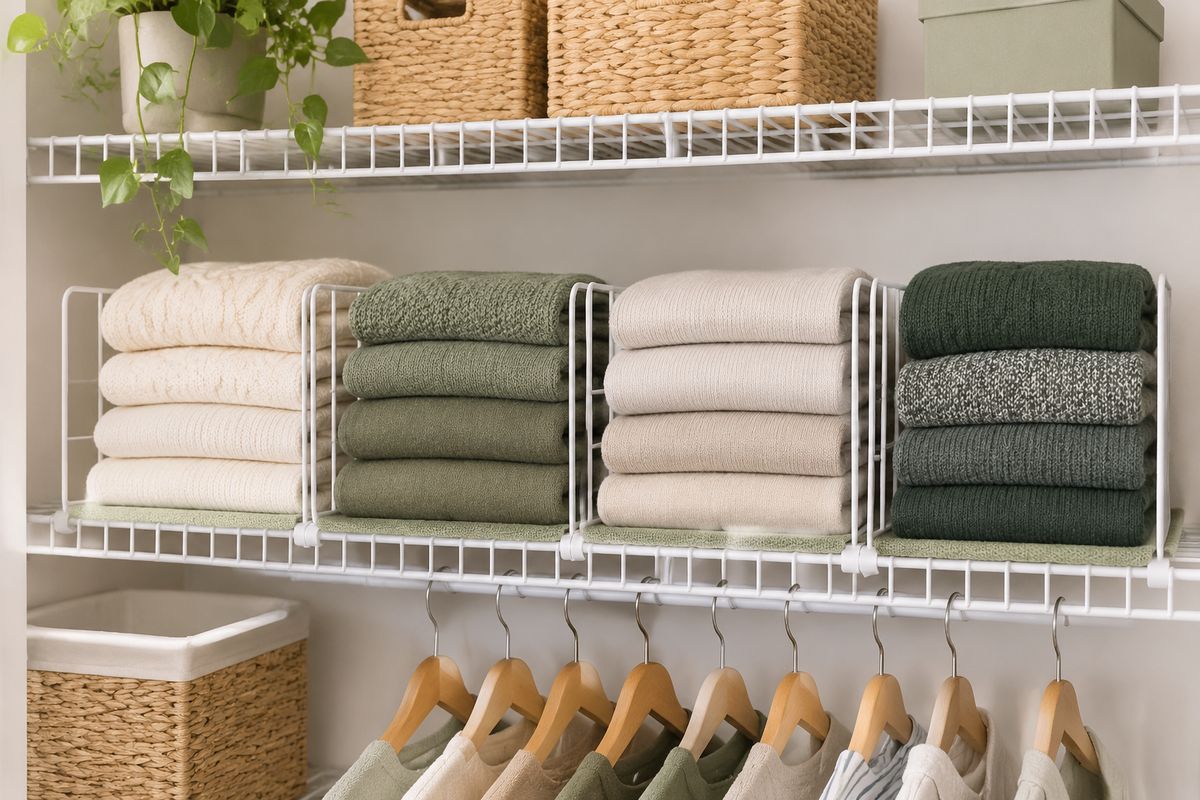
In bedroom and linen closets, folded stacks on wire shelves lean, slump and leave stripes on soft fabrics. A liner fixes the stripes, and wire shelf dividers that hook over the bars keep each stack upright. Space dividers about 12 inches (30 cm) apart for sweaters and towel stacks, and keep each stack below the top of the divider so it cannot fold over it.
For more on dividers, including which kinds fit wire versus solid wood shelves, see our shelf divider ideas. For whole-closet layouts, start with small closet organization ideas.
9Move the shelves if your system allows it
Track-style wire systems with vertical standards let you move shelves up or down in small steps. If yours has them, set each shelf about 2 to 3 inches (5 to 8 cm) taller than the tallest item on it, and you may gain a whole extra shelf from the same wall.
Fixed wire shelving held by wall clips can be moved too, but it means new holes and new anchors. Only do it if you can hit studs or use the anchors made for that system, and fill the old holes before the new shelf goes up.
10Keep the heavy things low and near the supports
Wire shelves are strongest at the back, where the wall clips are, and directly above the support brackets. Put heavy items there: cases of water, canned goods in bulk, small appliances. Lighter, bulky items like paper towels, cereal and party supplies can go on the top shelf.
If a shelf front dips when it is loaded, it is overloaded or missing a support bracket. Take weight off right away and add a bracket before the clips pull out of the wall. A sagging shelf also tips bins forward, which undoes the rest of your work.
Wire shelf sizes and what fits on them
Wire shelving comes in a few standard depths. Use this as a starting point for choosing bins and liners, then measure your own shelf before buying.
| Shelf depth | Best for | Bin depth to look for | Watch out for |
|---|---|---|---|
| 12 in (30 cm) | Cans, spices, jars, cleaning sprays | 10 to 11 in (25 to 28 cm) | Tall bottles tipping; use a liner |
| 16 in (41 cm) | Pantry staples, towels, folded clothes | 14 to 15 in (36 to 38 cm) | Items lost at the back; use bins as drawers |
| 20 in (51 cm) | Bulk packs, small appliances, bedding | Two bins front and back, or 18 in (46 cm) bins | Overloading; keep heavy items low |
Wire shelves usually have a front lip that rises above the shelf surface, so measure the usable depth from the wall to the inside of the lip.
Mistakes to avoid on wire shelving
- Skipping the liner and blaming the bins. Almost every tipping problem starts with the bare bars.
- Buying bins with feet or a ridged base. They rock even on lined shelves.
- Loading the front edge. The front is the weakest part of a wire shelf; heavy items belong at the back.
- Ignoring the gap above each shelf. A riser or under-shelf basket often adds more storage than a new shelf would.
- Using drywall anchors without checking the rating. If you install or move wire shelving, use the anchors made for that system and hit studs where you can.
Renter-friendly upgrades
Everything above except moving the shelves needs no tools and leaves no marks. Liners, bins, risers, clip-on baskets and hook-on dividers all come off in minutes when you move out, which makes wire shelving one of the easiest places in a rental to organize. For a full pantry plan, see small pantry organization ideas.
Keeping it that way
Start with the shelf that annoys you most, usually the pantry, and do it in order: empty it, line it, bin it, then add height. Most wire shelves look finished after the liner and the first row of matching bins.
Once the pantry is done, the same steps work in the linen closet, the laundry room and the garage. Keep the shelving organization guide handy for the zoning part.
Get the free pantry labels
Free printable pantry labels: 48 jar labels with a best-by line, 20 bin and shelf labels and blank labels. 7-page PDF, print at home on sticker paper.
Everything mentioned in this guide
One list, so you can check sizes against your own measurements. Links go to Amazon; we may earn a commission.
Questions people ask
How do you keep things from falling through wire shelves?
Cover the shelves with a rigid plastic liner made for wire shelving, or a cut board on heavy-duty shelves. Then group small items in flat-bottom bins so nothing sits directly on the bars.
What can I put on wire shelves to make them flat?
Clear or frosted plastic wire shelf liners are the simplest option and cut with scissors. Thin plywood or hardboard cut to size works for heavier loads on shelves that are well supported.
What kind of bins work best on wire shelves?
Bins with flat, solid bottoms and straight sides, sized an inch or two shorter than the shelf depth. Avoid bins with feet, ridges or open-weave bases, which rock on the bars.
How much weight can wire shelving hold?
It depends on the system, the bracket spacing and whether it is anchored into studs. Check the rating in your manufacturer's instructions, keep heavy items at the back near the wall clips, and add support brackets if a shelf front sags.
Can you add more shelves to wire shelving?
With a track system, yes: add a shelf on the existing standards. With fixed wire shelving, a shelf riser or under-shelf basket is usually easier than installing a new shelf, and it needs no drilling.