Garage Shelving Ideas: How to Organize Garage Shelves
To organize garage shelves, install heavy-duty steel units anchored to wall studs, then sort everything into zones: tools, car care, sports, garden and seasonal. Use clear, same-size bins with large labels, keep heavy things on the bottom shelf, daily items at waist height and seasonal bins on top or on an overhead rack.
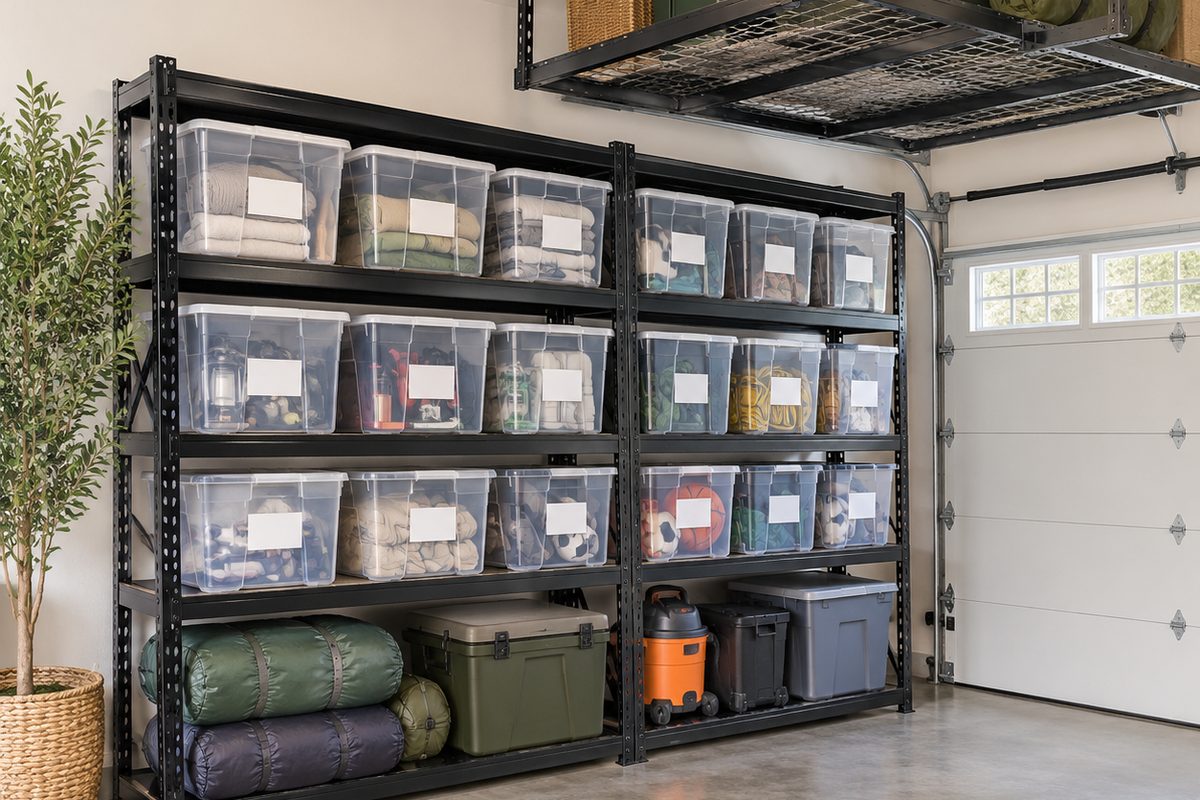
Garage shelves fail in a predictable way. Things go up on them in a hurry, boxes of different sizes stack on top of each other, and within a year the shelf is a wall of cardboard nobody wants to dig through.
A garage shelving system that lasts comes down to three decisions: the right shelving, a few clear zones and containers that make every item easy to see and lift. The ideas below cover all three, plus the safety steps that matter more in a garage than anywhere else. For the general shelf method, see how to organize shelving, and if money is tight, our garage organization ideas on a budget.
- Sort and purge before you buy any shelving
- Choose heavy-duty steel shelving units
- Anchor every unit to the wall
- Divide the garage into zones
- Use clear, same-size bins with lids
- Label in large letters on the side that faces out
- Put heavy things low and daily things at waist height
- Add overhead racks for seasonal storage
- Store chemicals and flammables separately
- Use the walls between shelving units
1Sort and purge before you buy any shelving
It is tempting to buy shelving first, but the right size depends on what you are keeping. Pull everything from one wall onto the driveway on a dry day and sort it into keep, donate, sell and trash. Expired paint, broken tools, duplicate extension cords and sports gear nobody uses are common finds.
Dispose of old paint, chemicals and batteries through your local household hazardous waste program, not the trash. Once the purge is done, group what remains and estimate how many bins each group will fill. That number tells you how much shelving you need. Our 30-day declutter challenge is a gentler way to tackle a packed garage.
2Choose heavy-duty steel shelving units
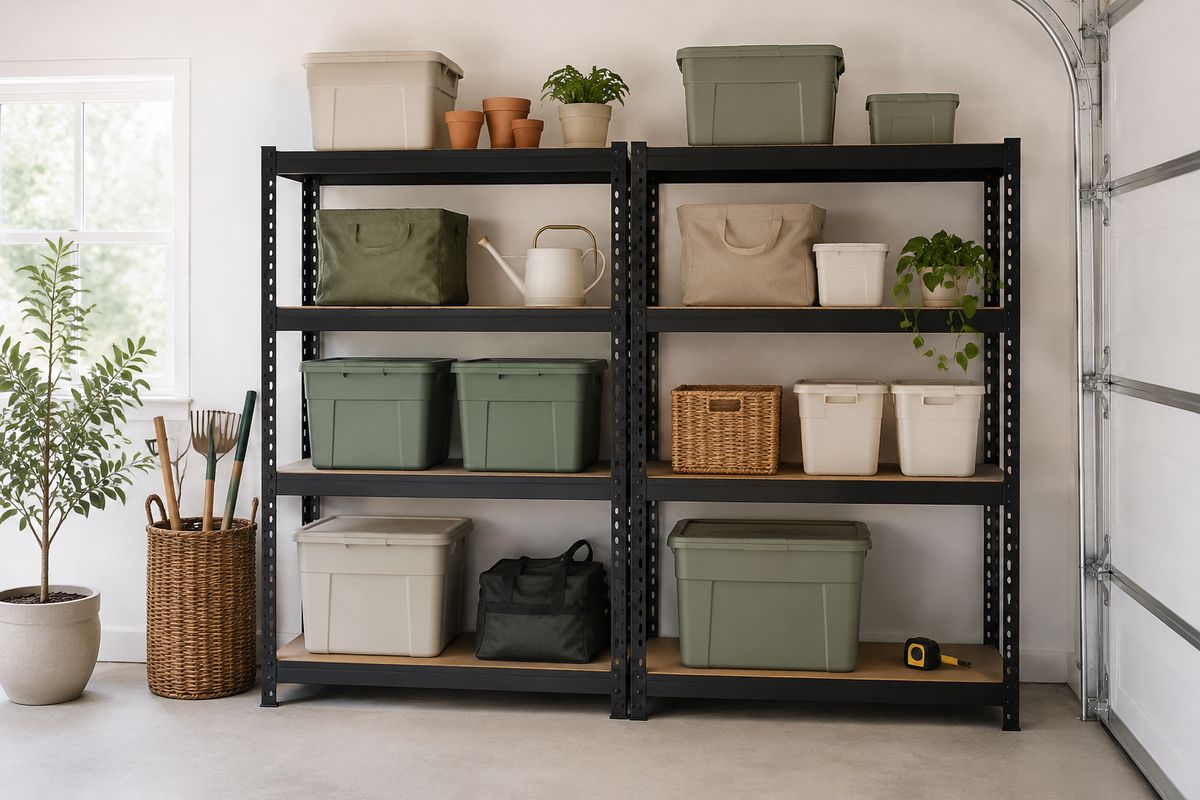
Garages need shelving that handles weight, temperature swings and humidity. Freestanding steel units, often 48 inches wide, 18 or 24 inches deep and 72 inches tall (122 x 46 or 61 x 183 cm), are the workhorse choice. Look for a per-shelf weight rating on the box and adjustable shelf heights.
For deeper bins, 24-inch-deep units are easier, while 18-inch-deep units save floor space in a tight garage. Steel units with particleboard decks hold weight well but swell if they get wet; wire decks or sealed decks are better if your garage floor gets snowmelt. Wall-mounted track systems are another option when you need the floor clear.
3Anchor every unit to the wall
A loaded shelving unit is top-heavy, and garage floors are rarely level. Anchor every tall unit to the wall studs with the straps or L-brackets that come with it, or with an anti-tip kit. This matters even more if kids play in the garage or if you live in an earthquake area.
Level the unit first with the adjustable feet or shims, then attach it at the top. Keep the heaviest items on the lowest shelf, and never climb the shelves to reach the top; keep a sturdy step stool in the garage instead. If the wall is concrete block, use masonry anchors rated for the job.
4Divide the garage into zones
Group shelves by activity, not by what fits where. Common garage zones are tools and hardware, car care, sports and outdoor gear, garden and lawn, bulk household overflow and seasonal decor. Put each zone near where it is used: garden tools by the door to the yard, car supplies near the car, bulk paper towels near the door into the house.
Give each zone one shelving unit or one section of a unit, and label the zone on the shelf edge. When everyone in the house knows that sports gear lives on the left unit, it is far more likely to go back there after practice.
5Use clear, same-size bins with lids
Clear plastic bins are the single best upgrade for garage shelves. You can see what is inside without opening them, the lids keep out dust and pests, and plastic does not soften in humidity the way cardboard does.
Pick one or two bin sizes that fit your shelf depth and buy them all at once, so they stack and line up neatly. Leave about 2 inches (5 cm) above each bin so you can tilt it out without unloading the shelf. Latching lids stay on when a bin gets bumped. Measure your shelf openings before buying; bin dimensions vary between brands, even at the same listed capacity.
6Label in large letters on the side that faces out
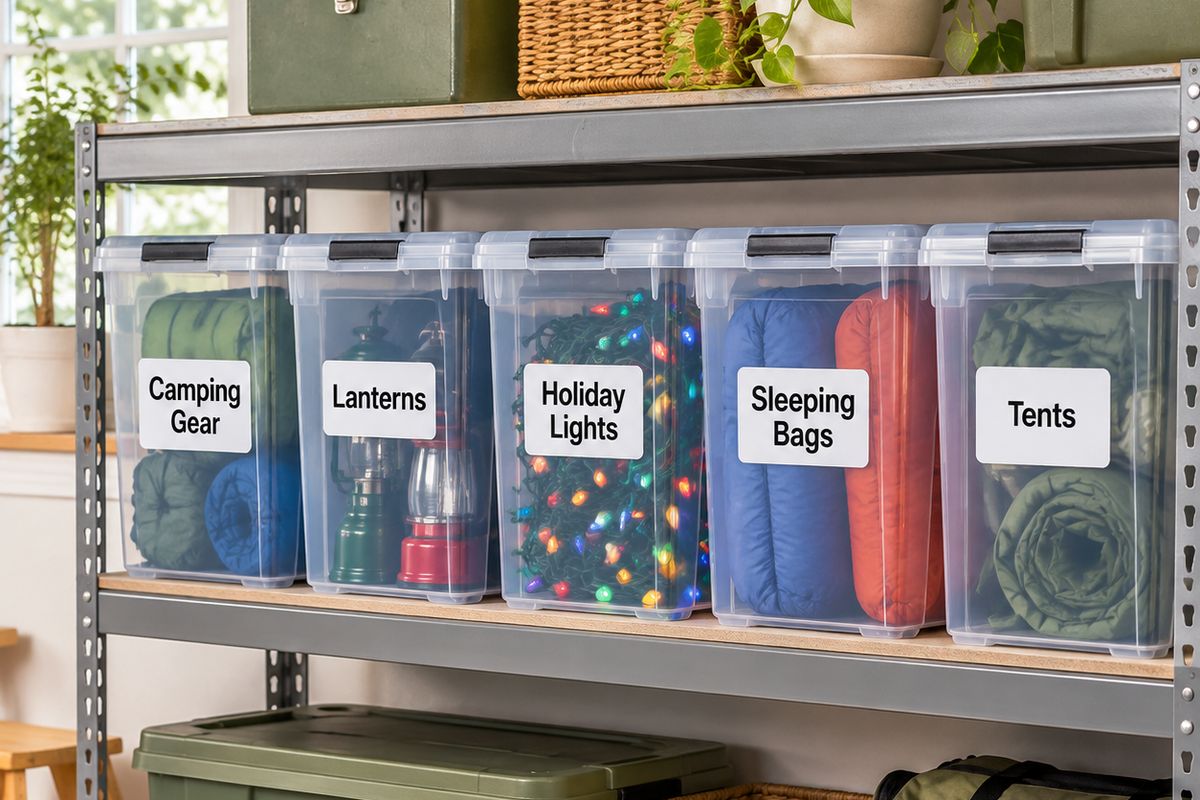
Labels in a garage need to be readable from several feet away and in dim light. Use large, bold labels on the short end of each bin, the side that faces out on the shelf, and list the main contents, not just a category: 'Camping: stove, lantern, tarps' is more useful than 'Outdoor.'
Weatherproof label tape or printed labels in a sleeve hold up better than paper in a humid or cold garage. Labeling the shelf edge too, with the zone name, helps bins go back in the same spot every time.
7Put heavy things low and daily things at waist height
Shelf height in a garage is a safety question as much as a convenience one. Paint cans, bags of salt or soil, toolboxes and full bins go on the lowest shelf, where you can slide them out without lifting overhead. Items you use weekly, such as the cordless drill, work gloves and car cleaning supplies, go between waist and eye level.
Light, rarely used things go on the top shelf: holiday decor, spare bedding, empty coolers. Keep heavy bins on top shelves out of the plan entirely. Lifting a heavy bin from above your head is how backs get hurt and bins get dropped.
8Add overhead racks for seasonal storage
Ceiling-mounted overhead racks use the space above the garage door or the hood of the car for things you need once or twice a year: holiday decorations, camping gear, luggage and off-season clothes in bins. They keep that bulk off the floor and off your main shelves.
Overhead racks must be bolted into ceiling joists, not drywall alone, and loaded within their rating. Check clearance for the garage door, its tracks and opener, and for the roof of your tallest vehicle. Store only light-to-medium bins up there and use a sturdy ladder to reach them. Our christmas decoration storage ideas work well for these overhead bins.
9Store chemicals and flammables separately
Paint, solvents, gasoline, pesticides, pool chemicals and fertilizer need their own shelf or lockable cabinet, high enough to be out of children's reach and away from the water heater, furnace or any other ignition source. Keep products in their original containers with labels intact.
Do not store certain chemicals together. Pool chemicals and fertilizers in particular should be kept apart from each other and from fuels, so follow the storage directions printed on each product. A closed metal cabinet keeps fumes contained and makes it obvious to everyone where these products live.
10Use the walls between shelving units
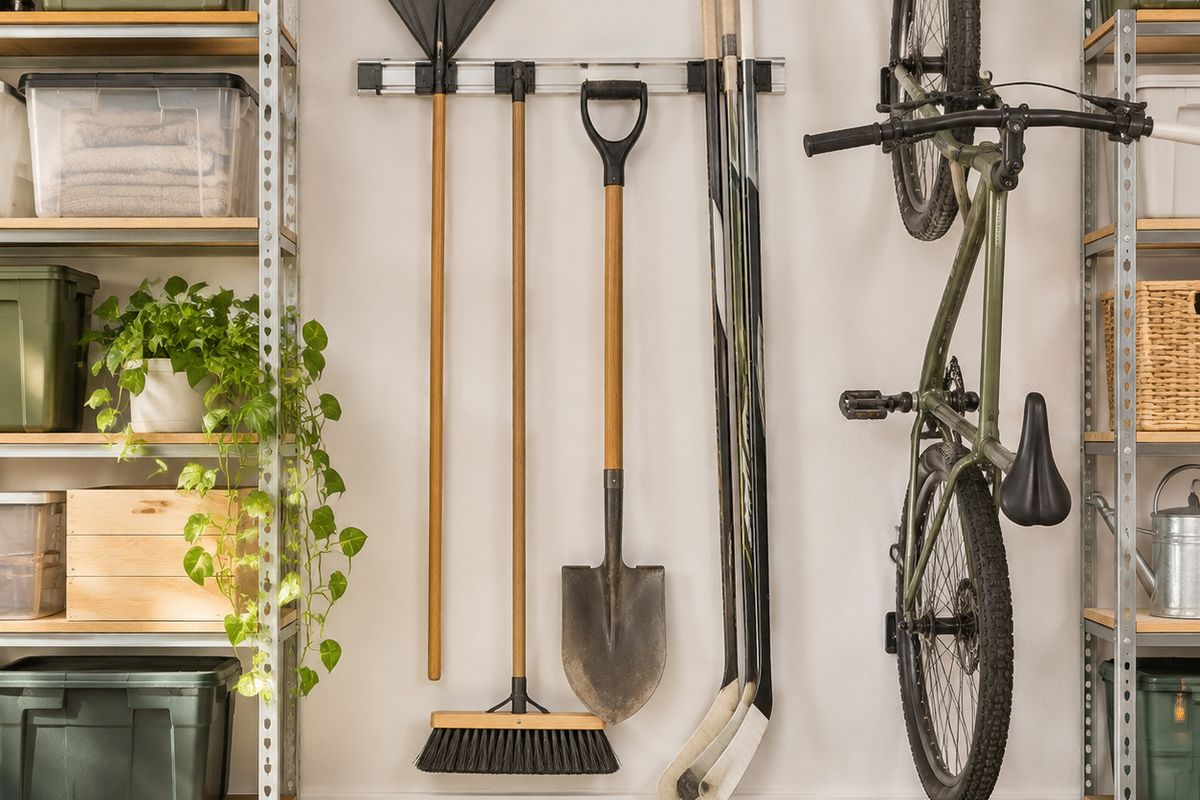
Long-handled tools such as rakes, brooms, shovels and hockey sticks do not fit on shelves at all. Mount a wall rack or rail with hooks between shelving units, so they hang upright instead of leaning in a corner. A pegboard above a workbench handles hand tools, each with its own hook.
Bicycles can hang vertically on wall hooks screwed into studs, which frees floor space for the car. Keep the wall area at the front of each parking spot clear so car doors do not hit shelves or tools.
Where each item goes on a garage shelf
Use this as a starting map for a standard 72-inch (183 cm) shelving unit. Adjust the shelf heights to fit your bins, leaving about 2 inches (5 cm) above each one.
| Shelf level | Height from floor | What to store |
|---|---|---|
| Top shelf | About 60 to 72 in (152 to 183 cm) | Light, rarely used bins: holiday decor, spare bedding |
| Upper middle | About 45 to 60 in (114 to 152 cm) | Labeled bins you open monthly: camping, sports accessories |
| Waist to chest | About 30 to 45 in (76 to 114 cm) | Weekly items: power tools, car care, gloves |
| Bottom shelf | Floor to about 15 in (38 cm) | Heavy items: paint cans, toolboxes, bags of salt or soil |
| Overhead rack | Ceiling, above door or car hood | Seasonal bins and bulky light gear |
Load each shelf within the manufacturer's rating, spread weight evenly across the shelf and anchor every tall unit to the wall.
Garage shelving mistakes to avoid
- Storing in cardboard boxes. They absorb moisture, attract pests and collapse when stacked.
- Buying bins in many sizes. Mismatched bins waste shelf space and never stack well.
- Leaving tall units unanchored. Uneven garage floors make tipping more likely.
- Putting heavy bins on top shelves. Lifting overhead is the most common way to get hurt.
- Blocking the path to the house door, the electrical panel or the water heater.
Keeping it that way
Work one wall at a time: purge, install and anchor shelving, set up zones, then fill bins and label them. A full garage is a weekend project, but a single wall is a Saturday morning.
Have tools and paint under a kitchen or utility sink too? Our under sink organization ideas cover the indoor half of household supplies, and wire shelving organization ideas help if your garage already has wire units.
Get the free Declutter Kit
A 7-page printable: room-by-room checklists, the 30-day challenge calendar and a 10-minute weekly reset. Free, straight to your inbox.
Everything mentioned in this guide
One list, so you can check sizes against your own measurements. Links go to Amazon; we may earn a commission.
Questions people ask
What is the best shelving for a garage?
Freestanding heavy-duty steel units with adjustable shelves are the most versatile. Wall-mounted track systems and ceiling racks are good additions when floor space is tight.
How do you organize garage shelves?
Sort and purge, then group items into zones. Store them in clear, same-size bins with large labels, put heavy items low, daily items at waist height and seasonal bins up high.
Should garage shelves be anchored to the wall?
Yes. Loaded units are top-heavy and garage floors are often uneven. Strap or bracket each tall unit to a wall stud, or use masonry anchors on concrete walls.
What size bins fit garage shelving?
It depends on your shelf depth and height. Measure the opening, then choose one or two bin sizes that fit with about 2 inches (5 cm) of space above, so they slide out easily.
How deep should garage shelves be?
18 inches (46 cm) works for smaller bins and tight garages; 24 inches (61 cm) fits larger totes. Deeper shelves tend to hide items at the back.
Is it safe to store paint on garage shelves?
Yes, on a dedicated shelf away from heat sources such as the water heater, out of reach of children and with lids sealed. Protect it from freezing and dispose of old paint through local hazardous waste programs.