How to Organize a Pantry: 8 Steps That Last
To organize a pantry, empty it completely, toss expired food and group like with like. Zone the shelves by how often you reach for things, decant only what you buy often into square airtight containers, put everything else in clear bins, add risers, turntables and a door rack, label shelves and containers and reset weekly.
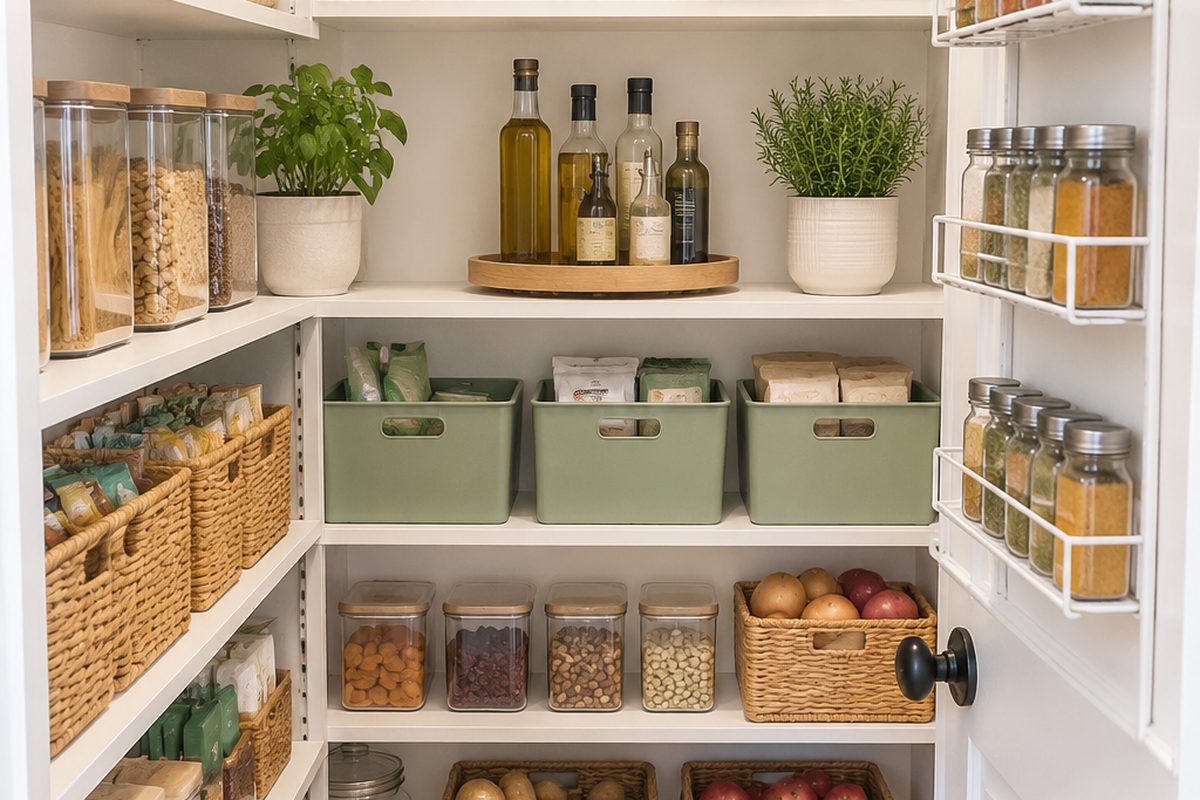
January is pantry season: the holiday baking is done, the shelves are full of half-used bags, and everyone wants to start the year eating better. A pantry organized in the right order stays that way for months; one organized by buying containers first is usually back to chaos by February.
Here is the method we use for any pantry, from a walk-in to a single cabinet. Each step links to a detailed guide, and you will find all our pantry guides at the end.
1Empty everything and check dates
Take every item out, including the floor and the door. Throw away expired food and recycle empty boxes. Wipe and dry the shelves. It is the only way to see what you have and how much space each category really needs.
Use this moment to check for pantry moths and crumbs in corners, and to note anything you threw away because it expired. Those items are a clue: if half a bag of quinoa expired, buy a smaller bag next time or move quinoa to eye level where you will remember it.
2Group like with like
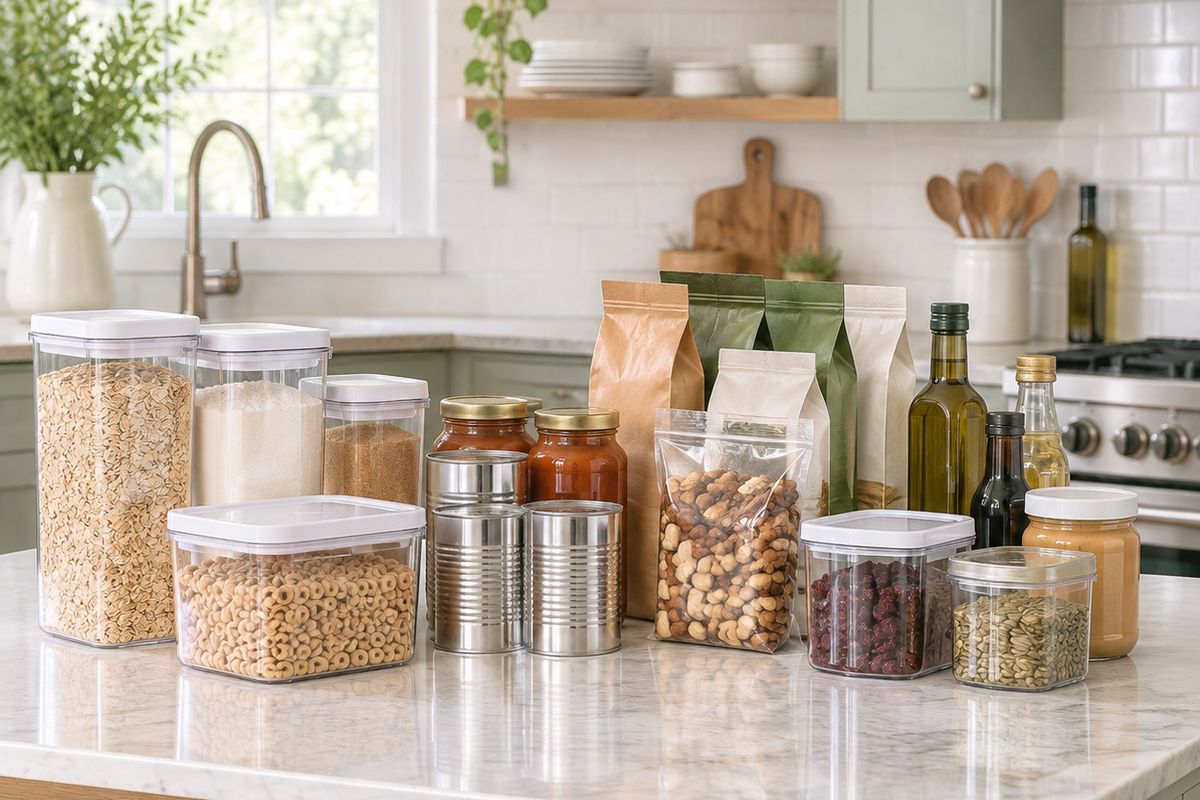
Make piles on the counter: breakfast, baking, pasta and grains, canned goods, sauces and oils, snacks, spices, drinks, backstock. These groups become your zones.
Do not worry if some groups are tiny and others huge. A single bottle of vanilla can live in the baking group; it does not need its own spot. What matters is that every item belongs to one named group, so it has a clear place to go back to.
3Zone the shelves by how often you reach
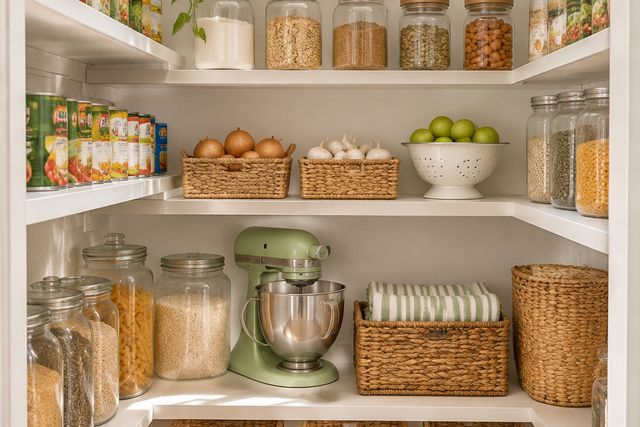
Most used food at eye level, heavy cans and drinks low, kids' snacks where kids can reach, and backstock or seasonal baking up high. Give each shelf one job and write it down before anything goes back.
If you share the kitchen, agree on the zones together. A pantry where only one person knows the system is organized for that person only. Five minutes of explaining saves weeks of finding pasta in the snack bin.
4Decide what to decant
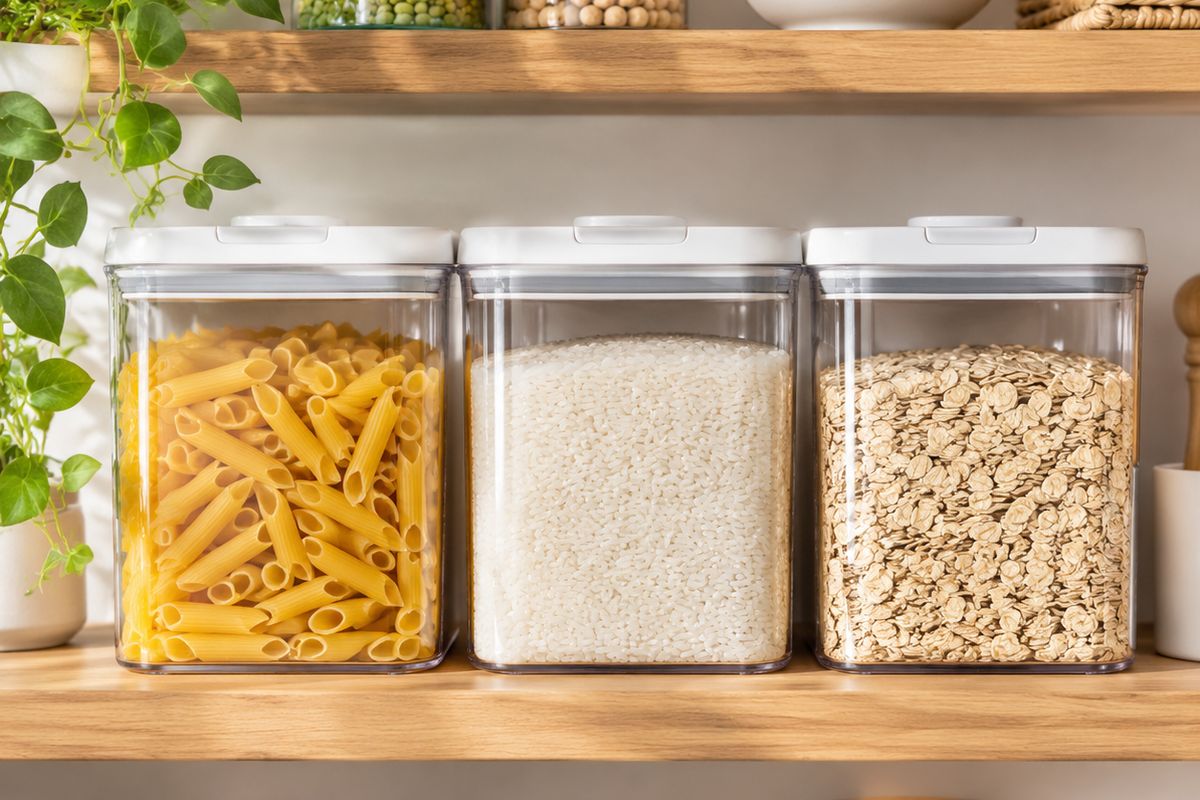
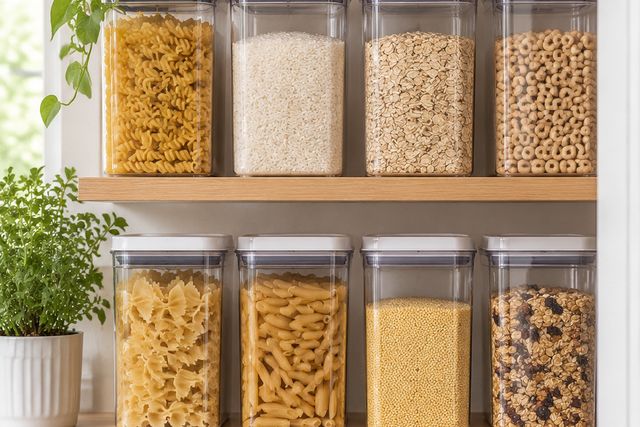
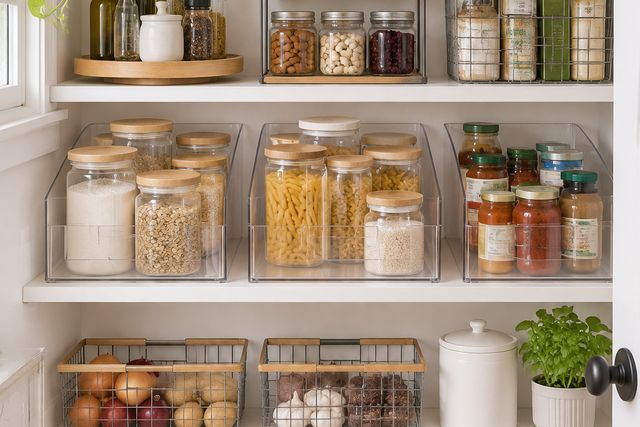
Decant only what you buy often and in the same size: pasta, rice, oats, cereal, flour, sugar. Use square airtight containers so they line up. Our guide to the best pantry storage containers explains what to buy and what to skip.
5Bin the rest
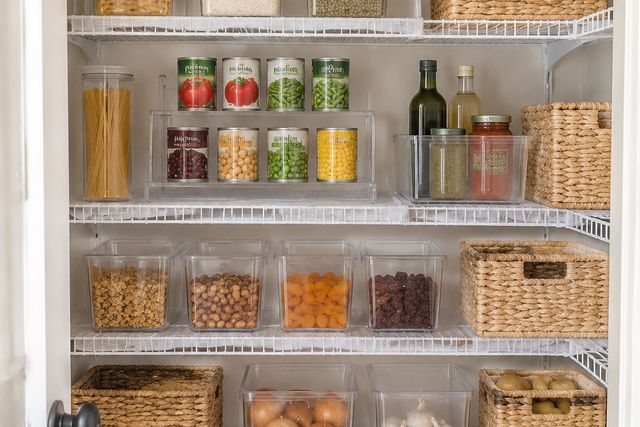
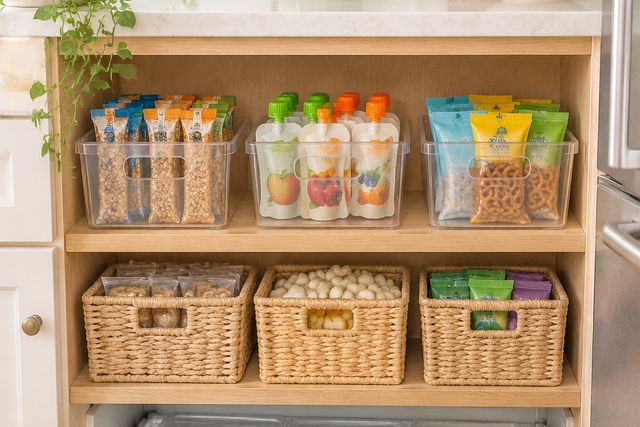
Packets, pouches, bars and bags go into clear bins with handles, one category per bin. On deep shelves, bins work like drawers. More in deep pantry shelf organization and snack organization ideas.
Pick one bin size and style for the whole pantry if you can. Matching bins line up neatly, stack when empty and can be moved between shelves as your needs change.
6Use risers, turntables and the door
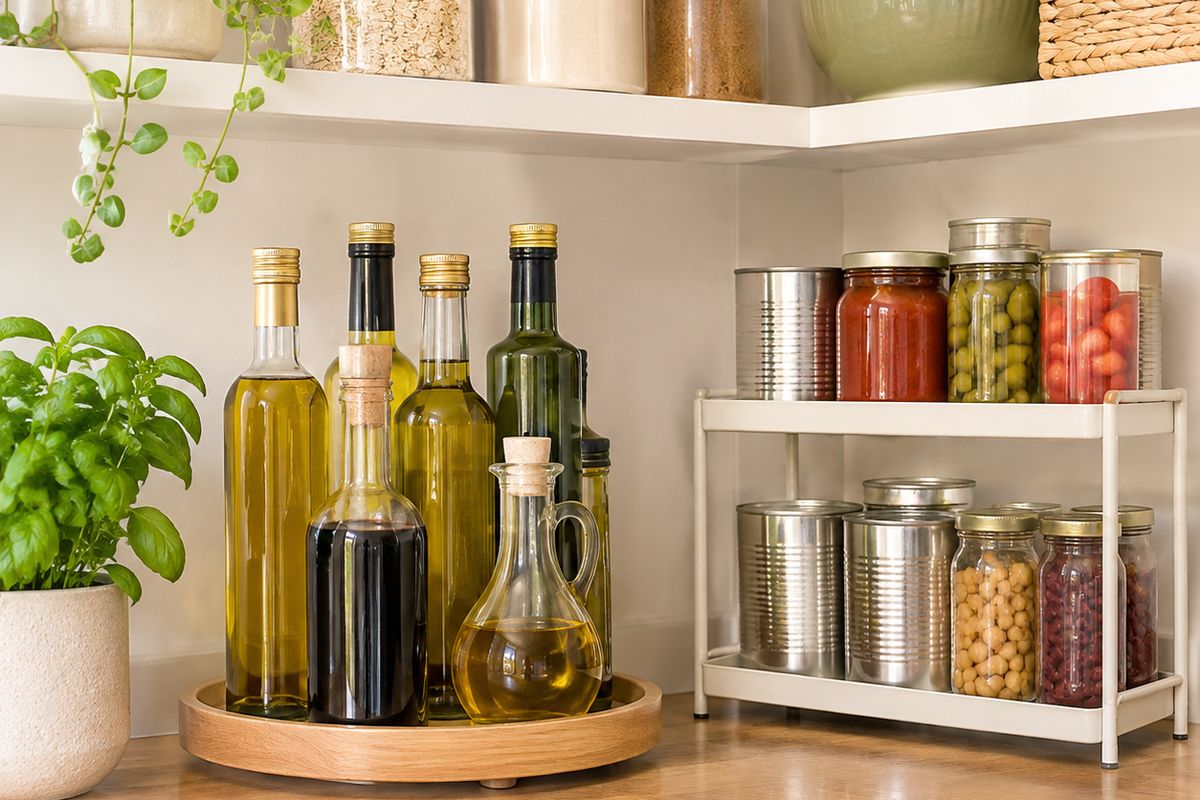
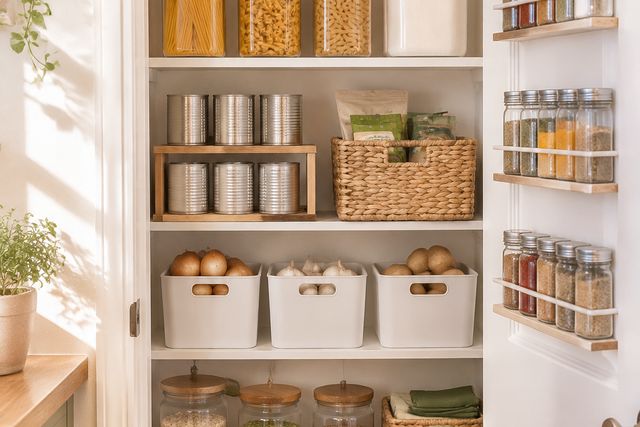
A tiered riser shows every can, a turntable keeps oils and sauces from disappearing in corners, and an over-the-door rack holds spices and wraps. See small pantry organization ideas for more.
Before buying risers or a door rack, check clearances: the door must close over a door rack, and a riser needs room above it for the tallest can.
7Label shelves and containers
Label the containers and the shelf edges. Shelf labels are what keep the zones working when someone else unpacks the groceries.
8Reset weekly before you shop
Five minutes before you write the grocery list: pull items forward, refill containers, note what is low. It keeps the pantry organized and stops you from buying duplicates.
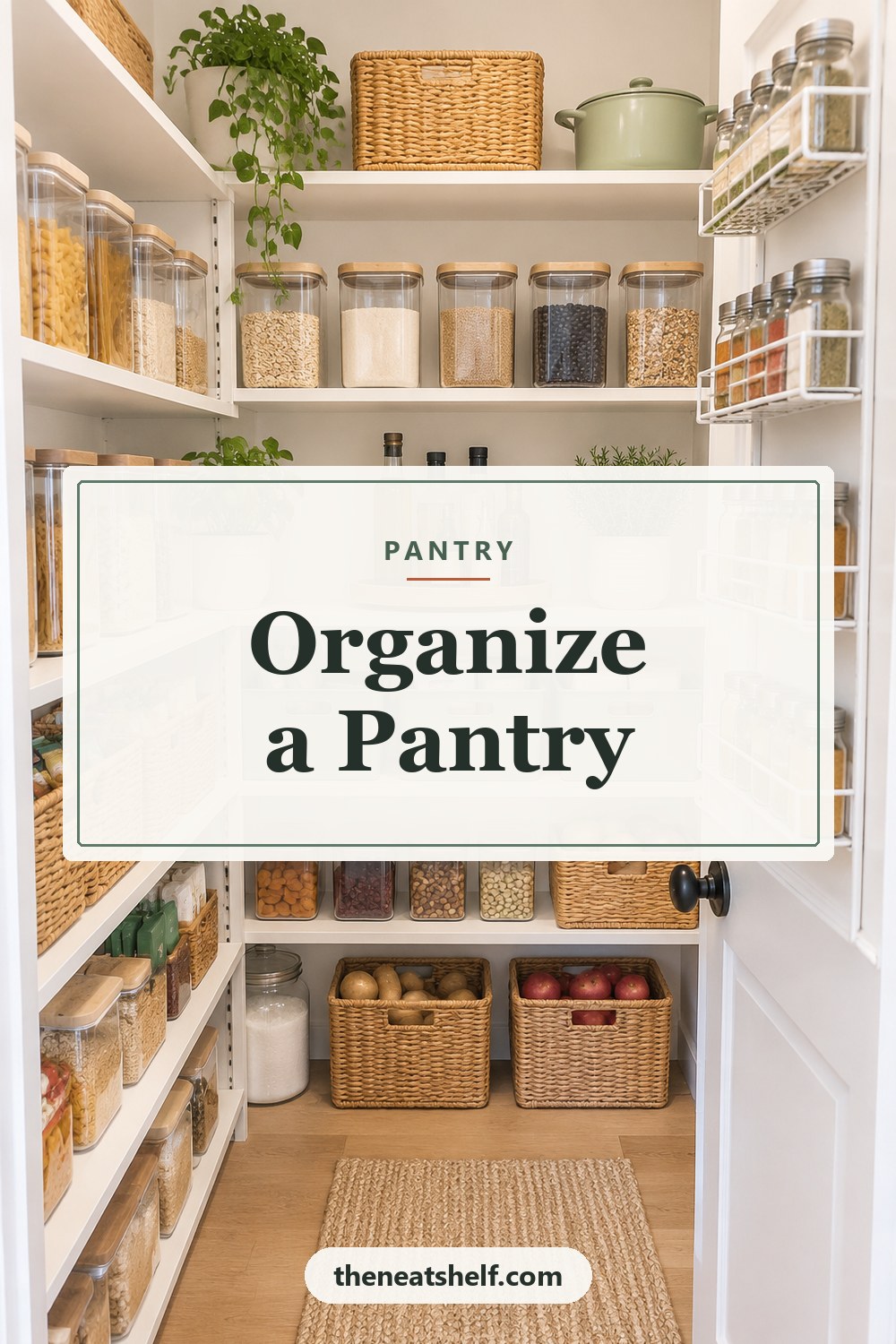
Pantry zones checklist
- Breakfast: cereal, oats, spreads, coffee and tea.
- Baking: flour, sugar, chocolate chips, baking soda, extracts.
- Dinner staples: pasta, rice, grains, sauces, broth.
- Cans and jars: vegetables, beans, tomatoes, soups.
- Snacks: one bin for adults, one for kids.
- Backstock: one bin or shelf for extras, top or bottom.
Pantry organization mistakes
Buying containers before measuring, decanting food you rarely use, and using deep shelves without bins are the three we see most. A fourth is having no backstock spot, so extra boxes end up on counters. Fix those and most pantries stay tidy with only a weekly five-minute reset.
Cabinet pantry, walk-in or reach-in?
In a cabinet pantry, think in drawers: pull-out bins on every shelf, a turntable in each corner, and the door for spices. In a reach-in pantry closet, the shelves are often deep, so bins and risers matter most; see deep pantry shelf organization. In a walk-in, use every wall, keep the floor for heavy items and drinks, and give bulk buys their own backstock shelf.
No pantry at all? Use a tall cabinet or a freestanding pantry shelf in the kitchen or hallway, with the same zones.
Pantry organizers worth buying first
- Clear bins with handles for packets and snacks.
- A tiered riser for cans.
- A turntable for oils, vinegars and sauces.
- Square airtight containers for the 5 foods you use most.
- An over-the-door rack if the door has clearance.
- Labels for shelves and containers.
Every guide in this series
Keeping it that way
Do the whole job in one session if you can; a pantry takes two to three hours. If not, do one shelf per day, top to bottom. Grab our free printable pantry labels for the labeling step, and if you are building or adjusting shelves, see how deep pantry shelves should be.
Get the free pantry labels
Free printable pantry labels: 48 jar labels with a best-by line, 20 bin and shelf labels and blank labels. 7-page PDF, print at home on sticker paper.
Everything mentioned in this guide
One list, so you can check sizes against your own measurements. Links go to Amazon; we may earn a commission.
Questions people ask
How do you organize a pantry step by step?
Empty it, check dates, group like items, zone the shelves, decant only what you use often, bin the rest, use risers and the door, label, and reset weekly.
How should pantry shelves be arranged?
Most used food at eye level, heavy items low, kids' snacks within their reach and backstock up high.
How do I organize a pantry on a budget?
Use the boxes and jars you already have, buy a few bins for packets first, and add matching containers slowly for the foods you use most.
How often should a pantry be cleaned out?
Do a quick reset weekly and a full clean-out with date checks two or three times a year.
How do I keep my pantry organized with kids?
Give kids one low bin or shelf for their snacks, label everything with words or pictures, and keep treats you want to limit up high.