Best Pantry Storage Containers (and When to Skip Them)
The best pantry containers are square airtight canisters with a silicone seal, used for foods you buy often such as pasta, rice, oats and cereal. Choose cereal dispensers for kids, large wide-mouth canisters with a scoop for flour and sugar, glass jars for small amounts on open shelves and clear bins for packets. Skip decanting anything you buy rarely.
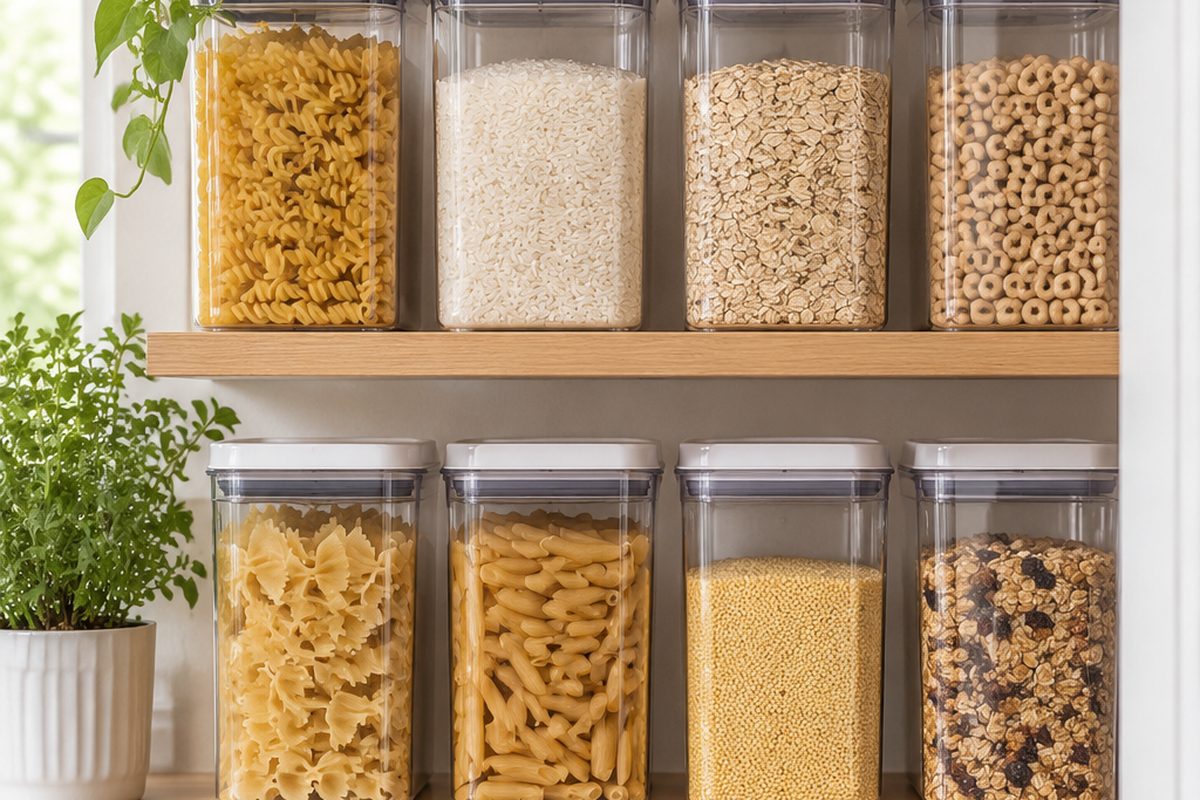
Matching containers are what make pantry photos look calm, but they are also where pantry budgets disappear. The right containers keep food fresh, show you when you are running low and use the shelf space better than boxes. The wrong ones are expensive, hard to refill and end up half empty at the back.
Here are the container types worth buying, what each one is best at, and which foods you can leave in their packaging. No prices, because they change; check the current listing for sizes and reviews.
Our picks at a glance
Square shapes stack and line up on shelves, and the seal keeps dry goods fresh.
Check pricePour spout makes them easy for kids and keeps cereal crisp.
Check priceWide openings fit a measuring cup, and a full bag fits in one go.
Check pricePlastic-free and good-looking for open shelves; best for smaller amounts.
Check priceNo decanting needed: bins group packets so they pull out like drawers.
Check priceWaterproof labels that survive washing and show what is inside.
Check price1Decide what to decant
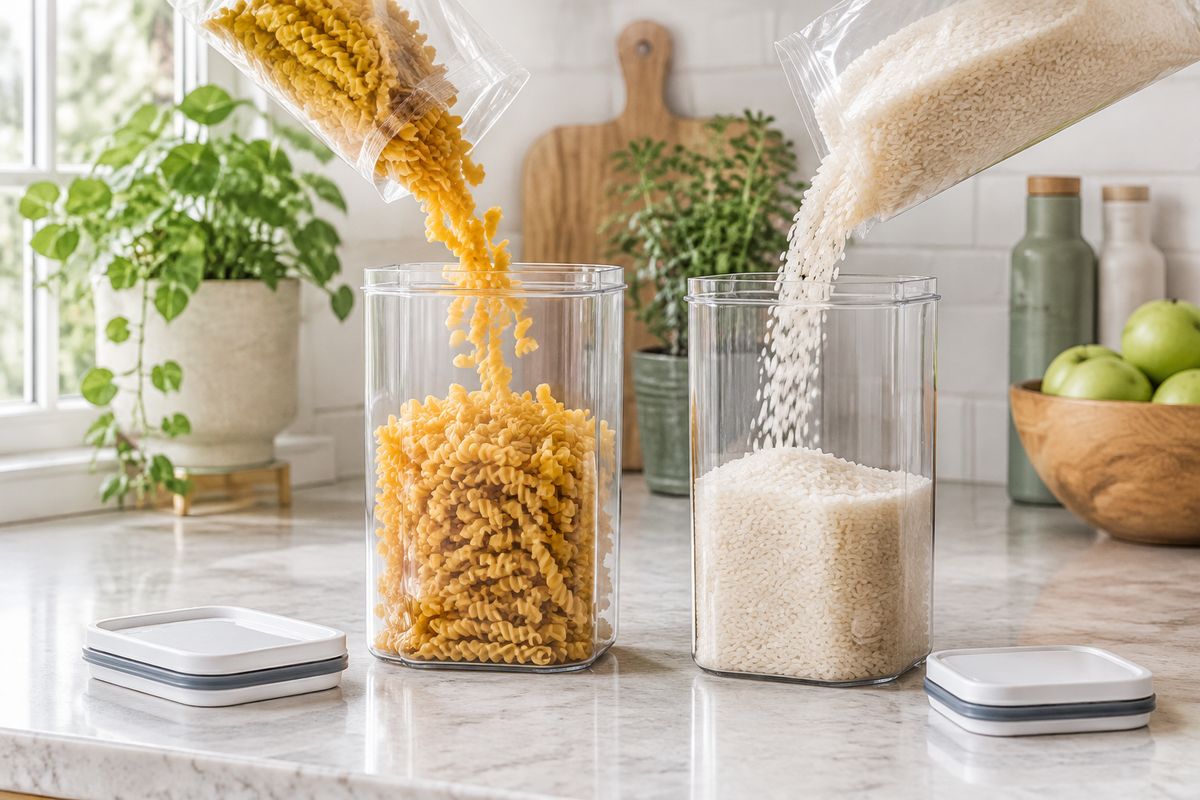
Decant food you buy often and in the same size: pasta, rice, oats, cereal, flour, sugar, snacks you buy weekly. These containers get refilled regularly, so the effort pays back.
Leave things in their packaging if you buy them rarely, in changing sizes, or if the box has instructions you need. Those go in open bins instead. A pantry that is half decanted and half binned is normal, and much easier to keep up.
2Square beats round
Round jars waste the corners of every shelf. Square or rectangular canisters sit flush side by side and front to back, so the same shelf holds more. Pick a set with a common footprint so containers of different heights still line up and stack.
Measure your shelves before choosing sizes: depth decides how many containers fit front to back, and the height between shelves decides how tall the tallest one can be. Leave an inch above each container so you can lift the lid without taking it off the shelf.
3Check the seal and the opening
A good pantry container has a silicone gasket and a lid that locks or clicks. That keeps out moisture and pantry moths. The opening matters too: wide enough for a measuring cup for flour and sugar, and for your hand when the container is half empty.
4Cereal and snacks: dispensers
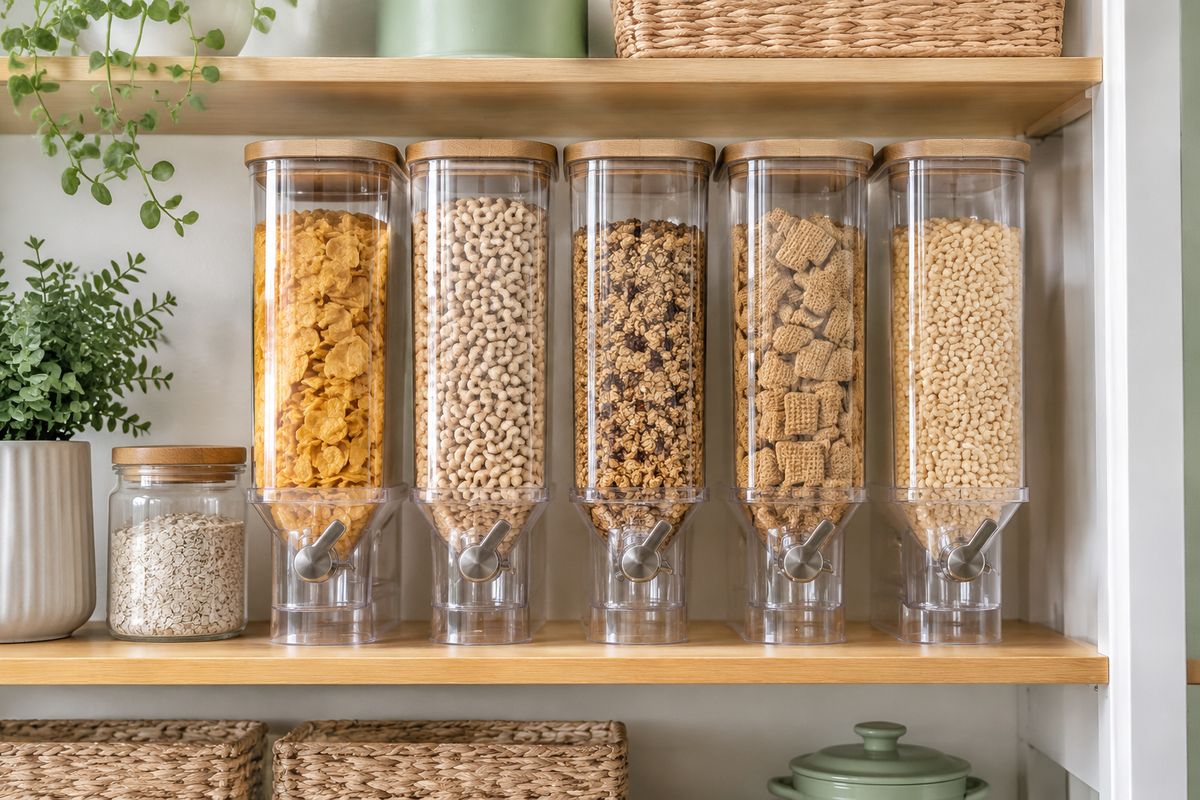
Cereal dispensers with a pour spout let kids serve themselves without spilling half a box. Choose ones that fit a whole box of your usual cereal, and that come apart for washing.
5Glass for open shelves and small amounts
Glass jars look beautiful on open shelves and do not stain or hold smells. They are heavier and breakable, so keep them for smaller amounts: spices, nuts, seeds, tea, coffee beans and baking extras. Store them at a height where they are easy to lift down.
6Bins for everything you do not decant
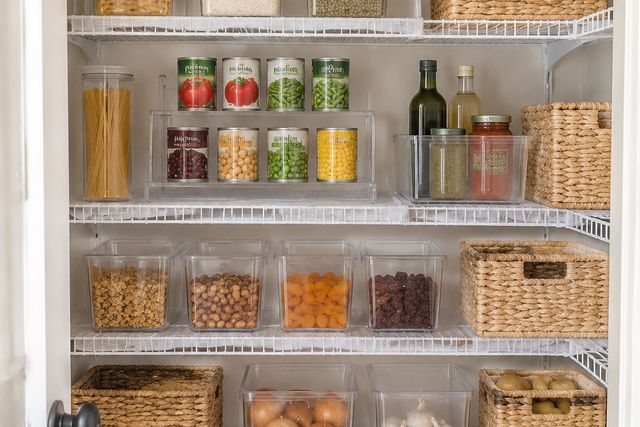
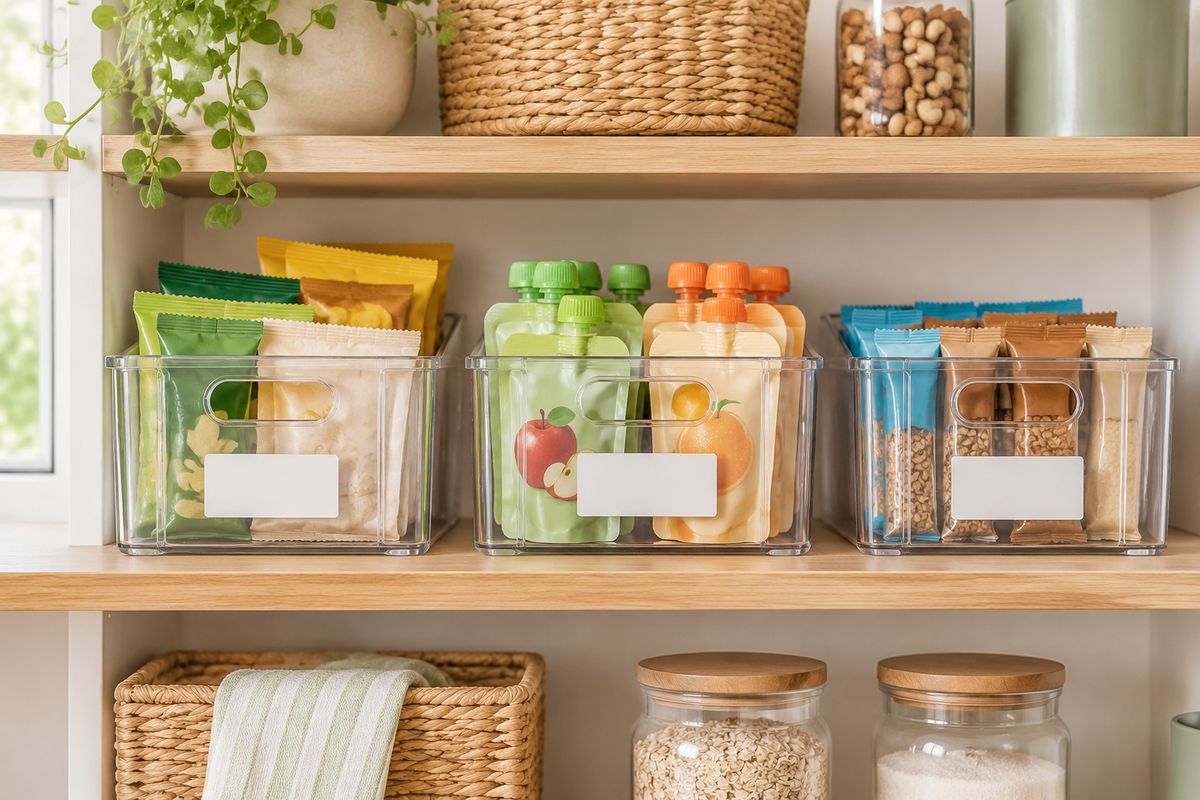
Packets of sauce mixes, bags of chips, granola bars and pouches belong in clear bins with handles. Each bin is one category. You pull out the bin, take what you need and slide it back, and you can see at a glance when it is getting low.
7Label lids and fronts
Label every container on the front, and add the expiry date with a dry-erase marker or a strip of tape on the bottom. Labels make sure everyone in the house refills the right container and puts it back in the right spot.
How many containers do you need?
Count before you buy. List the foods you buy at least twice a month and want to decant, then match each to a size: tall for pasta and cereal, medium for rice and oats, small for snacks and baking extras. Most pantries need 8 to 15 containers, not 30. Add bins for everything else.
Buying a big set because it is better value only works if you use every size. Half-empty containers at the back of the shelf are the most common pantry regret.
Keeping containers clean and fresh
- Never top up old food with new; empty, wash and dry the container first.
- Wash gaskets separately and let everything dry fully before refilling.
- Cut the cooking instructions off the package and tape them inside the lid.
- Write expiry dates on the bottom with a marker.
- Keep containers away from the stove and direct sun.
A starter set for most pantries
- Two tall containers: pasta and cereal.
- Three medium: rice, oats and a second grain or snack.
- Two large with wide openings: flour and sugar.
- Four small: brown sugar, chocolate chips, nuts and seeds.
- Four to six clear bins for everything else.
Keeping it that way
Start with the five foods you use most and live with them for a few weeks before buying more containers.
For the whole pantry, see small pantry organization ideas, deep pantry shelf organization and snack organization ideas. Finish the set with our free printable pantry labels, and check how deep pantry shelves should be before you choose container sizes.
Get the free pantry labels
Free printable pantry labels: 48 jar labels with a best-by line, 20 bin and shelf labels and blank labels. 7-page PDF, print at home on sticker paper.
Everything mentioned in this guide
One list, so you can check sizes against your own measurements. Links go to Amazon; we may earn a commission.
Questions people ask
Are airtight containers worth it for the pantry?
Yes, for foods you use often. They keep flour, cereal and snacks fresh longer and keep out moisture and pantry moths.
Is glass or plastic better for pantry storage?
Plastic is lighter and safer on high shelves and for kids. Glass looks better and does not stain, so it suits smaller amounts on lower shelves.
What should you not decant?
Foods you buy rarely, in changing package sizes, or that need the instructions on the box. Store them in bins instead.
How do I stop pantry moths?
Use airtight containers, check new flour and grains, wipe up crumbs, and empty and wash containers before refilling.