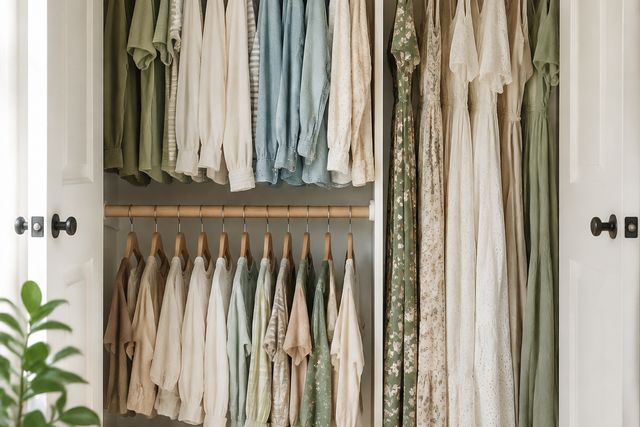
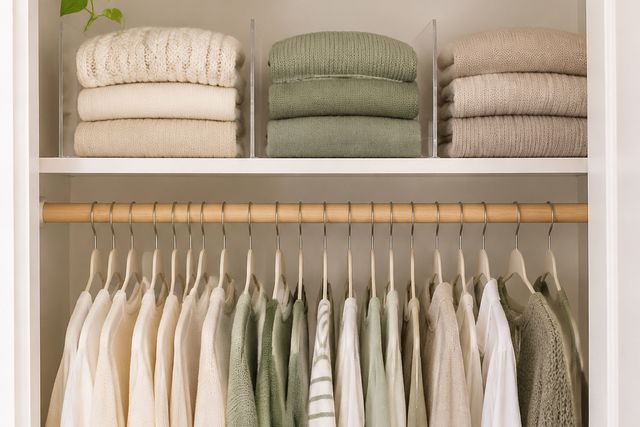
Shelf Divider Ideas: 10 Ways to Keep Closet Shelves Neat
Shelf dividers are upright panels that clip onto or stand on a shelf to keep stacks from toppling. Use clear acrylic clip-on dividers for solid wood shelves, hook-on wire dividers for wire shelving, and space them about 12 inches apart for sweaters, towels and sheet sets so each stack stays upright on its own.
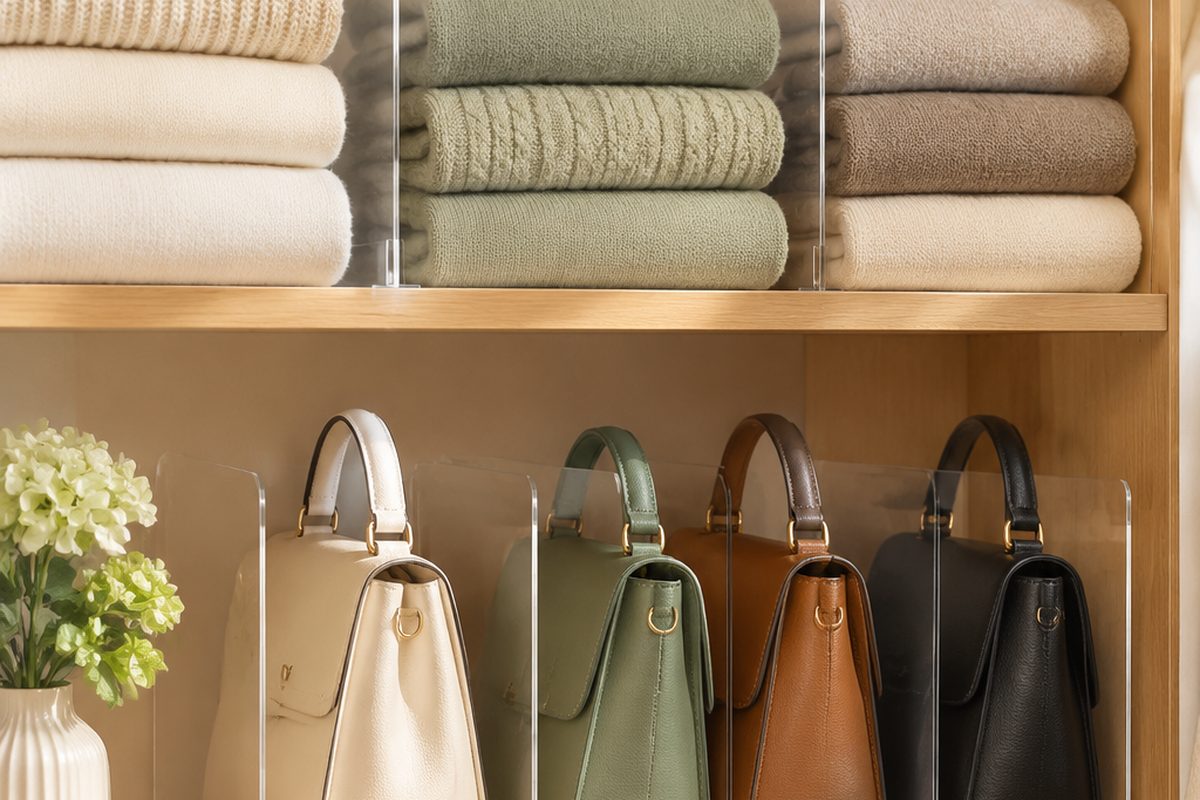
A closet shelf without dividers works for about a week. Then one sweater gets pulled from the middle, the stack leans into its neighbor, and soon the whole shelf is one slumped pile. Dividers fix that by giving every stack two walls.
They are also one of the cheapest upgrades in any closet, and they work far beyond sweaters: purses, linens, baking sheets and pantry bags all stay put with the right divider. The main thing to get right is matching the divider to your shelf, because clip-on styles made for wood do not fit wire, and vice versa. For whole-shelf layouts, see closet shelf organization ideas.
- Clear acrylic clip-on dividers
- Wire dividers for wire shelving
- Metal clip-on dividers for heavy stacks
- Space dividers for sweater stacks
- Purse dividers to keep bags upright
- Linen closet dividers for towels and sheets
- Vertical dividers for pantry trays and baking sheets
- Freestanding dividers for shelves that are too thick
- DIY dividers from wood or craft board
- Combine dividers with an under-shelf basket
1Clear acrylic clip-on dividers
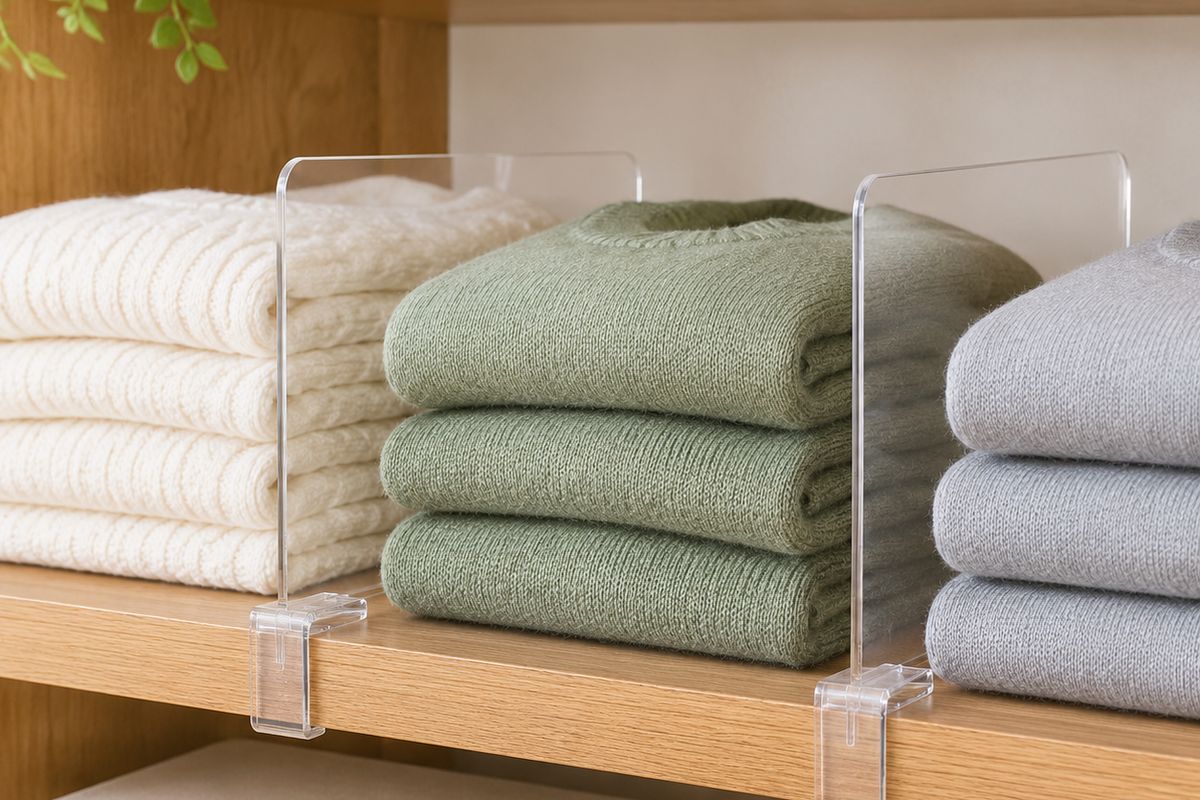
Clear acrylic dividers slide over the front edge of a solid shelf and grip it from above and below. They almost disappear visually, so the shelf looks like a row of tidy stacks rather than a row of hardware. Most are around 8 to 12 inches (20 to 30 cm) tall.
Check the clip opening before you buy. Many fit shelves up to about 3/4 inch (2 cm) thick, and thicker closet shelves may need a different model. The clip should be snug enough that the divider does not tilt when you pull a sweater out of the stack.
2Wire dividers for wire shelving
On ventilated wire shelves, clip-on acrylic dividers cannot grip, because there is no solid edge to clamp onto. Use wire dividers made to hook over the bars instead. They lock between the wires and stay straight under a full stack of towels or jeans. Check the product notes for the wire spacing it fits, since systems differ slightly.
Add a shelf liner too, so folded clothes do not get striped by the bars and small items do not slip through. Our wire shelving organization ideas cover liners and bins for the same closets.
3Metal clip-on dividers for heavy stacks
Chrome or black metal dividers that clamp onto solid shelves are a sturdier choice for heavy stacks like jeans, towels and blankets. Some have a tension screw that tightens against the shelf, which suits thicker or slightly uneven shelves where a fixed clip would wobble.
They are more visible than acrylic, so match the finish to your closet rod or hardware for a clean look. Tighten the screw by hand only; too much pressure can dent a soft particleboard shelf or crack the laminate edge. Use two dividers per stack wall on very deep shelves.
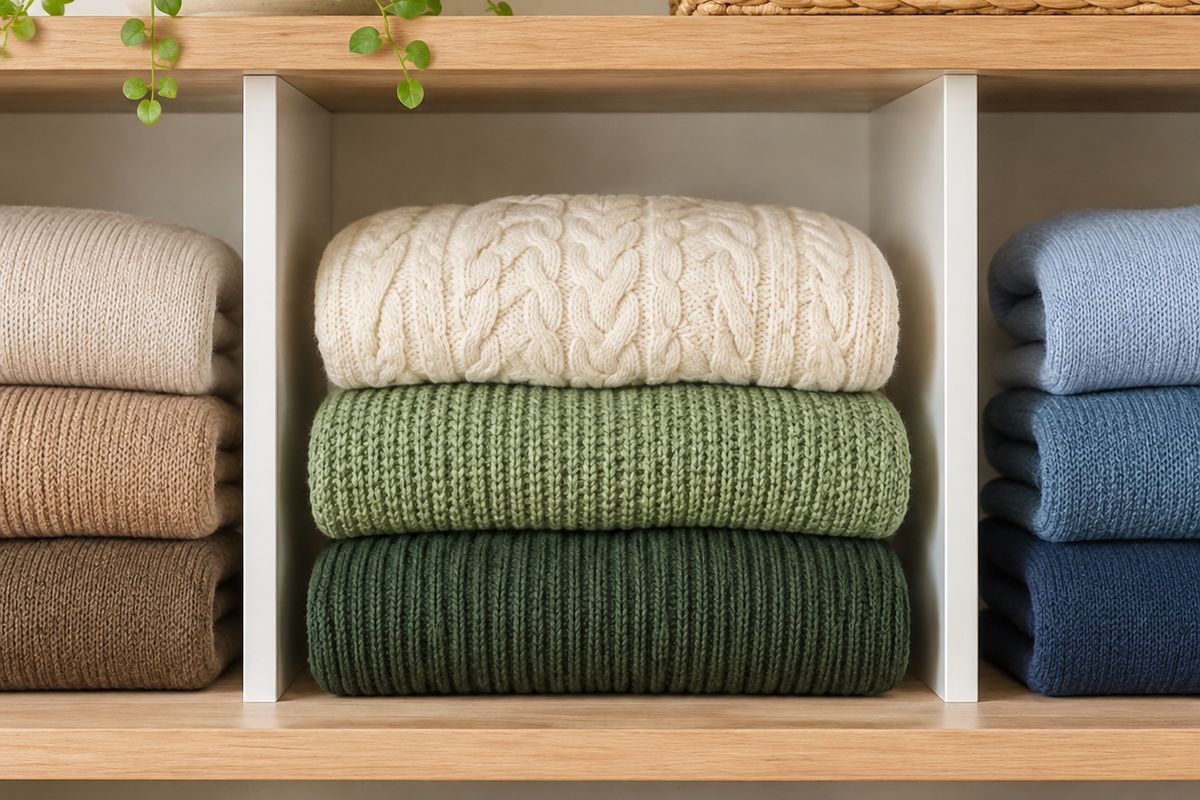
4Space dividers for sweater stacks
A stack of folded sweaters is about 10 to 12 inches (25 to 30 cm) wide, so space dividers about 12 inches (30 cm) apart. Keep stacks to about 10 to 12 inches high, usually three or four sweaters, so you can pull one from the middle without toppling the rest.
Fold every sweater to the same width, using a folding board if it helps, and group by type or color. Put the sweaters you wear most on the shelf closest to the door, and keep heavy knits on the bottom of each stack.
5Purse dividers to keep bags upright
Handbags lose their shape when they lean on each other. Dividers on the top closet shelf give each bag its own lane, standing upright with the handle facing out so you can lift it down. Space them a couple of inches wider than your widest bag, often 10 to 14 inches (25 to 36 cm).
Stuff soft bags with tissue paper or a purse insert so they hold their shape, and keep dust bags folded inside. Rarely used evening bags can go in a clear box at the end of the row. Our purse and handbag storage ideas cover clutches and crossbody bags too.
6Linen closet dividers for towels and sheets
In a linen closet, dividers separate bath towels from hand towels and keep folded sheet sets from merging into one pile. Store one sheet set per section, folded and tucked into its own pillowcase, so you grab a complete set in one move.
For deeper linen shelves, put the divided stacks at the front and a bin of spare items behind them. Label the shelf edge with the bed or bathroom each section belongs to. See linen closet organization ideas for the full layout, including how many sets to keep per bed.
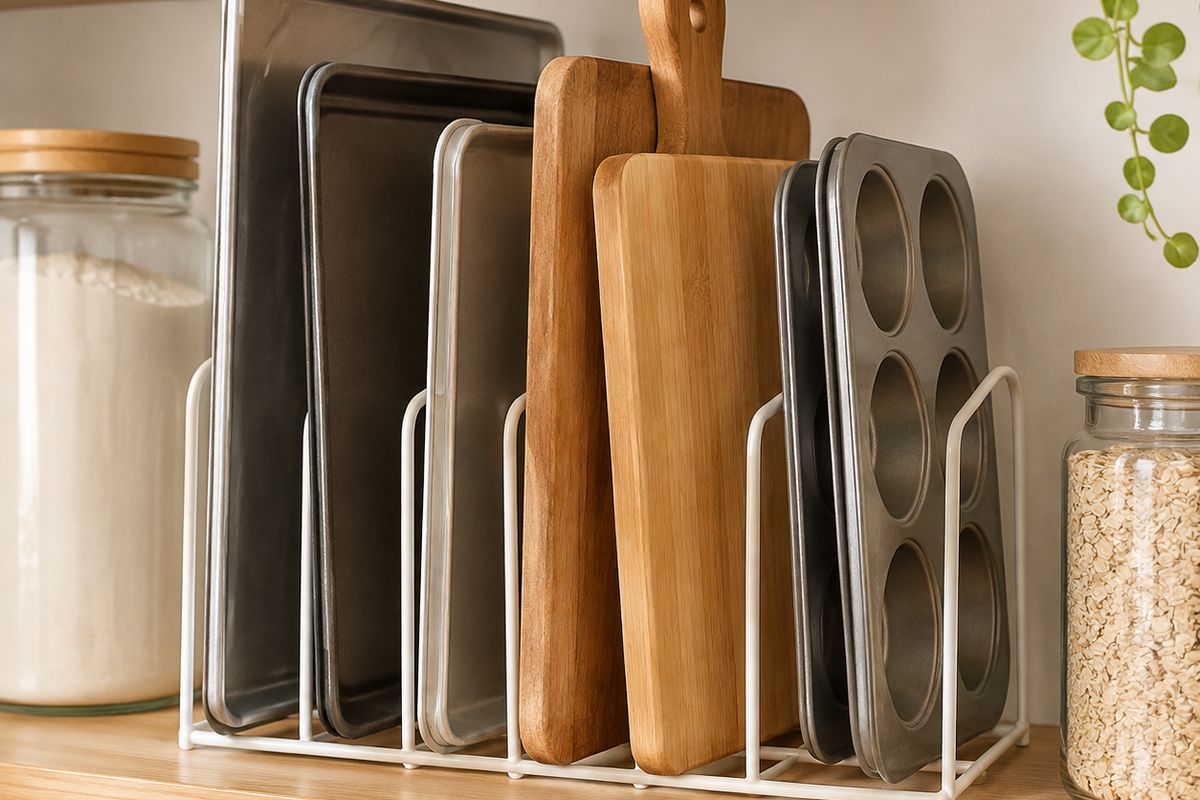
7Vertical dividers for pantry trays and baking sheets
Baking sheets, cutting boards and muffin tins are easier to grab standing on edge than stacked flat. A rack of vertical dividers, in wire or bamboo, sits on a pantry or cabinet shelf and holds them like files. Leave about 1.5 inches (4 cm) per slot for most sheet pans.
The same rack works for pantry bags like chips and pasta, which slump over on an open shelf. Our guide on how to organize a pantry shows where these fit by zone, next to bins and risers. Measure the shelf height first: tall sheet pans need about 18 inches (46 cm) of clearance.
8Freestanding dividers for shelves that are too thick
If clip-on dividers will not fit your shelf thickness, use freestanding ones with an L-shaped base that slides under the stack. Tall metal bookends work the same way for smaller stacks. The weight of the folded items holds them in place, so there is nothing to clamp.
They are also the answer on shelves with a raised front lip or decorative trim, where clip-on styles cannot reach the edge, and on glass shelves, where a metal clip could scratch or chip the surface. Add felt pads under the base on delicate finishes.
9DIY dividers from wood or craft board
For a built-in closet or an unusual shelf, cut your own. Thin plywood or sturdy craft board, cut to the shelf depth and about 10 inches (25 cm) tall, can be fixed with small L-brackets or slotted into a strip of wood glued along the shelf. Sand the edges and paint them to match the closet so they look built in.
For a renter-friendly version that leaves no holes, use tall bookends wrapped in fabric, or slim boxes cut to shelf depth as walls between stacks. Both can be moved whenever your wardrobe changes.
10Combine dividers with an under-shelf basket
A divider handles the stacks on top of the shelf, and an under-shelf basket hanging below handles small flat things like scarves, tank tops or clutches. Together they turn one shelf into two zones without adding any shelving or drilling any holes.
Check that the basket's clips fit the shelf thickness, just as with the dividers. In a small walk-in closet, this combination often frees up a whole shelf for shoes or bags. Start with the shelf you use daily and add the basket only if small items still pile up on top.

Which shelf divider fits your shelf?
| Shelf type | Divider to use | What to check |
|---|---|---|
| Solid wood or laminate, up to about 3/4 in (2 cm) thick | Clear acrylic or metal clip-on | Clip opening matches shelf thickness |
| Thick solid shelf, over 1 in (2.5 cm) | Freestanding L-base or tension-screw metal | Base fits under the stack |
| Ventilated wire shelving | Wire dividers that hook over the bars | Made for wire shelves; add a liner |
| Shelf with raised front lip or glass shelf | Freestanding dividers or bookends | Clip styles cannot reach past the lip |
| Pantry or cabinet shelf | Vertical divider rack | Slot width for your pans and boards |
Measure shelf thickness with a ruler at the front edge, where the clip will sit, rather than relying on the closet's specifications.
How far apart to space shelf dividers
- Sweaters and sweatshirts: about 12 in (30 cm) apart, stacks 3 to 4 items high.
- Jeans: 12 to 14 in (30 to 36 cm), folded in thirds.
- Bath towels: 12 to 14 in (30 to 36 cm), folded to the shelf depth.
- Handbags: the width of the bag plus about 2 in (5 cm).
- Sheet sets: one set per section, about 12 in (30 cm).
Mistakes to avoid
The most common one is buying clip-on dividers without measuring the shelf thickness. The second is spacing them too far apart, which leaves room for two stacks to lean together, the very problem you were trying to fix. And stacks taller than the divider will still topple, so keep them below its top edge.
Keeping it that way
Measure your shelf thickness, count your stacks and buy one more divider than you think you need. Install them, fold everything to the same width and step back: the shelf should look like neat columns.
For the overall plan for every shelf in the house, see how to organize shelving.
Get the free Declutter Kit
A 7-page printable: room-by-room checklists, the 30-day challenge calendar and a 10-minute weekly reset. Free, straight to your inbox.
Everything mentioned in this guide
One list, so you can check sizes against your own measurements. Links go to Amazon; we may earn a commission.
Questions people ask
Do shelf dividers work on wire shelves?
Only the kind made for wire. Clip-on acrylic dividers need a solid edge to grip, so use wire dividers that hook over the bars and add a shelf liner underneath.
How thick a shelf will clip-on dividers fit?
Many fit shelves up to about 3/4 inch thick, but it varies by model. Measure at the front edge and check the product's clip opening before buying.
How far apart should closet shelf dividers be?
About 12 inches for sweaters and sheet sets and 12 to 14 inches for jeans and towels. For purses, use the bag width plus about 2 inches.
What can I use instead of shelf dividers?
Tall bookends, freestanding L-base dividers, slim boxes or DIY panels cut from thin plywood all work. On wire shelves, bins with straight sides can act as dividers too.
Are acrylic shelf dividers sturdy enough?
Yes, for sweaters, towels and handbags. For very heavy stacks like denim, or on thick shelves, a metal divider with a tension screw holds better.