How Much Closet Space Per Person Do You Really Need?
Plan about 4 to 6 feet (1.2 to 1.8 m) of hanging rod per adult, plus 2 to 4 feet of shelf or drawer space for folded clothes. Each shirt on a slim hanger takes about 1 inch (2.5 cm) of rod, sweaters and jackets about 2 inches, and coats 3 to 4 inches. Double hang roughly doubles capacity.
Most closet advice gives one number, but closet space is really a math problem: how many pieces you hang, how thick your hangers are, and how much folds instead. Once you count, the right amount of space for each person becomes obvious, and so does the reason a shared closet feels crowded.
Below are rule-of-thumb amounts per person, the inches each type of clothing takes on a rod, and how to plan shelves, drawers and shoes. These are practical planning figures used by closet designers, not official standards, so use them as a starting point and adjust to your wardrobe.
| Item | Rod space per item | Example |
|---|---|---|
| Shirts, blouses, dresses on slim hangers | About 1 in (2.5 cm) | 30 shirts = about 30 in of rod |
| Shirts on thick plastic or wood hangers | 1.5 to 2 in (4 to 5 cm) | 30 shirts = 45 to 60 in |
| Pants folded over hangers | 1 to 1.5 in (2.5 to 4 cm) | 15 pants = 15 to 23 in |
| Sweaters, blazers, suit jackets | 2 in (5 cm) | 10 blazers = 20 in |
| Suits | 2 to 3 in (5 to 8 cm) | 5 suits = 10 to 15 in |
| Winter coats | 3 to 4 in (8 to 10 cm) | 4 coats = 12 to 16 in |
Add 10 to 20 percent extra so hangers slide freely and new pieces fit.
1Count your hanging clothes first
Take an evening and count what you hang, by type: shirts, pants, dresses, jackets, coats. Do it after a quick declutter so you are not planning space for things you will donate; our 30-day declutter challenge is a gentle way in.
Multiply each count by its rod space from the table above, add it up, and add 10 to 20 percent for breathing room. Thirty shirts, fifteen pants, eight jackets and three coats on slim hangers comes to about 30 + 19 + 16 + 11 = 76 inches, or about 85 to 90 inches with breathing room. That is roughly 7 feet of single rod, or about 3.5 feet of double hang.

2Rule of thumb: 4 to 6 feet of rod per adult
For an average adult wardrobe, 48 to 72 inches (122 to 183 cm) of single-hang rod is a comfortable range. People with a large professional wardrobe or lots of dresses often need 8 feet or more. A minimalist wardrobe can fit in 3 feet.
Use the count from the step above to decide where you fall, and remember that a typical reach-in closet is 4 to 8 feet wide. For two adults, that is usually not enough single-hang rod, which is why double hang is the first thing to try.
3Slim hangers can free a third of your rod
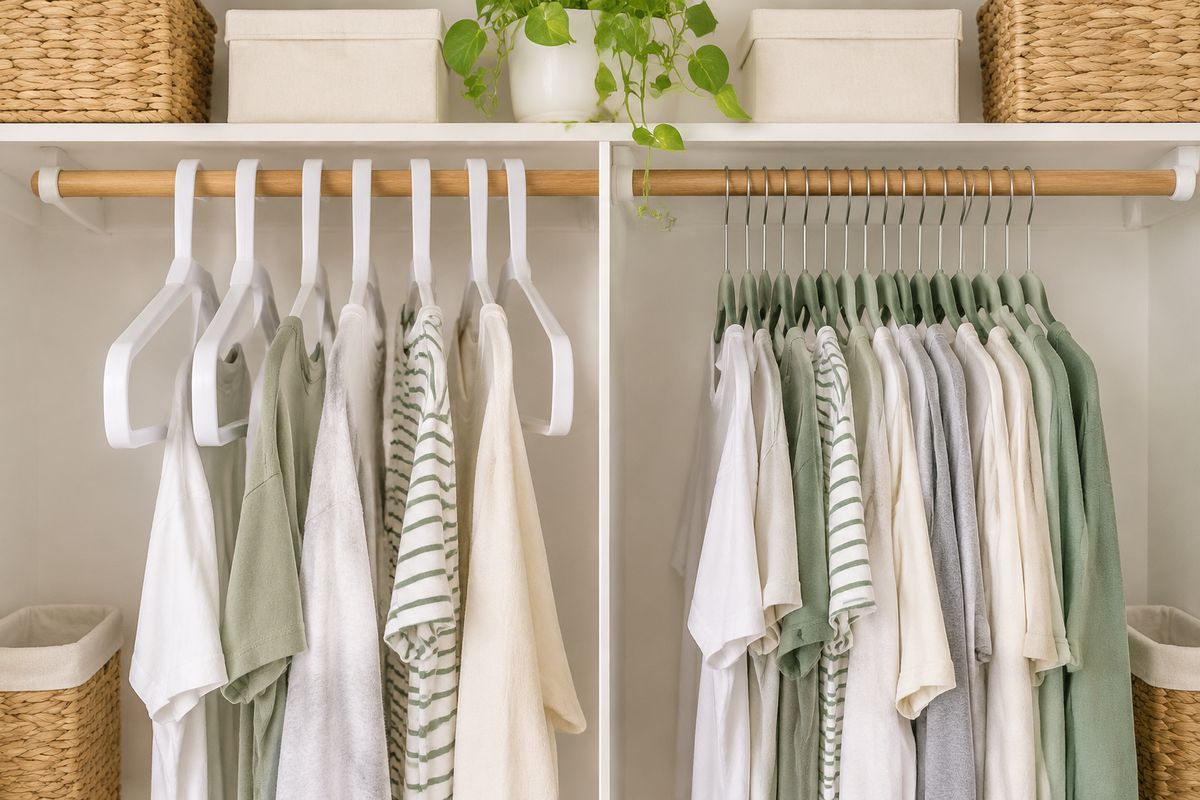
Hanger thickness is the hidden factor. Chunky plastic tube hangers and wooden hangers take 1.5 to 2 inches each, while slim velvet hangers are about 1/4 inch thick and let shirts hang about 1 inch apart. Switching a closet to matching slim hangers often frees a third or more of the rod.
The velvet surface also stops wide necklines and slippery blouses from sliding off, and one style of hanger makes the rod look tidy even when it is full. Do the swap in one go: as each item comes off its old hanger, decide whether it stays.
Keep shaped wooden hangers for suits and coats, which need the shoulder support anyway, and plan 2 to 4 inches of rod for each of them.
4Use double hang to double short-item space
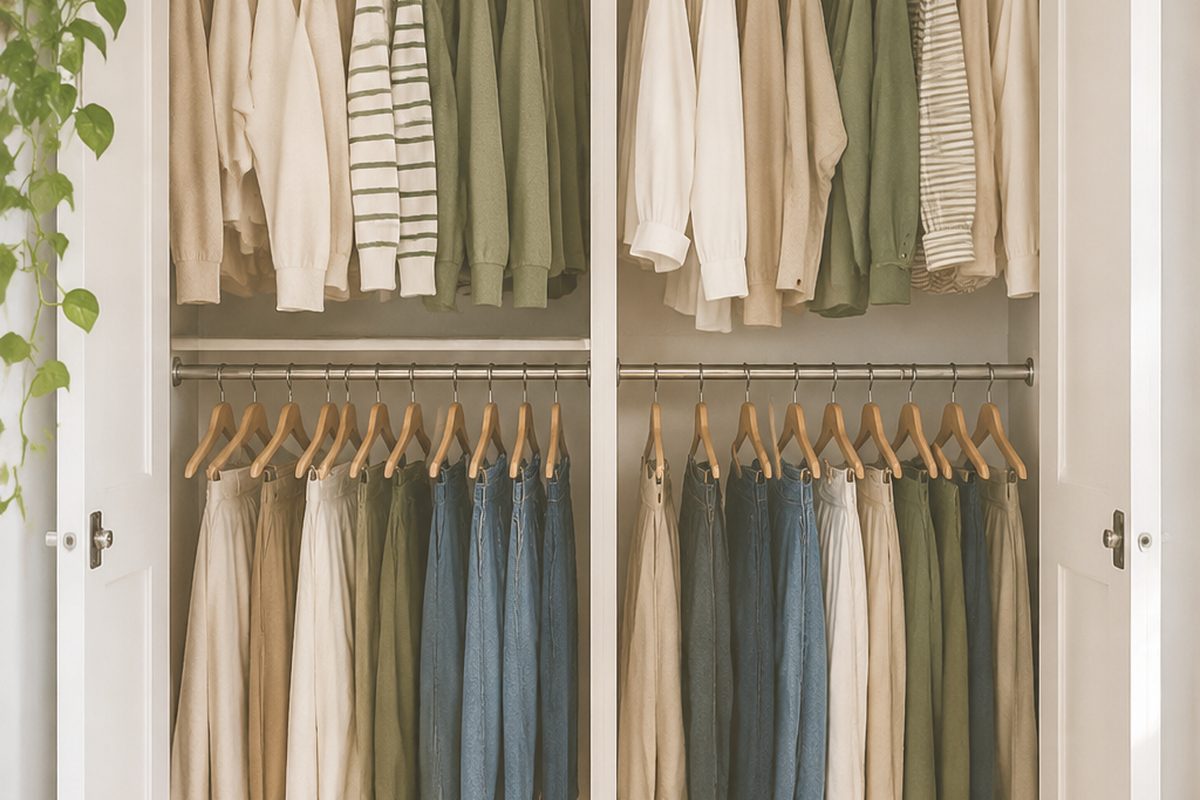
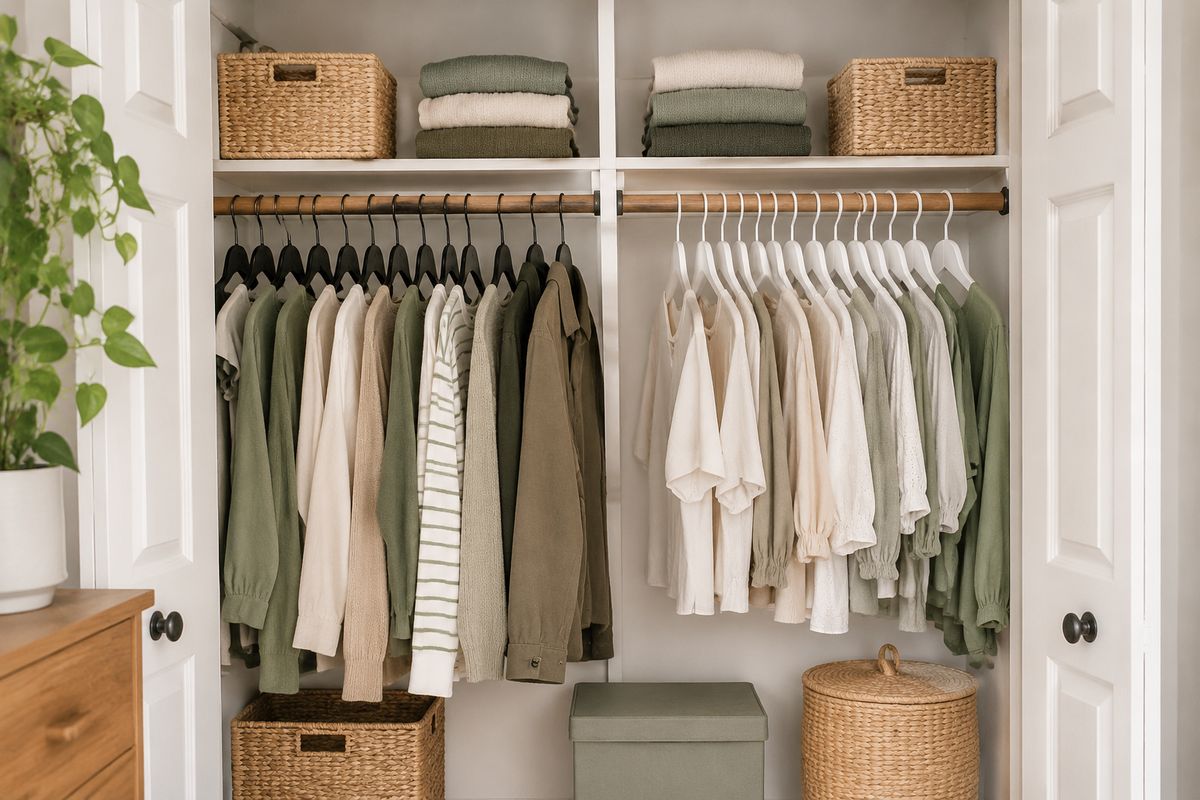
Most adult clothing is short: shirts, jackets and folded pants hang 24 to 42 inches long. With rods at about 82 and 41 inches, double hang turns 4 feet of wall into 8 feet of rod for those items. Keep 1 to 2 feet of single long hang per person for dresses, long coats and full-length pants.
Heights and setup details are in our guide to standard closet rod height. A hang-down rod is a no-drill way to test it before you commit to new brackets.
In a shared closet, double hang also makes the split easier: each person can take a vertical slice with an upper and a lower rod, instead of fighting over one long run.
5Shelf and drawer space for folded clothes
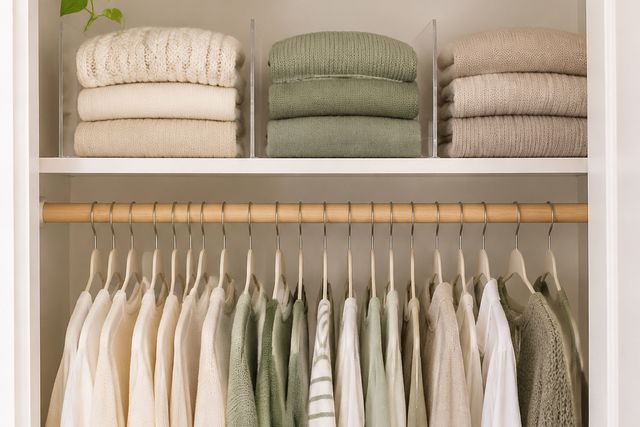
Plan for 2 to 4 feet (61 to 122 cm) of shelf width per person for folded clothes. A 12-inch-wide stack holds about 8 to 10 folded T-shirts, 6 to 8 sweaters or 4 to 6 pairs of jeans before it gets too tall to pull from. Keep stacks under about 12 inches tall, and use shelf dividers so they stay upright.
Small items belong in drawers: socks, underwear, workout clothes and pajamas usually take two to four standard drawers per adult. Our dresser drawer organization ideas show how to file-fold to fit more.
6Shoes: 7 to 10 inches per pair
On a shelf, one pair of women's flats or sneakers takes about 7 to 9 inches (18 to 23 cm) of width; men's shoes about 8 to 10 inches (20 to 25 cm). Ten pairs therefore need about 6 to 8 feet of shelf, or three short shelves stacked under the long-hang section. Boots need more height, not width.
If the closet floor is your shoe zone, an over-the-door organizer or a stackable shoe rack doubles capacity. Keep everyday pairs by the door instead; see small entryway shoe storage ideas.
7Splitting a shared closet fairly
Split by count, not by half. If one person hangs 90 inches of clothes and the other 50, a 50/50 split leaves one side stuffed and the other half empty. Measure each person's rod needs, then divide the rod and the shelves to match, with a divider or a different hanger color marking the line.
Give each person a long-hang zone, their own shelf above their side, and their own drawers or bins. Shared items like luggage and linens go on the top shelf. If it still does not fit, move off-season clothes to under-bed boxes.
Closet size guide
| Closet type | Minimum size | Notes |
|---|---|---|
| Reach-in closet depth | 24 in (61 cm) | Hangers are 17 to 19 in wide; 24 to 30 in is comfortable |
| Reach-in width for one adult | 48 to 72 in (122 to 183 cm) | Use double hang for more capacity |
| Walk-in with hanging on one side | About 60 in (152 cm) wide | 24 in of hanging plus a 36 in aisle |
| Walk-in with hanging on both sides | About 84 in (213 cm) wide | 24 + 36 + 24 in |
| Walk-in aisle | 36 in (91 cm) minimum | 42 in or more if two people dress at once |
These are common design guidelines, not building code requirements.
When the closet is simply too small
If the count says you need 10 feet of rod and the closet has 5, no organizer will close the gap. The options are to rotate seasons, move folded clothes to a dresser, add a freestanding wardrobe or garment rack, or edit the wardrobe. Most people end up using a mix.
Our small walk-in closet organization guide covers tight walk-ins, and how to organize a closet walks through the full sort.
Keeping it that way
Count first, then plan. Most people find they have more rod than they think once hangers are slim and short clothes are double-hung, and less than they think once the coats are counted.
Write down your numbers and keep them; they make shopping for a closet system much faster, because you will know exactly how many feet of rod and shelf you need.
Get the free Declutter Kit
A 7-page printable: room-by-room checklists, the 30-day challenge calendar and a 10-minute weekly reset. Free, straight to your inbox.
Everything mentioned in this guide
One list, so you can check sizes against your own measurements. Links go to Amazon; we may earn a commission.
Questions people ask
How many feet of closet space does one person need?
About 4 to 6 feet of hanging rod and 2 to 4 feet of shelf or drawer space for an average adult. A larger wardrobe may need 8 feet or more of rod.
How many hangers fit in a foot of closet rod?
About 12 shirts on slim velvet hangers, 6 to 8 on thick plastic or wooden hangers, and only 3 to 4 winter coats.
How much closet space does a couple need?
Usually 8 to 12 feet of hanging rod combined, plus shelves and drawers. With double hang, a 6-foot reach-in can work for two people with moderate wardrobes.
How do you split a shared closet?
Measure each person's hanging clothes and divide the rod in proportion, not in half. Give each person a long-hang zone, a shelf and their own drawers.
What is the minimum depth for a closet?
24 inches (61 cm) for hanging clothes, because hangers are 17 to 19 inches wide. Shallower closets work better with shelves, hooks or a front-facing rod.