How to Organize a Closet in 8 Steps
To organize a closet, empty it completely and edit with three questions: do I wear it, does it fit now and would I buy it again? Measure and plan zones, switch to matching slim hangers, add a second rod and shelves, use dividers and labeled bins, get shoes off the floor and keep it tidy with one in, one out.
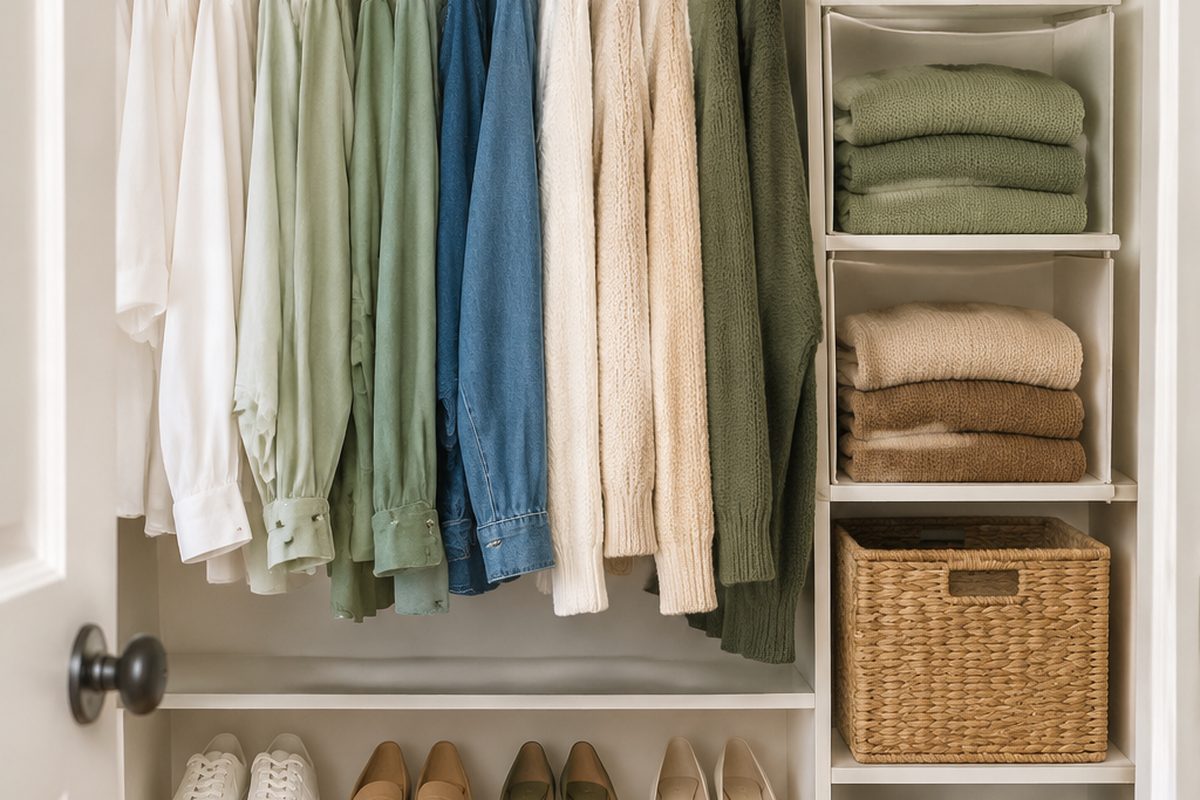
Closet organization works the same way in a small reach-in, a shared wardrobe and a walk-in: edit what you own, use the full height, and give every category a home you can see. The difference between a closet that stays organized and one that falls apart is almost always the first step.
Here is the full process, with links to our detailed guides for each type of closet. The complete list is at the end.
1Empty the closet completely
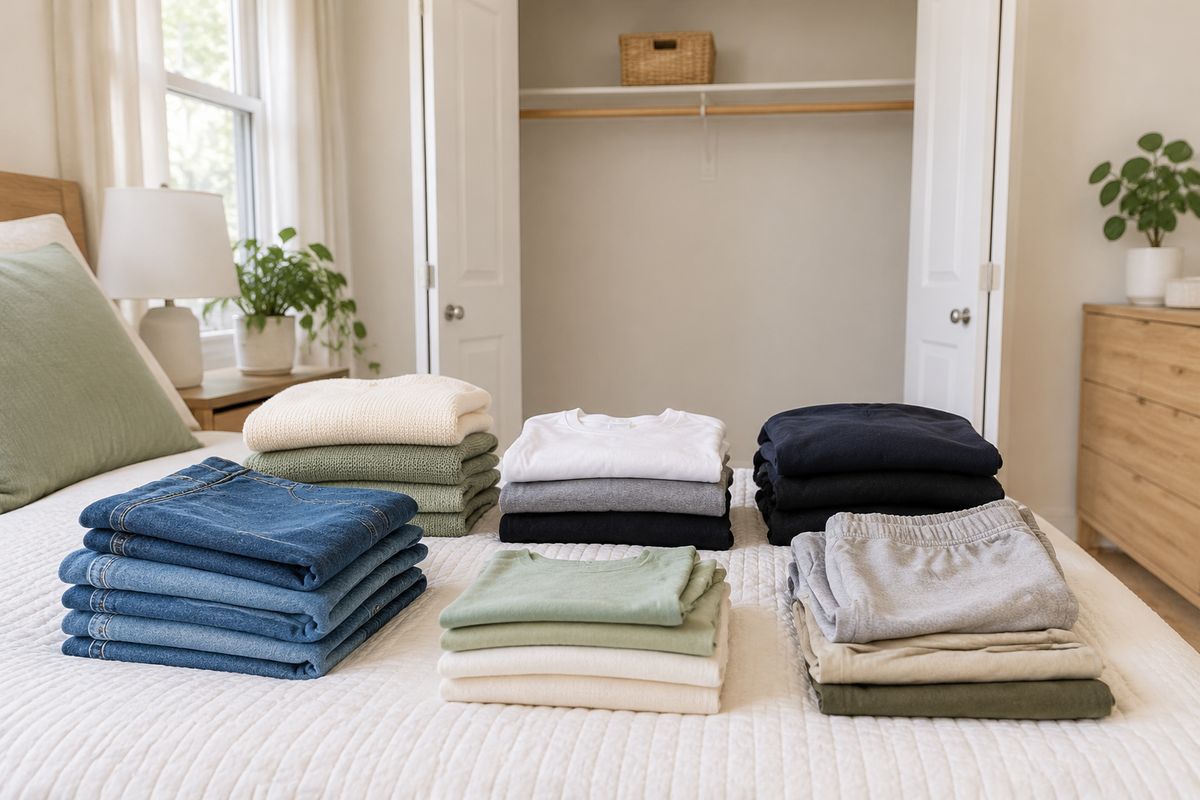
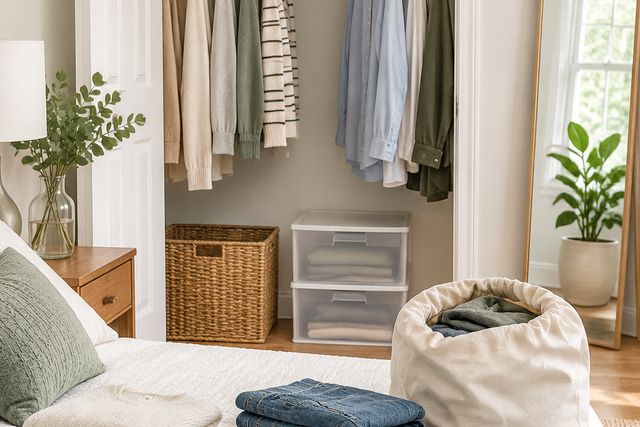
Take everything out and put it on the bed. You will see what you own, and you will notice the closet itself: how much rod space, how many shelves, what is wasted. Wipe the shelves and vacuum the floor while it is empty.
Set up three bags or boxes before you begin: donate, sell or repair, and trash. Clothes will move fast once you start, and having somewhere to put each decision keeps the bed from turning into one big pile.
2Edit with three questions
Do I wear it? Does it fit now? Would I buy it again today? Anything that fails two of the three goes into the donate bag. Repairs that have waited more than six months go too. Our declutter checklist by room has a full closet list.
3Measure and plan zones
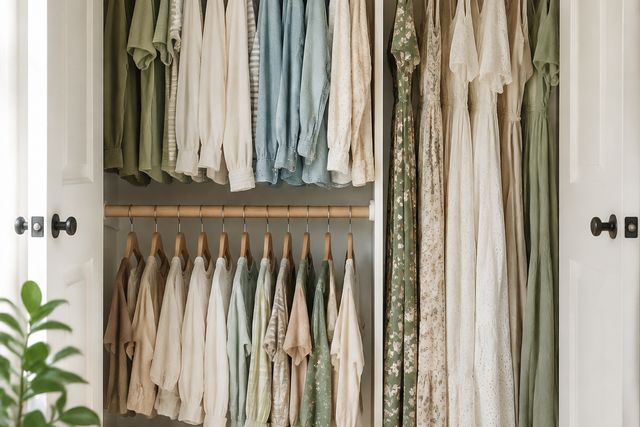
Measure the rod length, the height under the rod and shelf depths. Then plan: long hanging (dresses, coats), short hanging (shirts, skirts), folded (sweaters, jeans), shoes, accessories. Put what you wear most in the middle, at eye level.
If your closet has adjustable shelves or a modular system, now is the time to move them. Many closets come with one rod at a height that suits no one. Raising a shelf by a few inches can make room for a second row of bins, and lowering a rod can put everyday clothes within easy reach.
4Switch to matching slim hangers
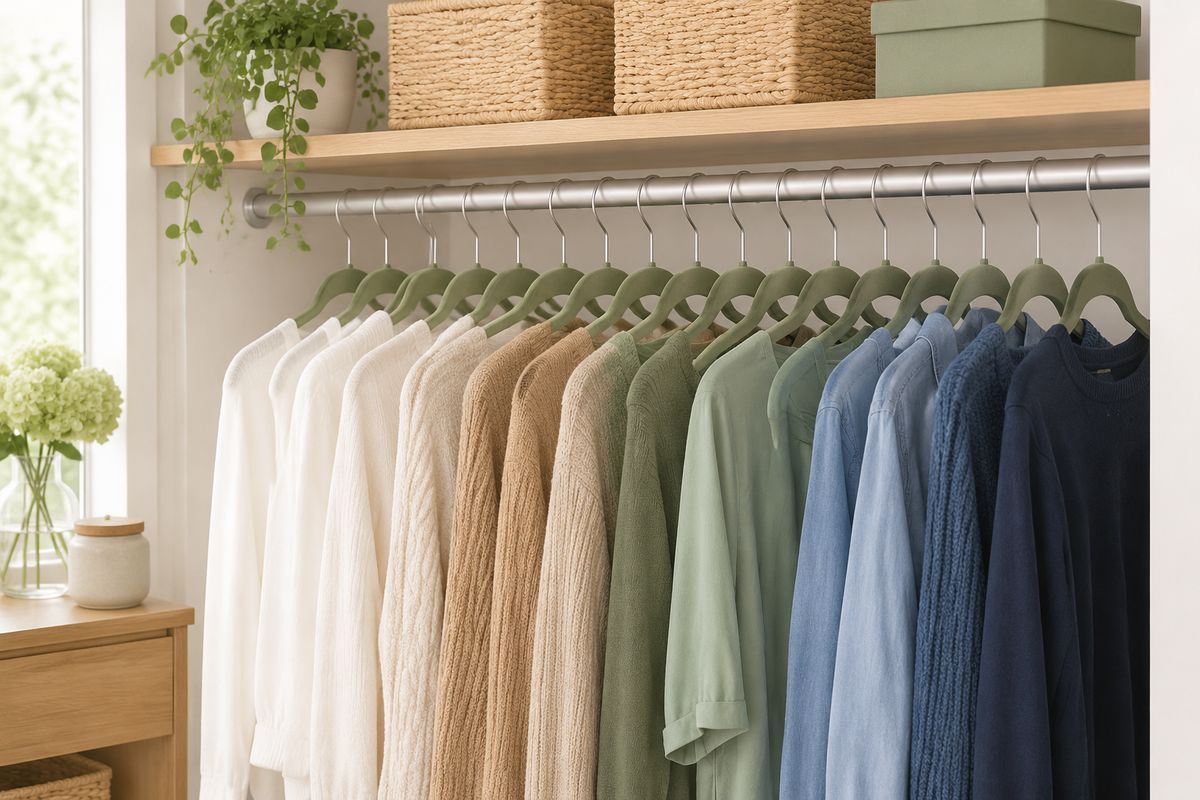
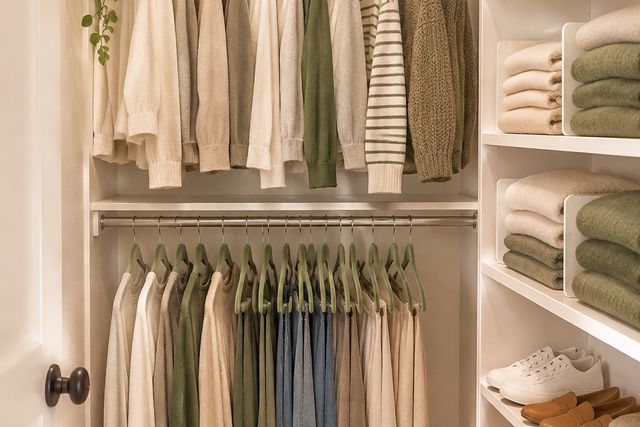
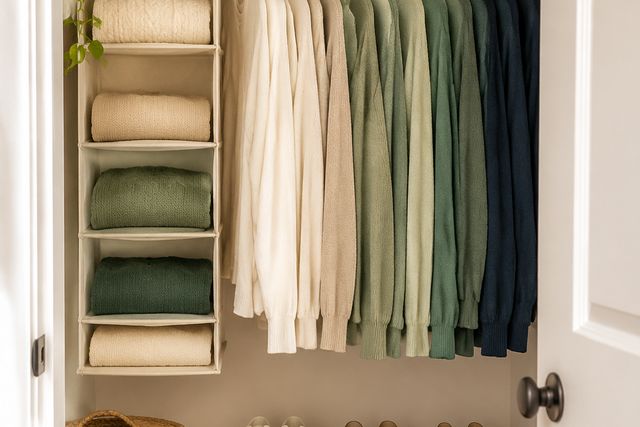
Slim velvet hangers free up to a third of the rod and make the closet look calmer instantly. Face all hangers the same direction.
5Add a second rod and shelves
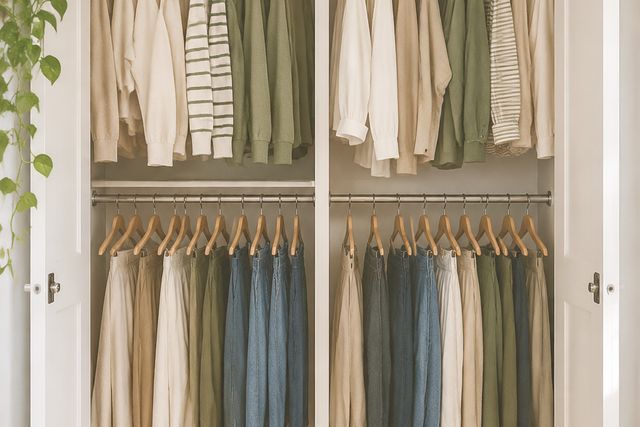
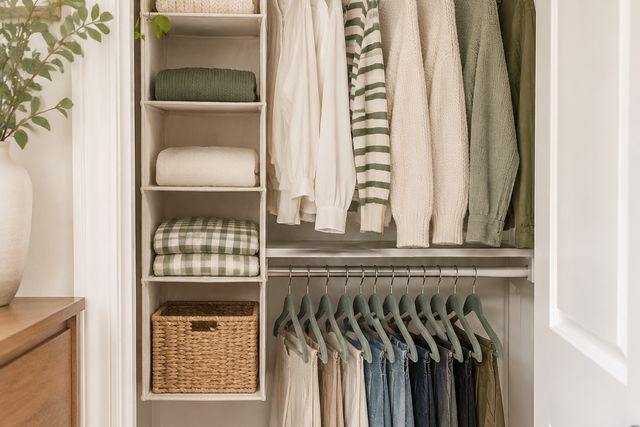
A double rod under short clothes and hanging shelves where there are none can double a small closet. For the right products, see best closet organizers for small closets and small closet organization ideas.
If you can drill, a closet system with adjustable rods and shelves is a long-term investment. If you rent, everything you need hooks onto the existing rod or stands on the floor, and comes with you when you move.
6Use dividers and bins on shelves
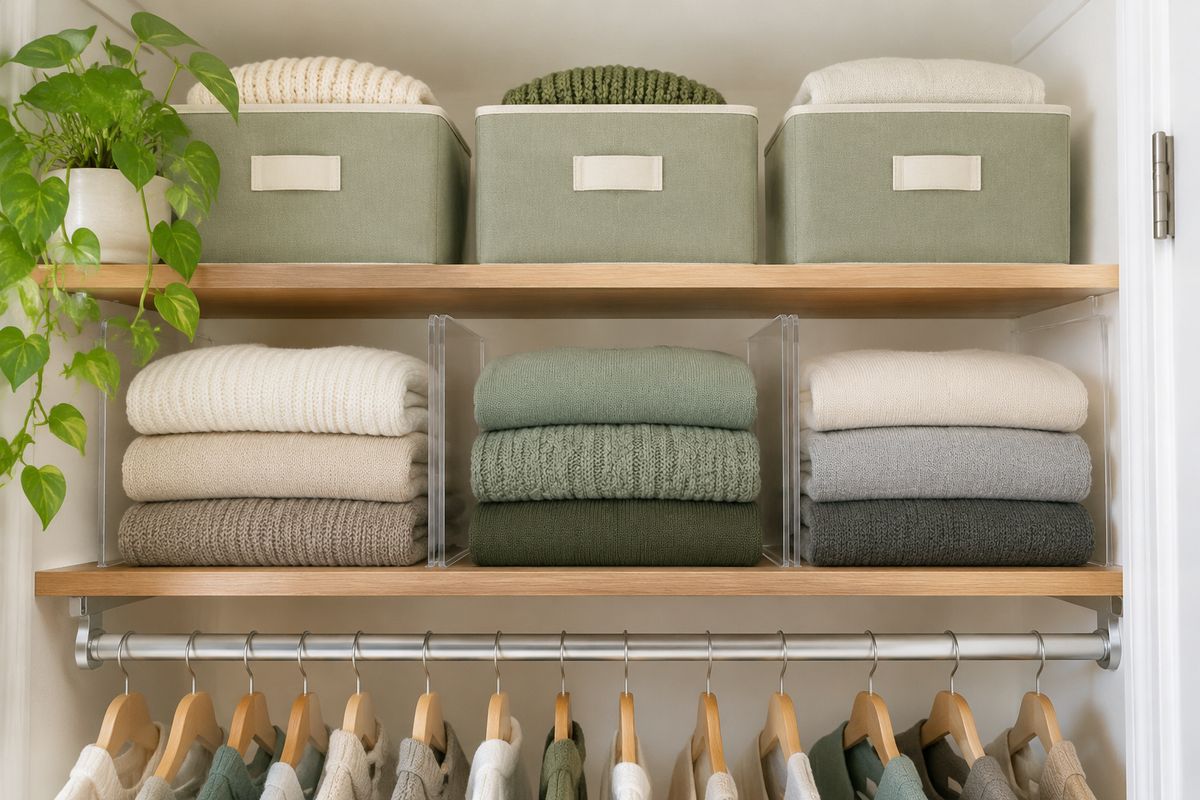
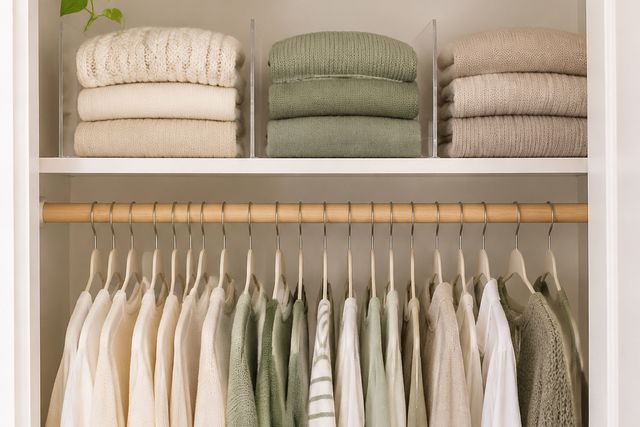
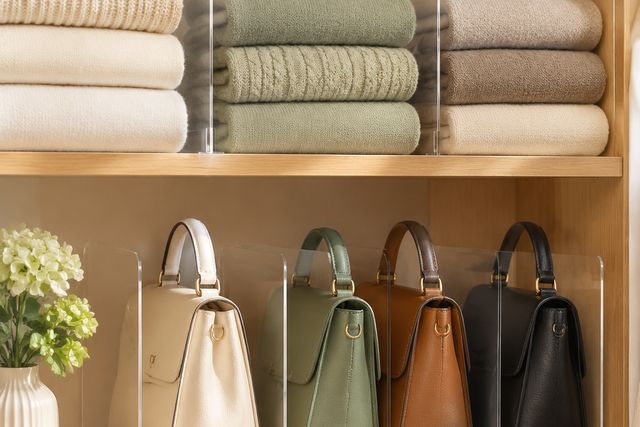
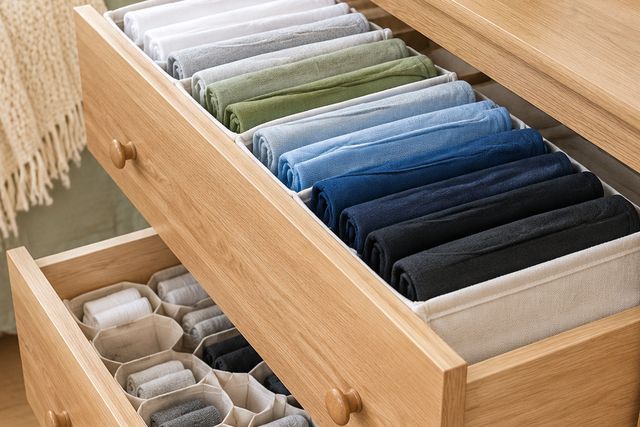
Dividers keep folded stacks upright. Labeled bins up high hold off-season clothes, swimwear and spare bedding. Keep stacks low enough to pull from without toppling.
7Get shoes and accessories off the floor
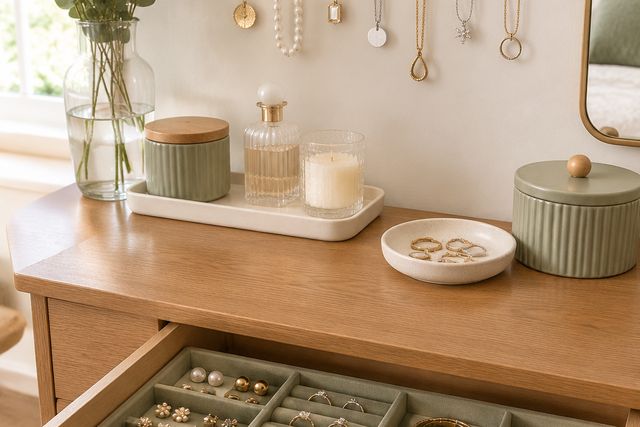
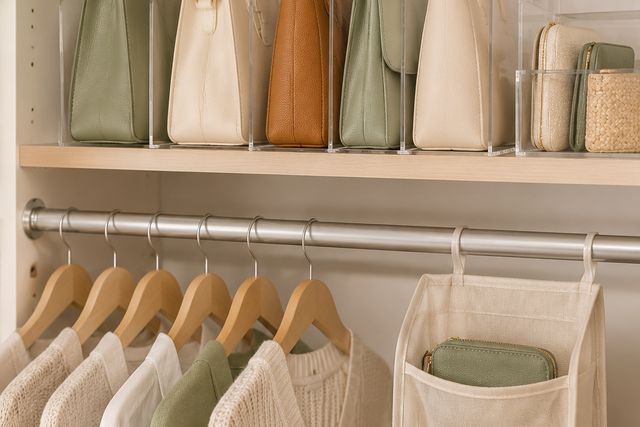
Shoe racks, over-the-door organizers and drawer inserts for belts and jewelry keep the floor clear. See purse and handbag storage ideas and jewelry organization ideas.
8Keep it organized
One in, one out for new clothes, a donation bag on the closet floor, and a seasonal swap twice a year. Turn hangers backwards at the start of a season; whatever is still backwards at the end is a candidate to donate.
Keep a small basket for clothes that are worn but not dirty, such as jeans and sweaters you will wear again. Without one, they end up on a chair, and the chair becomes a second closet.
How to organize clothes in a closet
- By type first: shirts, pants, dresses, jackets.
- Then by color, light to dark, within each type.
- Workwear and everyday clothes in the middle; occasion wear at the ends.
- Knits folded, not hung, so they keep their shape.
- Off-season clothes in labeled bins or under the bed.
Different closets, same method
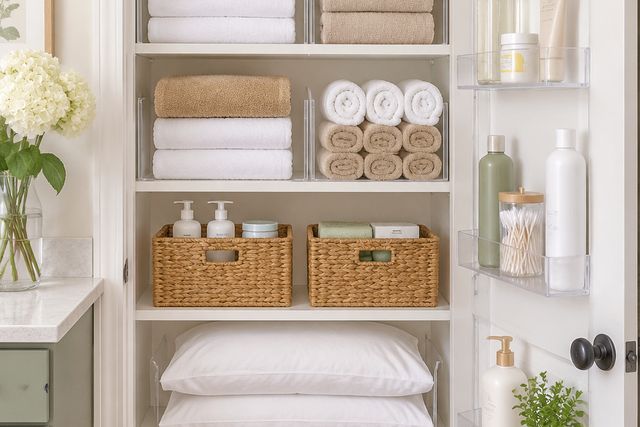
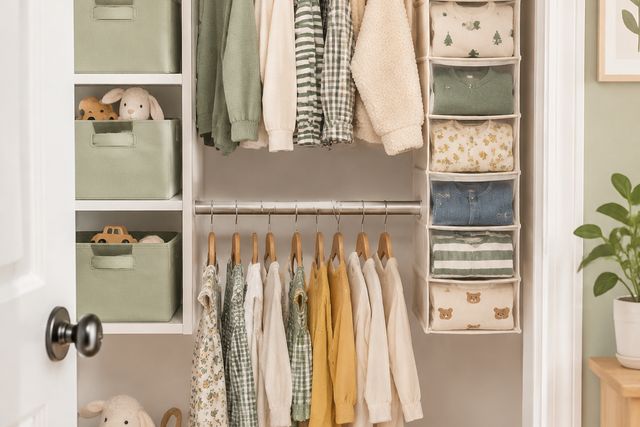
In a small walk-in closet, use every wall and keep the middle clear. In a linen closet, store sheets in sets and label shelves by room. In a coat closet, give each person a hook or a section, and in a kids closet, put daily clothes at their height and adjust the rods as they grow.
Closet organization mistakes
Buying a full closet system before editing is the most expensive one; you end up designing around clothes you will donate. Mixing hanger styles makes even a tidy closet look messy. Stacking folded clothes too high means the pile falls every time you take something from the middle. And keeping the floor as storage hides shoes and bags and makes the closet impossible to clean.
The fix for all of these is the same order every time: edit, measure, plan, then buy only what the plan needs.
Seasonal swap checklist
- Wash or dry clean everything before storing it.
- Donate what you did not wear this season.
- Store off-season clothes in breathable, labeled bins or bags.
- Add cedar blocks or lavender sachets for wool.
- Bring the new season to the middle of the closet, at eye level.
Every guide in this series
Keeping it that way
Most closets take two to four hours from empty to finished. If that is too much at once, do the edit one day and the organizing the next. When you measure, compare with the standard closet rod heights and how much closet space per person you need, or let the closet rod calculator plan the rods.
Get the free Declutter Kit
A 7-page printable: room-by-room checklists, the 30-day challenge calendar and a 10-minute weekly reset. Free, straight to your inbox.
Everything mentioned in this guide
One list, so you can check sizes against your own measurements. Links go to Amazon; we may earn a commission.
Questions people ask
How do I organize my closet step by step?
Empty it, edit what you own, measure, switch to slim hangers, add rods, shelves and dividers, get shoes off the floor, and keep a donation bag in the closet.
What is the best way to arrange clothes in a closet?
By type, then by color, with the clothes you wear most in the middle at eye level.
How often should I clean out my closet?
Do a quick edit at each seasonal swap, twice a year, and keep a donation bag in the closet all year.
How do I organize a closet with too many clothes?
Edit first, then store off-season clothes elsewhere, switch to slim hangers and add a second rod before buying bigger organizers.
Should I organize my closet by color?
Organize by type first, then by color within each type. It makes outfits easier to put together and the closet looks calmer.