10 Closet Shelf Organization Ideas for Neater Stacks
To organize closet shelves, fold clothes into stacks about 8 to 10 inches tall and separate them with shelf dividers. Keep everyday items at the front of the lowest shelf, seasonal things in labeled bins up high, and add a second shelf if there is about 18 inches of empty space above the first.
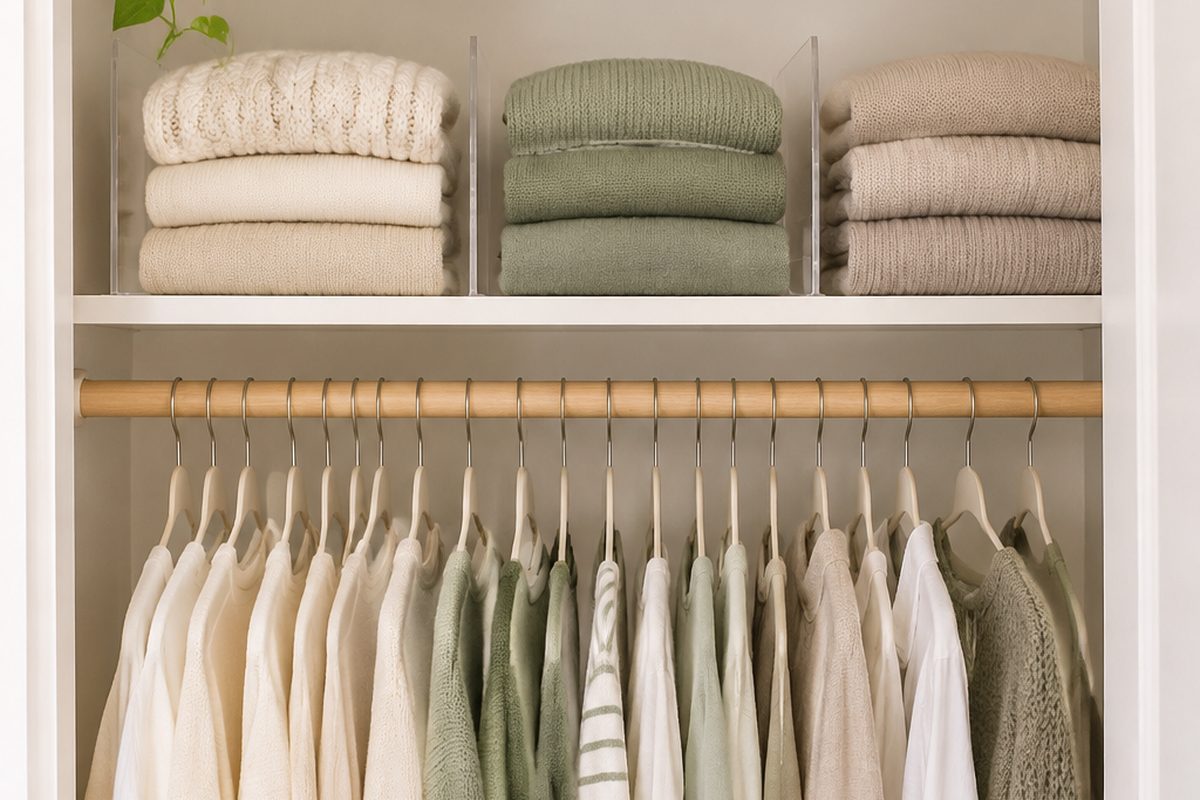
The shelf above the closet rod is easy to forget. It becomes the place where sweaters fall into a pile, handbags get squashed and a box from the last move sits for years. In most reach-in closets it is also the only shelf, so wasting it means wasting a big share of the storage.
These closet shelf organization ideas turn that strip of space into something that holds its shape: neat stacks, labeled bins and, often, a second shelf you did not know you had room for. For the full closet, see how to organize a closet; for the general method that applies to any shelf, how to organize shelving.
- Clear the shelf and decide what it is for
- Fold into stacks of about 8 to 10 inches
- Use shelf dividers to keep stacks upright
- Put everyday items at the front edge
- Use labeled bins for the high shelf
- Store handbags upright with dividers or purse inserts
- Use the space above the rod
- Add a second shelf above the first
- Hang under-shelf baskets for small items
- Do a five-minute shelf reset every week
1Clear the shelf and decide what it is for
Take everything off the shelf and sort it into three groups: clothes you wear this season, things you use rarely or seasonally, and things that do not belong in this closet at all. Paperwork, old electronics and gift wrap often end up on closet shelves just because they are out of sight.
Then give the shelf a job. In a bedroom closet, that is usually folded clothes on the front of the lower shelf and seasonal bins up high. In a coat closet, the shelf is for hats, gloves and bags. One job per shelf keeps the next pile from starting.
2Fold into stacks of about 8 to 10 inches
Sweaters, jeans and sweatshirts stack well on closet shelves, but only up to a point. Keep each stack about 8 to 10 inches (20 to 25 cm) tall, usually four to six sweaters. Taller stacks tip over, and pulling out the bottom piece wrecks the whole pile.
Fold every item in a stack to the same width so the edges line up, folded edge facing out. A folding board makes this quick and consistent, especially for T-shirts. Heavier pieces such as jeans go on the bottom of a stack, lighter knits on top. Lay out stacks across the shelf by type: one stack for each kind of item.
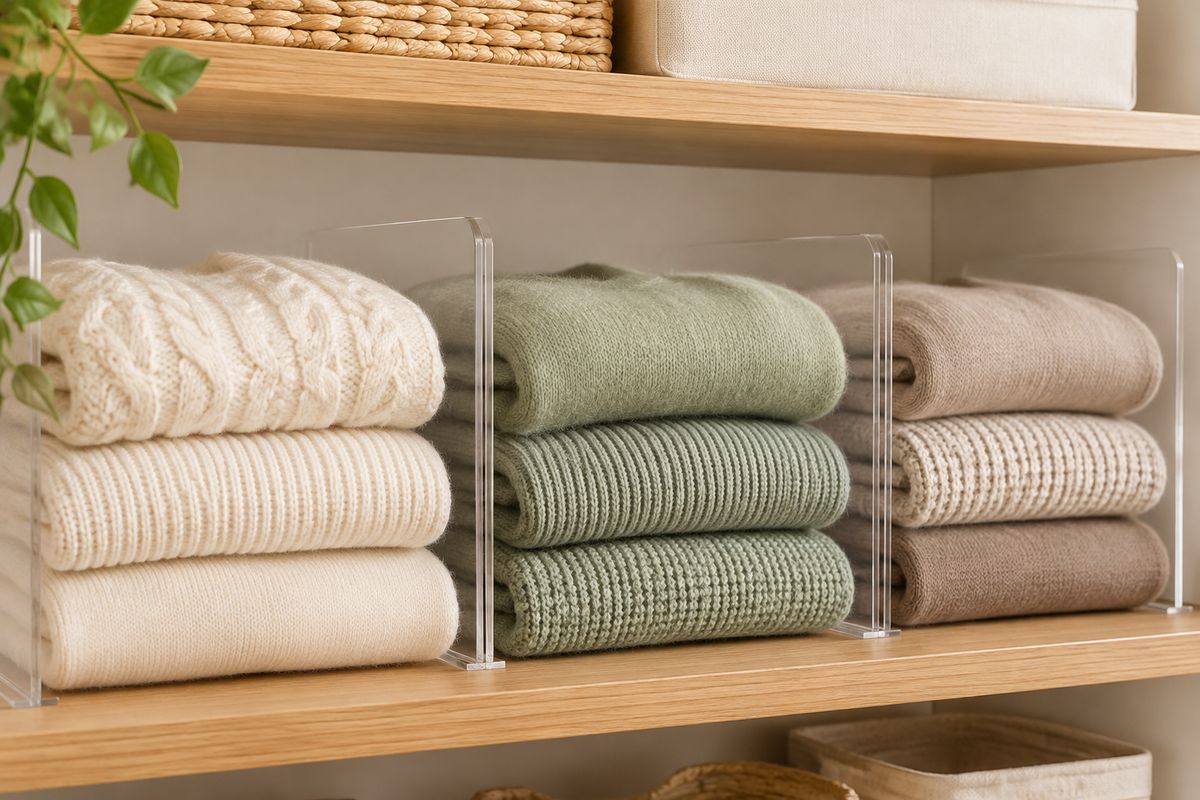
3Use shelf dividers to keep stacks upright
Shelf dividers are the simplest fix for stacks that slump into each other. They clip over the shelf and create vertical walls, so each pile of sweaters or jeans stays in its lane, even when you pull from the middle.
Clear acrylic dividers disappear visually; wire dividers are sturdier on thick shelves. Check the shelf thickness before you buy, since most clip-on dividers fit shelves up to about 3/4 to 1 inch (2 to 2.5 cm) thick. Wire closet shelving needs a different style made for wire. Our shelf divider ideas compare the types in more detail.
4Put everyday items at the front edge
Most closet shelves are 12 to 16 inches (30 to 41 cm) deep. Anything at the back of a high shelf is out of sight and out of reach, so keep what you wear weekly at the front of the lowest shelf, where you can see and grab it without a step stool.
If the shelf is deep, use the back for a row of bins with rarely used things and put stacks in front. Pull the front stack forward so the bins are still visible. Rotating seasons twice a year, front for this season and back for the other, keeps the shelf working year round.
5Use labeled bins for the high shelf
The highest shelf in a closet is perfect for things you use a few times a year: off-season clothes, spare bedding, swimsuits, keepsakes. Store them in bins with handles on the front so you can pull them down easily from below, and label the front in letters you can read from the floor.
Fabric bins are light and soft if one falls; clear plastic bins with lids keep dust out of keepsakes and show what is inside. Choose bins that fit the shelf depth, leaving an inch or two (2.5 to 5 cm) at the front to grip. Keep anything heavy on lower shelves.
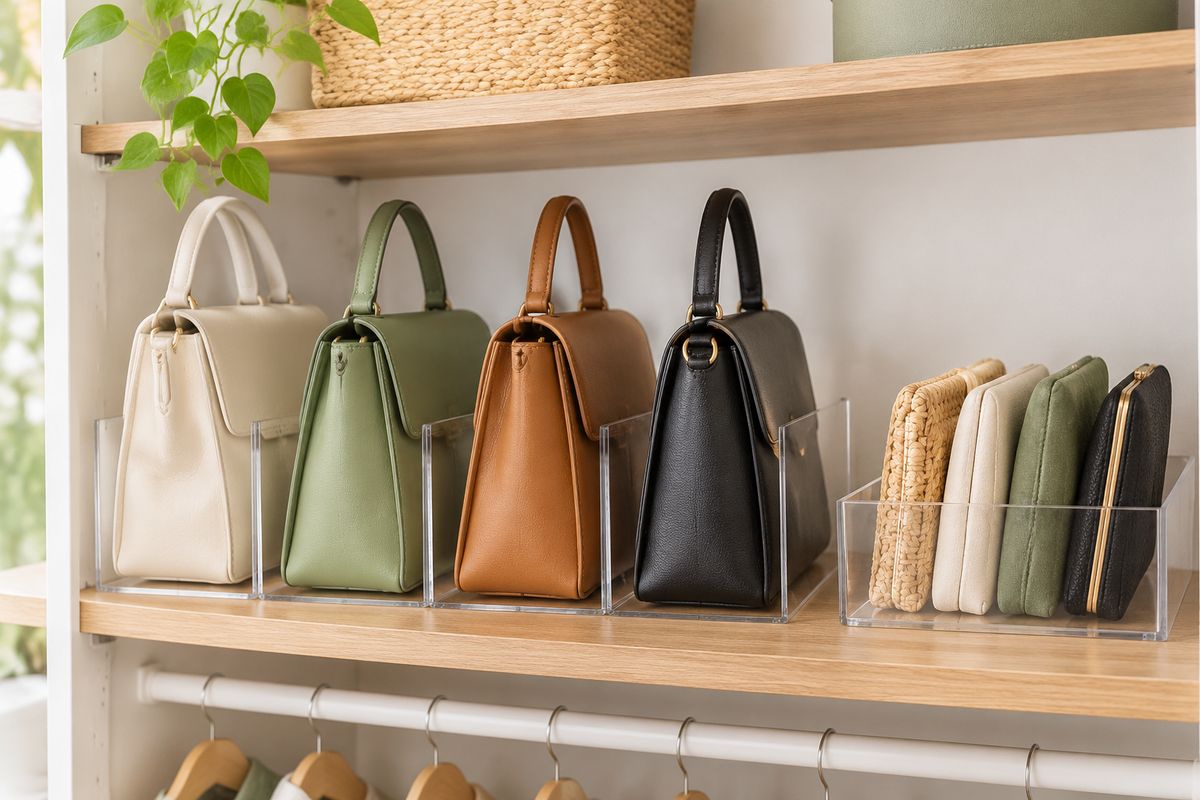
6Store handbags upright with dividers or purse inserts
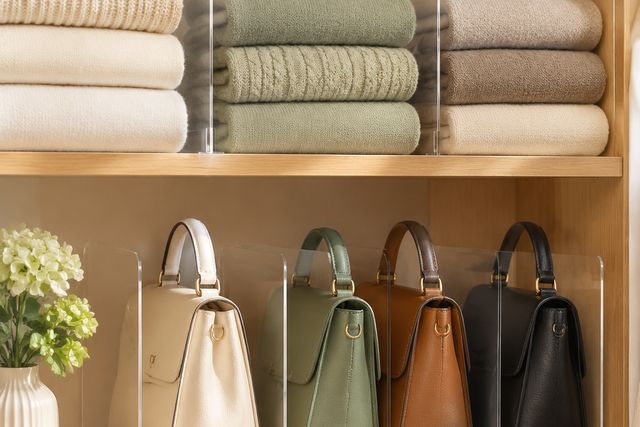
Handbags lose their shape when they are stacked or squeezed into a pile on the closet shelf. Stand them upright in a row, separated by shelf dividers or in open-top bins, so each one keeps its form and you can see them all at once.
Stuff structured bags with tissue paper or a purse insert to hold the shape, and store clutches standing on edge in a small bin like files. Keep the bags you carry daily at the front edge and evening bags further back. A dust bag or pillowcase over leather bags keeps them clean on an open shelf.
7Use the space above the rod
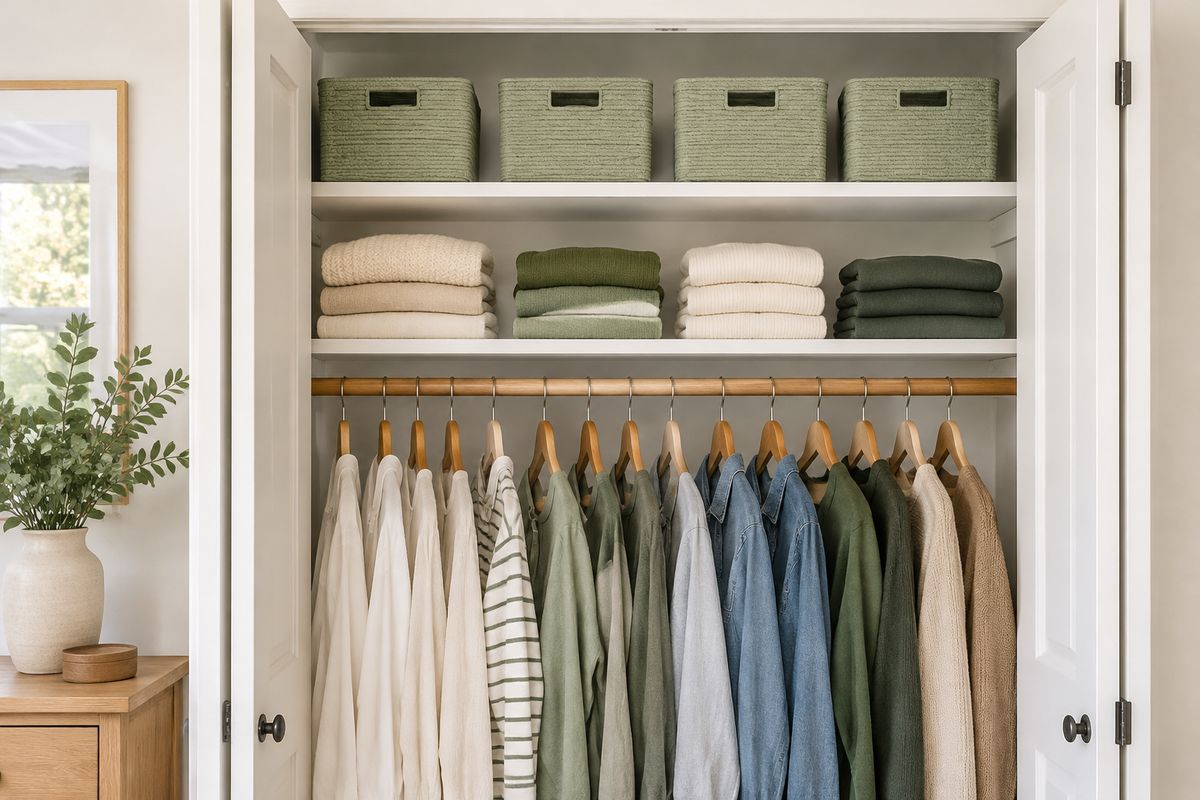
In many closets, the shelf sits just a couple of inches above the rod, with a lot of empty wall above it. That space can hold more than a single shelf of stacks. Add a stackable shelf riser to create a second level for folded tees or bins, or use tall bins that fill the full height up to the ceiling.
Check how high the rod and shelf are set before planning. A standard single rod is often hung around 66 inches (168 cm) from the floor with the shelf above it, but closets vary; see standard closet rod height. Keep a step stool in or near the closet so the upper space is actually usable.
8Add a second shelf above the first
If there is more than about 18 inches (46 cm) between the existing shelf and the ceiling, there is room for a second shelf. A board on two or three brackets screwed into studs, or a matching wire shelf with wall clips, roughly doubles the shelf storage in a reach-in closet.
Space the new shelf 12 to 14 inches (30 to 36 cm) above the first so stacks and bins fit underneath, and use it for the lightest, least used items. Mount brackets into studs, which are usually 16 inches (41 cm) apart on center; a closet full of bins and bedding is heavier than it looks.
9Hang under-shelf baskets for small items
Under-shelf baskets slide onto a shelf and hang in the space below it, above the clothes on the rod. They work well for scarves, belts, folded T-shirts or socks in closets without dresser space.
Check that the basket will not hit hangers on the rod. Most need several inches of clearance between the shelf and the rod, and they work best on the end of the rod where hanging items are short. Wire shelves have special hanging baskets that hook on, so buy the type that matches your shelf.
10Do a five-minute shelf reset every week
Closet shelves stay neat with a quick reset, not a big reorganization. Once a week, while putting laundry away, refold anything that has slumped, push stacks back between dividers and return strays to their bins. It takes about five minutes.
Twice a year, when seasons change, swap the front and high-shelf items and pull anything you did not wear for the donate box. If a shelf keeps overflowing, the closet has more clothes than it can hold, and editing will help more than any organizer. Our small closet organization ideas have more fixes for tight spaces.
Closet shelf measurements at a glance
These are common dimensions in reach-in closets. Measure your own closet before adding shelves or buying organizers.
| Measurement | Typical range | Notes |
|---|---|---|
| Shelf depth | 12 to 16 in (30 to 41 cm) | Deeper shelves hide things at the back |
| Folded stack height | 8 to 10 in (20 to 25 cm) | About four to six sweaters |
| Single rod height | About 66 in (168 cm) | Shelf usually sits just above the rod |
| Space between stacked shelves | 12 to 14 in (30 to 36 cm) | Fits stacks and most bins |
| Room needed for a second shelf | About 18 in (46 cm) or more | Between the first shelf and the ceiling |
Mount added shelves into wall studs and keep heavy items on lower shelves. Bins on the highest shelf should be light enough to lift down safely from a step stool.
Closet shelf mistakes to avoid
- Stacking sweaters too high. Tall stacks tip over and the bottom piece is impossible to pull out.
- Pushing everyday clothes to the back. If you cannot see it, you will not wear it.
- Using unlabeled bins on the high shelf. You will forget what is inside within a season.
- Buying dividers before measuring shelf thickness. Clip-on dividers only fit certain shelves.
- Storing heavy boxes overhead. Lifting them down from above your head is a common way to get hurt.
Keeping it that way
Start with the shelf you look at every morning: clear it, refold into short stacks, add dividers and move rarely used items into labeled bins up high. Most closet shelves can be done in under an hour.
If you are planning a full closet refresh, our best closet organizers for small closets covers the rods, drawers and hanging storage that work alongside your shelves.
Get the free Declutter Kit
A 7-page printable: room-by-room checklists, the 30-day challenge calendar and a 10-minute weekly reset. Free, straight to your inbox.
Everything mentioned in this guide
One list, so you can check sizes against your own measurements. Links go to Amazon; we may earn a commission.
Questions people ask
How do you organize a high closet shelf?
Use it for seasonal and rarely used items in labeled bins with front handles. Keep bins light, label the front in large letters and keep a step stool nearby.
How do you keep folded clothes neat on closet shelves?
Fold everything to the same width, keep stacks around 8 to 10 inches (20 to 25 cm) tall and separate them with shelf dividers so they cannot slump into each other.
Can you add a second shelf in a closet?
Usually, if there is about 18 inches (46 cm) or more above the existing shelf. Mount a board on brackets screwed into studs, or add a matching wire shelf, 12 to 14 inches (30 to 36 cm) above the first.
How deep should a closet shelf be?
Most closet shelves are 12 to 16 inches (30 to 41 cm) deep. About 12 inches works well for folded clothes without hiding things at the back.
How high should the shelf above a closet rod be?
The shelf usually sits a couple of inches above a single rod, which is often around 66 inches (168 cm) from the floor. See standard closet rod height for double-hang layouts.
What can I use instead of shelf dividers?
Bins or open baskets, bookends standing on the shelf, or stacking each pile inside a shallow tray. See shelf divider ideas for more options.