Laundry Room Shelving Ideas: 10 Smart Ways to Add Storage
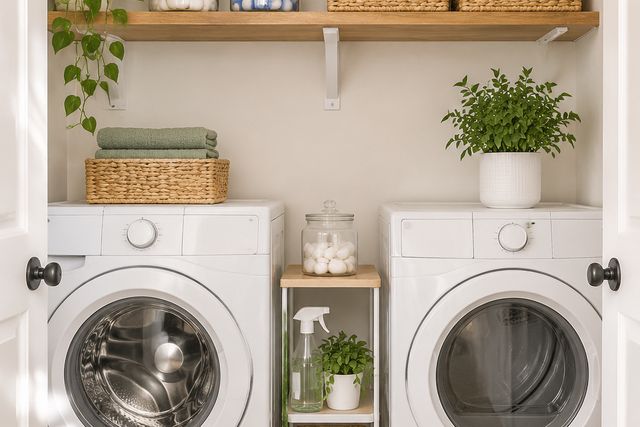
The best laundry room shelving runs one or two long shelves above the washer and dryer, high enough to open a top-loader lid, with a hanging rod mounted under the lowest shelf for air-drying. Add a slim rolling cart between machines, keep detergents in bins at eye level, and anchor every shelf into studs.
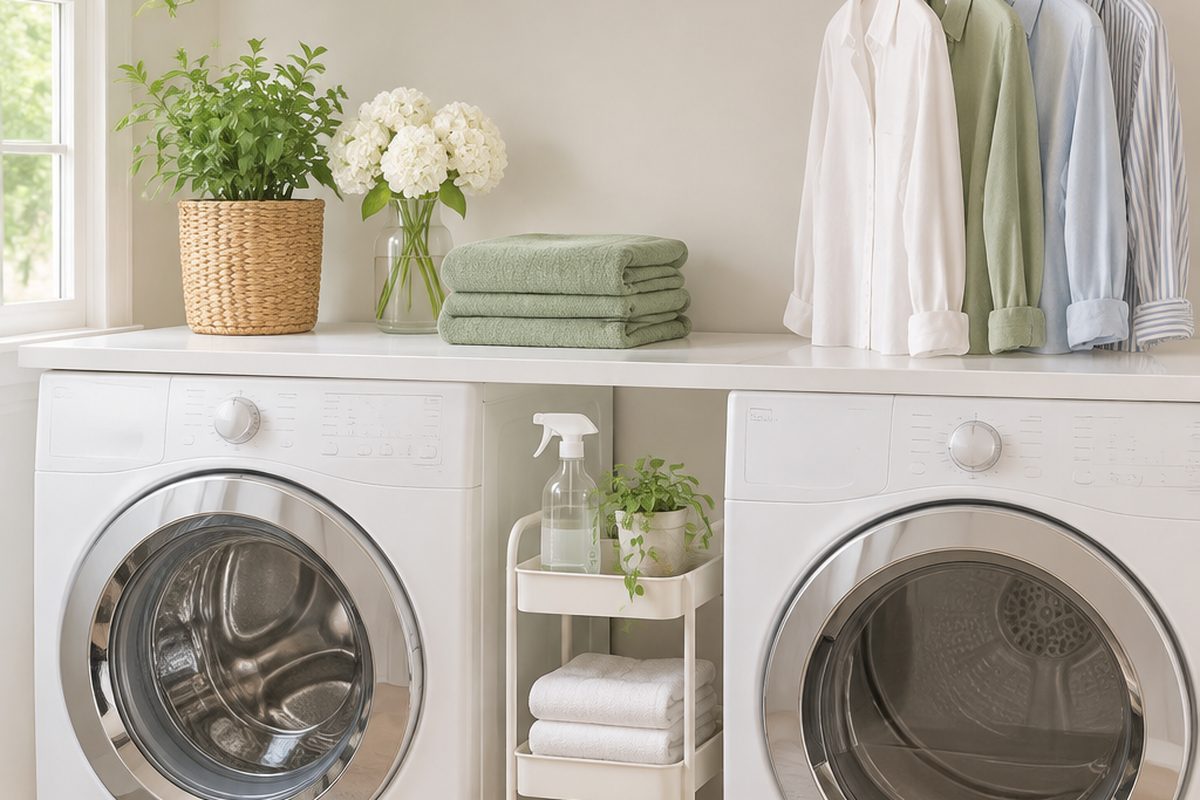
Most laundry rooms have one great storage spot, the wall above the machines, and it usually holds a single wobbly wire shelf. With better shelving, that wall can hold every detergent, a place to hang shirts straight out of the dryer and a few bins for the small things that otherwise end up on top of the washer.
Below are the shelving ideas that work in full laundry rooms, hallway closets and tight nooks, with the clearances you need around washers and dryers. If your space is very small, our small laundry room organization ideas cover the floor and door too.
- One long shelf above both machines
- Leave room for a top-loader lid
- A hanging rod under the lowest shelf
- Two shelves, spaced for jugs
- A slim rolling cart between the machines
- Bins that match the shelf depth
- Decant detergent into a dispenser
- Shelving for a laundry closet
- Wire shelving, upgraded
- A fold-down counter under the shelves
1One long shelf above both machines
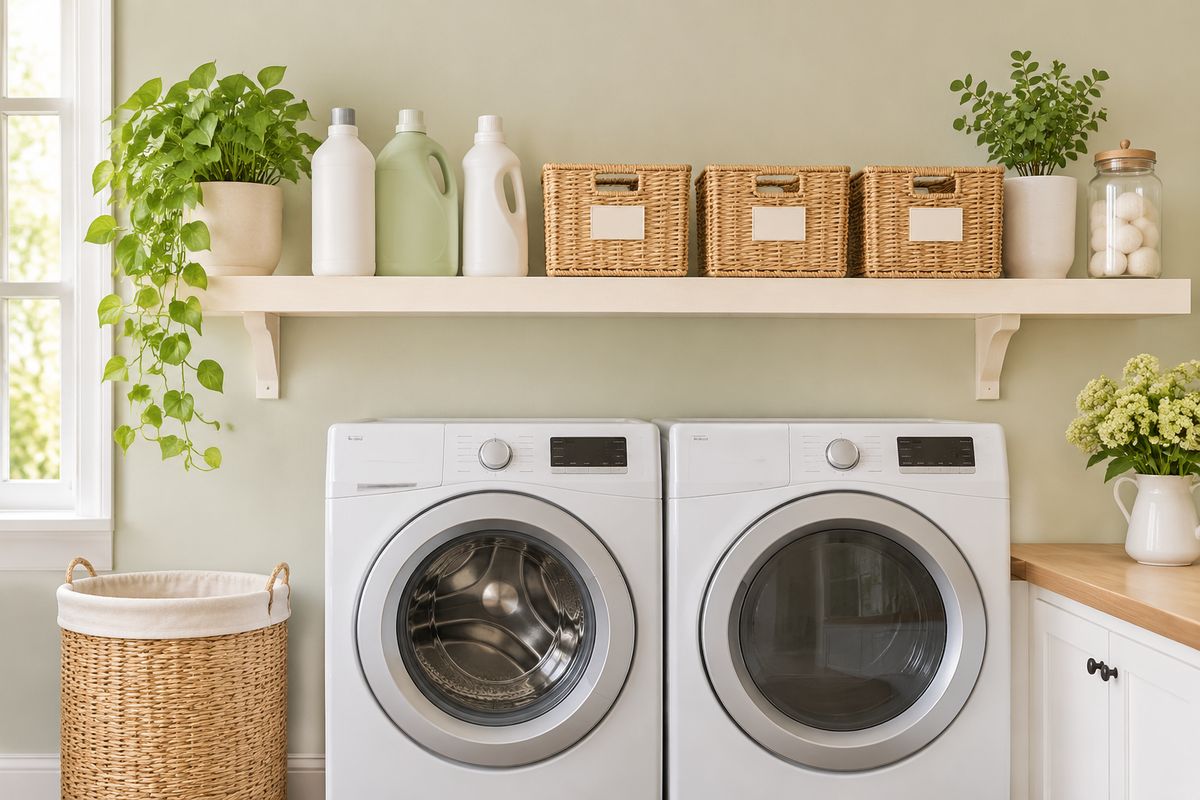
A single shelf that runs the full width of the washer and dryer, usually about 54 to 60 inches (137 to 152 cm), looks calmer than two short ones and gives you room for detergent, stain remover and a basket of rags. Choose a depth of about 12 inches (30 cm): deep enough for jugs, shallow enough that you do not bump your head when loading.
For front-loaders, mounting it about 54 to 60 inches (137 to 152 cm) from the floor keeps it in easy reach for most adults. If you have a top-loader, read the next idea before you mark any holes.
2Leave room for a top-loader lid
Top-loading washers need open air above them. Lift the lid all the way, measure from the floor to its highest point and mount the shelf at least 3 inches (8 cm) above that. For many top-loaders, that puts the lowest shelf around 60 inches (152 cm) or higher, so reserve it for things you reach for less often.
The same idea applies to stacked units: leave several inches between the top of the dryer and the shelf so the machine can vibrate without knocking it, and so you can still reach and read the controls. Your machine's installation guide lists the minimum clearances.
3A hanging rod under the lowest shelf
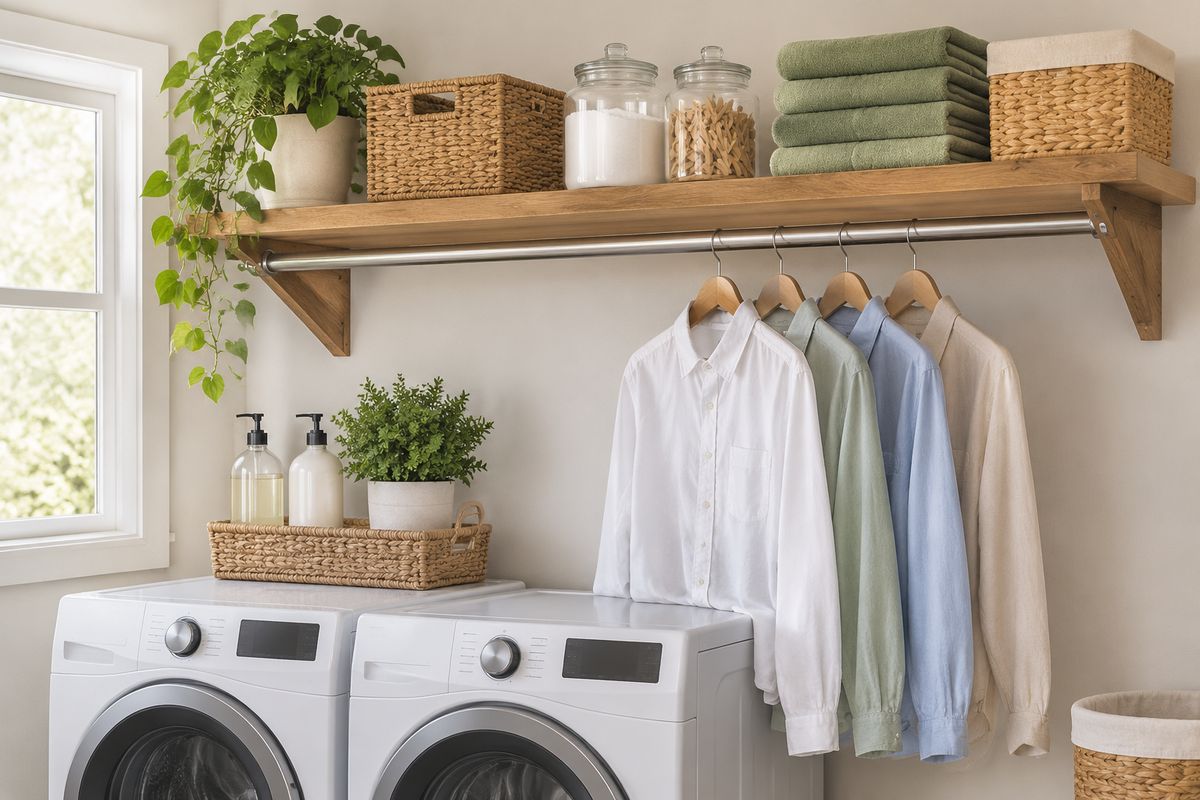
Shirts and delicates that should not go in the dryer need somewhere to hang right away. A rod mounted under the shelf, or a shelf with a built-in rod, puts that spot right where you unload. Leave about 40 inches (102 cm) or more between the rod and the top of the machines so hanging shirts do not drape onto them.
If you have two shelves, put the rod under the lower one and keep the upper one for backstock you reach less often. Keep a handful of empty hangers on the rod so you never have to go looking for one.
4Two shelves, spaced for jugs
If the wall is tall enough, a second shelf doubles the storage. Space the two about 14 to 16 inches (36 to 41 cm) apart so a large detergent jug fits with room to tilt and lift it out. The lower shelf holds what you use every load; the upper one holds refills, extra paper towels and seasonal items like a sweater drying rack.
For how to choose spacing on any wall, including what to do when the items on each shelf are very different heights, see how far apart shelves should be.
5A slim rolling cart between the machines
The gap between a washer and dryer is often 5 to 8 inches (13 to 20 cm) wide and fills with lost socks and dryer sheets. A slim rolling cart turns it into three narrow shelves for sprays, dryer balls and stain sticks, and it pulls out when you need it.
Measure the gap at its narrowest point, and the depth of the machines, before you buy. Leave the dryer vent and water hoses free behind the cart, and check behind it now and then for lint and dropped socks.
6Bins that match the shelf depth
Open shelves above the machines collect half-empty bottles and loose dryer sheets. Two or three matching bins keep the shelf calm: one for stain treatment, one for delicates supplies, one for cleaning cloths. Choose bins about 10 to 11 inches (25 to 28 cm) deep for a 12-inch shelf so they do not overhang.
Label the front so everyone in the house can put things back. Our cleaning supplies organization ideas suggest how to split sprays and cloths between the laundry room and the rest of the house.
7Decant detergent into a dispenser
Big detergent jugs are awkward to lift from a shelf above the machines. A glass or plastic dispenser with a spigot sits at the front edge of the shelf so you fill the cap without lifting anything. Pods and dryer sheets fit in lidded jars beside it, and the whole shelf reads as one neat line.
If children live in the house, keep detergent pods on the highest shelf or in a latched container. Pods are brightly colored and look like candy to small kids, so out of sight and out of reach is the rule.
8Shelving for a laundry closet
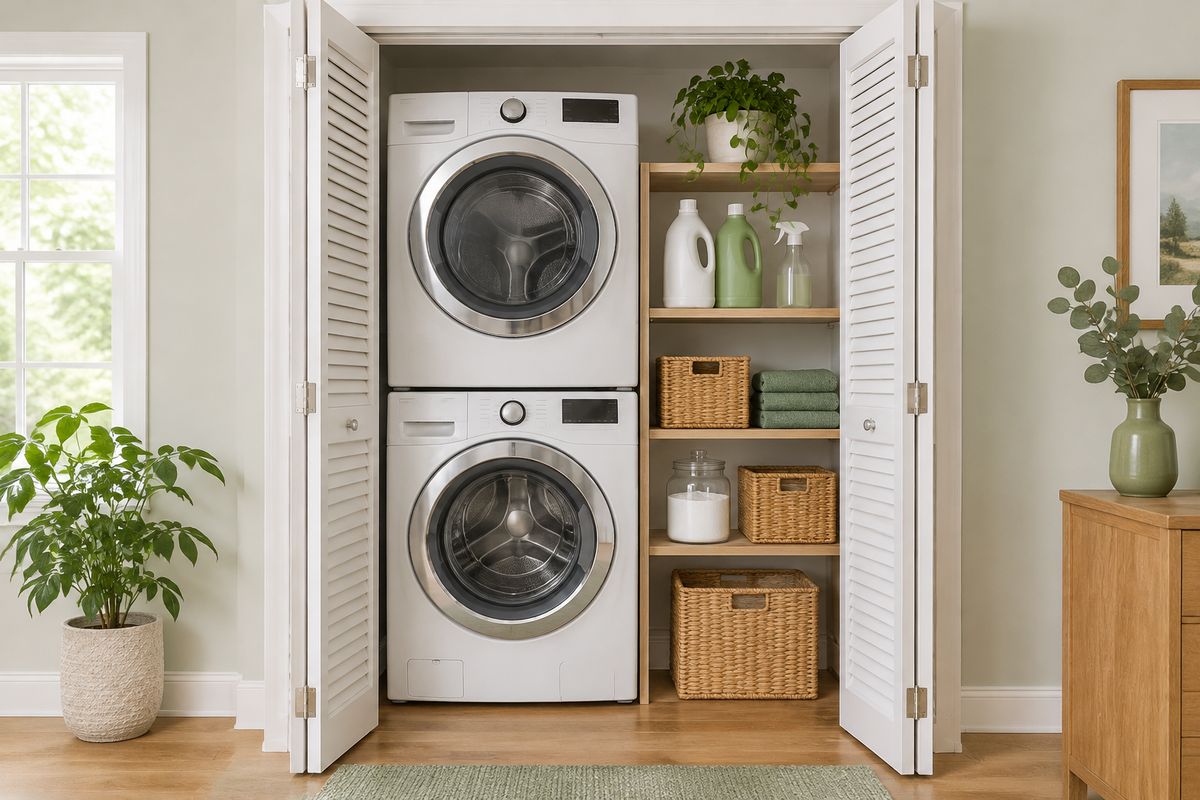
In a closet with folding doors, the shelves have to stay shallow enough for the doors to close, often 10 to 12 inches (25 to 30 cm). Use the full height instead: one shelf above the machines and a second near the top of the closet for backstock.
The inside walls of the closet can hold a narrow shelf for small items or a wall-mounted holder for an ironing board. A laundry sorting system in a bedroom or hallway keeps the closet floor clear of baskets, so you can reach the machines without moving anything first.
9Wire shelving, upgraded
If your laundry room came with wire shelving, keep it and fix it. A shelf liner stops bottles from tipping, flat-bottom bins stay put, and an under-shelf basket uses the gap below for dryer sheets and clothespins. Our wire shelving organization ideas go through each upgrade in order.
Wire shelves above a dryer are also a common place for lint to collect, because warm air rises through the bars. Wipe them down whenever you clean the lint trap so dust does not build up on the shelf or fall onto clean laundry.
10A fold-down counter under the shelves
If there is a free wall beside the machines, a wall-mounted fold-down table under a shelf gives you a folding surface that disappears when not in use. Mount it at about 36 inches (91 cm), the height of a kitchen counter, so you can fold standing up without bending.
With front-loaders, a counter laid over the machines does the same job and turns the shelf above into the top of a real workspace. Leave a small gap at the back for hoses and the vent, and make sure the counter does not rest its weight on the machine tops.

Clearances around washers and dryers
Always check your machine's installation guide, which lists the exact clearances for your model. These are typical starting points for planning shelves.
| Situation | Typical shelf height or gap | Notes |
|---|---|---|
| Shelf above front-loaders | 54 to 60 in (137 to 152 cm) from floor | Higher if machines sit on pedestals |
| Shelf above a top-loader | At least 3 in (8 cm) above the fully open lid | Measure with the lid fully raised |
| Hanging rod above machines | About 40 in (102 cm) or more above machine tops | So hanging shirts do not touch the machines |
| Gap between machines | Often 5 to 8 in (13 to 20 cm) | Fits a slim rolling cart |
| Shelf depth | 10 to 12 in (25 to 30 cm) | Shallower in closets with doors |
Keep the dryer vent path straight and free of stored items, and never block the space the manufacturer lists behind the machines.
Safety notes
- Anchor shelves into studs. Full detergent jugs are heavy, and running machines vibrate the wall.
- Keep anything flammable, including paper towels and lint, away from the dryer vent.
- Store detergent pods and bleach high or in a latched container if children use the room.
- Leave the water shutoff valves and the outlet behind the machines reachable.
Keeping it that way
Plan the shelf around the machines first: lid clearance, hanging length and reach. Then fill it with a few matching bins and a dispenser so the shelf stays clear enough to use every day.
For the general rules behind any shelf, start with how to organize shelving, then come back here for the laundry-specific measurements.
Get the free cleaning schedule
Free printable cleaning schedule: a daily checklist, weekly tasks by room, a monthly deep-clean list and seasonal jobs. 6-page PDF to print at home.
Everything mentioned in this guide
One list, so you can check sizes against your own measurements. Links go to Amazon; we may earn a commission.
Questions people ask
How high should shelves be above a washer and dryer?
About 54 to 60 inches from the floor works for most front-loaders. For a top-loader, open the lid fully and mount the shelf at least 3 inches above its highest point.
How deep should laundry room shelves be?
Around 12 inches holds detergent jugs and baskets without crowding the machines. In a laundry closet with doors, 10 to 12 inches is usually the limit.
Can I put a hanging rod above my washer and dryer?
Yes. Mount it under the lowest shelf and leave about 40 inches or more between the rod and the machine tops so hanging shirts stay clear of the machines.
What can I put between my washer and dryer?
A slim rolling cart, usually 5 to 7 inches wide, fits most gaps and holds sprays, dryer balls and stain sticks. Leave the dryer vent and hoses clear behind it.
What is the best shelving for a small laundry room?
One long 12-inch shelf above the machines with a hanging rod underneath, plus a second shelf higher up if the wall allows. Use bins on the shelves and a slim cart between the machines.