12 Realistic Organizing Goals for the New Year
Realistic organizing goals for the new year are small, specific and spread out: one area per month, worked on in 20-minute sessions. Start with a kitchen drawer in January, paperwork in February and closets in spring, and finish with holiday storage in fall. Twelve small wins beat one giant January purge that stalls by February.
Get organized is one of the most common New Year's resolutions, and one of the easiest to abandon. The problem is the size of it. A whole house feels too big to start, so January becomes a burst of motivation followed by a garage that looks the same in March.
A better plan is one small area a month, timed to when it actually matters: tax papers in February, closets when the seasons change, holiday storage before the decorations come out. Each goal below has a 20-minute task, so it fits a weeknight. Skip a month if life gets busy; the plan still works if you finish most of it.
- January: clear the kitchen counters and one drawer
- February: set up a paperwork and tax system
- March: edit winter clothes before you store them
- April: give the garage or storage closet one zone
- May: clean out the medicine cabinet and bathroom
- June: reset kids' rooms and toy storage
- July: organize digital photos and files
- August: build a drop zone before school starts
- September: refresh the pantry
- October: sort the linen closet
- November and December: holiday storage, then a year-end check
1January: clear the kitchen counters and one drawer
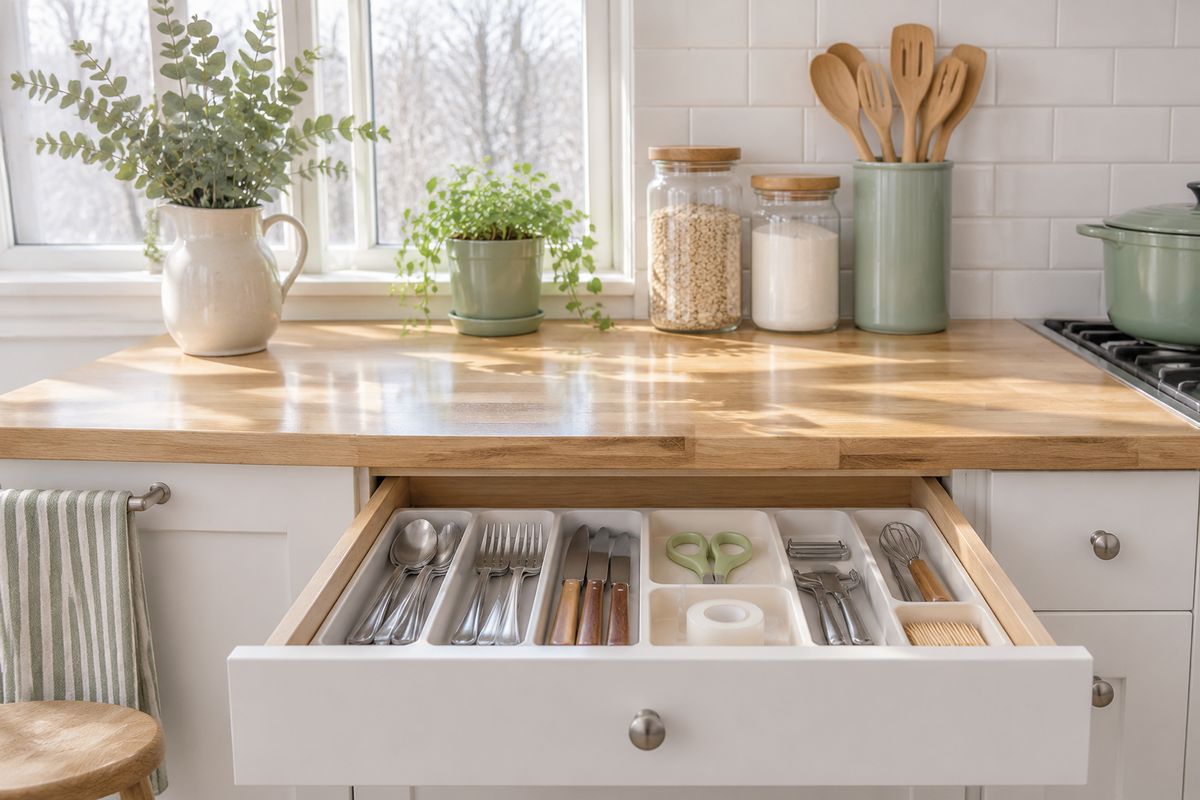
Start where you spend the most time. In January, clear everything off the kitchen counters, put back only what you use every day, and find homes for the rest. Then tackle the drawer that annoys you most, usually the junk drawer or the utensil drawer.
In 20 minutes you can empty the drawer, toss dead batteries, broken pens and takeout menus, and add a few small trays to separate what stays. A clear counter and one working drawer are small, but you will notice them every single day, which is what keeps you going. Our guide to decluttering your kitchen has the full method.
2February: set up a paperwork and tax system
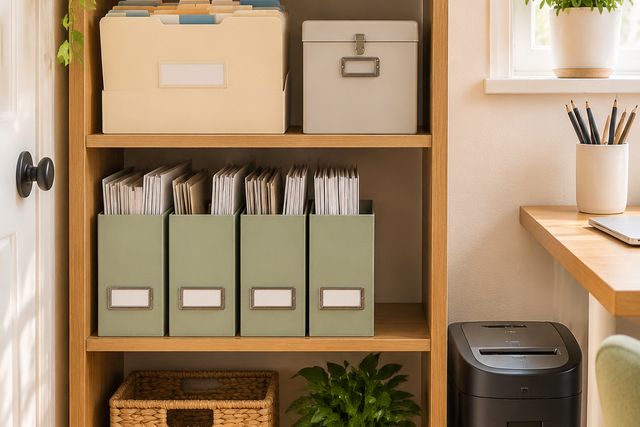
February is when tax forms arrive, so it is the natural month to fix paper clutter. Set up one folder for this year's tax documents and one simple inbox tray for mail that needs action.
Your 20-minute task: sort the existing pile into three stacks, act, file and shred, and set up the tax folder with a checklist of the forms you expect. Switch at least two accounts to paperless statements while you are at it, and shred old statements you no longer need. For a step-by-step setup, see how to organize tax documents.
3March: edit winter clothes before you store them
By March, you know which sweaters and coats you wore all winter and which ones never left the hanger. That makes it the best time to edit, while the season is fresh in your memory.
Spend 20 minutes pulling out winter clothes that did not get worn, do not fit or need repairs you will not make, and bag them for donation. Wash what stays before storing it, since stains and body oils attract moths. Our guide on how to declutter your closet walks through the keep, donate and store decisions. Store what stays in breathable bins or under the bed.
4April: give the garage or storage closet one zone
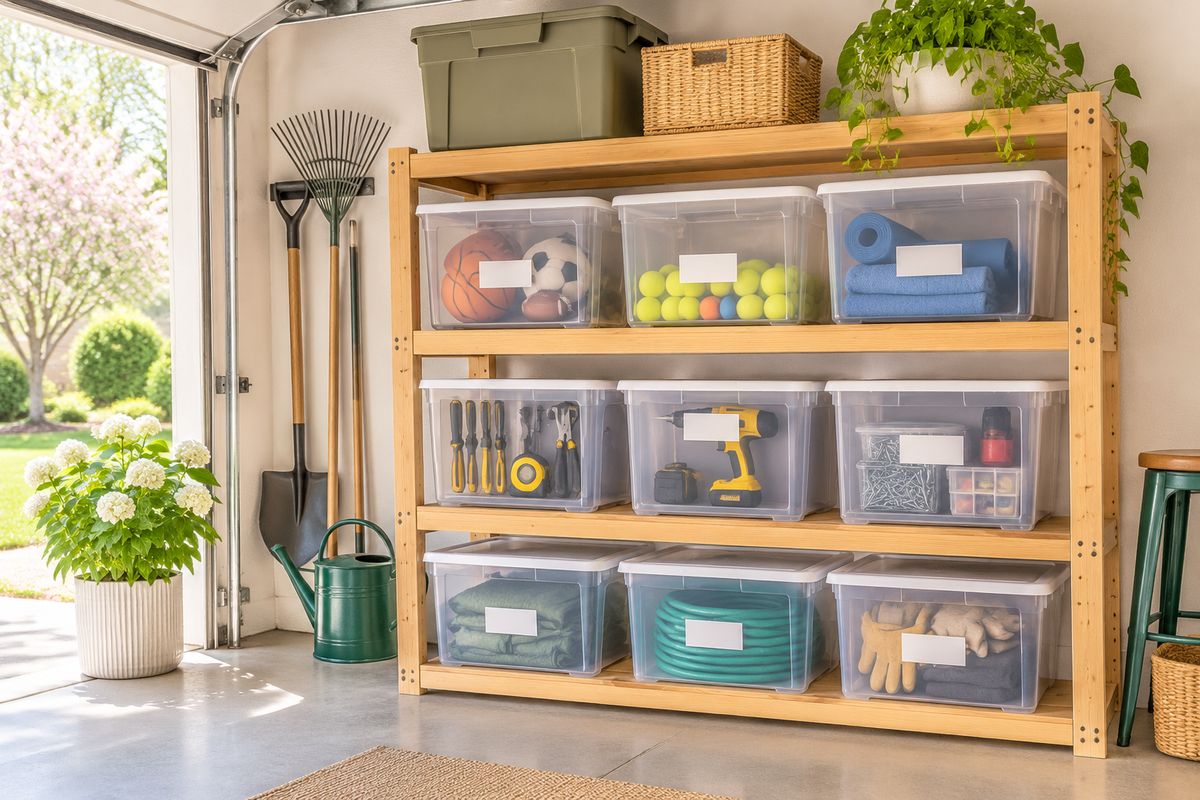
Spring weather makes garage and storage projects bearable again. Do not try to do the whole garage in one weekend. Pick one zone, such as a single shelf, the tool area or the corner where sports gear piles up.
In 20 minutes, pull everything out of that zone, toss what is broken, and group the rest into clear, labeled bins. Repeat for another zone whenever you have a spare evening. Bins with labels on two sides save time later, because you can read them from any angle. Keep heavy bins on low shelves and light seasonal ones up high.
5May: clean out the medicine cabinet and bathroom
Bathrooms collect expired products quietly. In May, go through the medicine cabinet, the shower and the space under the sink.
Your 20-minute task: check expiration dates on medicines, sunscreen and first-aid supplies, toss old makeup and nearly empty bottles, and make a list of what to replace. Dispose of medicines through a take-back location or the instructions on the FDA website rather than flushing them, unless the label says to. Then group what stays into small bins by use: daily care, first aid, cold and allergy, and skin care. Keep medicines out of reach of children, and store them away from the steam of the shower when you can, since heat and humidity can affect them.
6June: reset kids' rooms and toy storage
When school ends, kids' rooms fill with papers, art projects and toys that have not been touched since winter. June is a good month for a reset before the summer schedule takes over.
In 20 minutes, sort school papers into a small keepsake box and recycling, and pull toys and books your kids have outgrown. Let older kids decide what goes. A container limit, all the stuffed animals that fit in this basket, prevents arguments. Give each kid one keepsake box for the school year's best drawings and certificates, and photograph the rest of the artwork before it goes to recycling. Bag donations and put them in the car the same day.
7July: organize digital photos and files
Summer is a good time for an indoor project that does not involve heavy lifting. Digital clutter costs storage space and time, even if you cannot see it.
Spend 20 minutes deleting duplicate photos and screenshots from your phone, then make one folder per year in your cloud storage and move the photos into it. Next session, unsubscribe from ten email lists. Keep the scope small: one month of photos or one inbox folder per session is plenty. Turning on automatic backup means you only have to do this once. While you are there, clear your computer's downloads folder and desktop, which tend to collect old files nobody opens again.
8August: build a drop zone before school starts
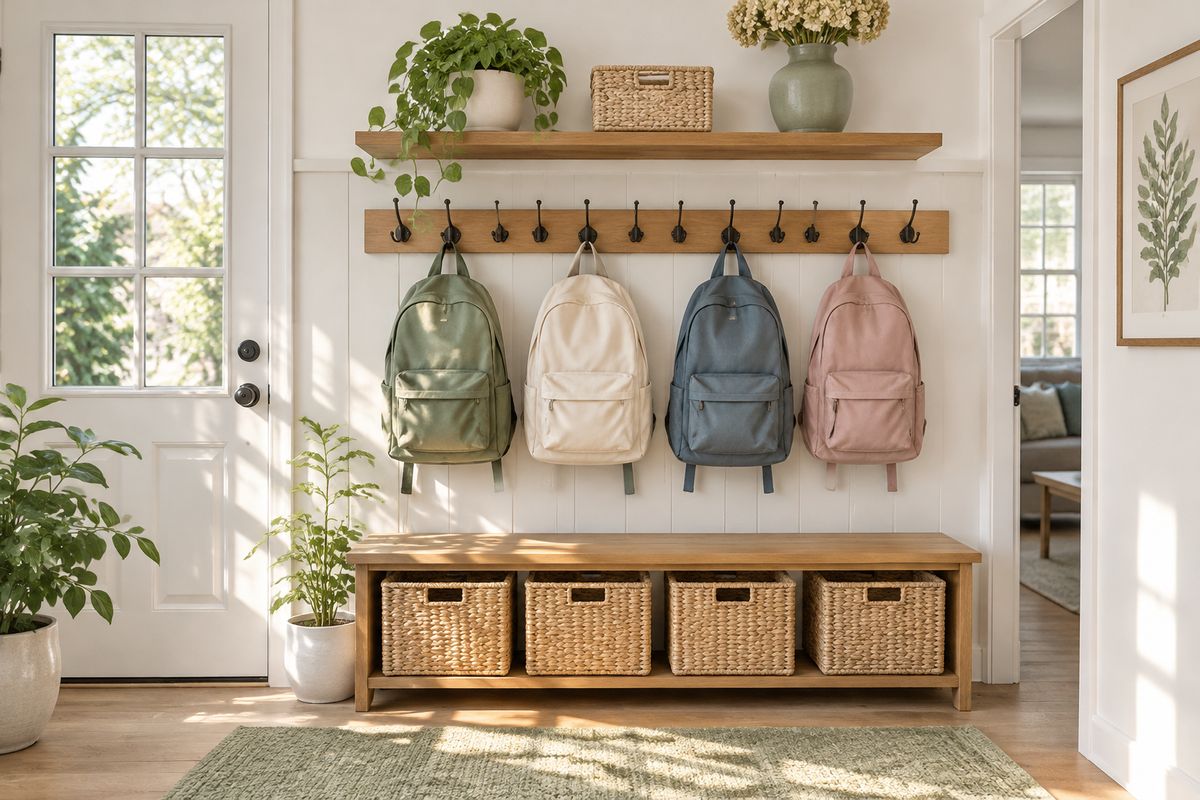
Back-to-school season brings backpacks, permission slips and sports gear through the front door every day. A drop zone gives each item a home before it lands on the floor.
In 20 minutes, clear the entryway, put up a hook for each person's bag and coat, and add one basket per person for shoes or gear. A small wall pocket or tray for keys and mail keeps those off the kitchen counter. If your entry is tight, use the wall: a shelf above the hooks holds baskets for hats and sunscreen, and an over-the-door organizer can hold each child's small items.
9September: refresh the pantry
Fall cooking and baking start in September, so it is the right time to see what is actually in the pantry. Expired spices and three opened bags of flour are common finds.
Your 20-minute task: empty one shelf at a time, check dates, combine duplicates and group what stays into categories like breakfast, baking, snacks and dinners. Put the oldest items in front. Labels make the system stick, and our free printable pantry labels are ready to print. Unopened food you will not use can go to a local food bank if it is within date.
10October: sort the linen closet
Before holiday guests arrive, make sure you can find a clean set of sheets and enough towels without digging. Linen closets tend to fill with mismatched sheets and towels too worn for guests.
In 20 minutes, pull everything out and keep two sets of sheets per bed and two or three towels per person, plus a guest set. Fold each sheet set and tuck it inside one of its pillowcases so it stays together. Worn towels can go to an animal shelter, many of which welcome them, but call first. Label each shelf by bed or by room so anyone can put laundry away.
11November and December: holiday storage, then a year-end check
Getting holiday storage ready in November makes December calmer and the January pack-up faster. Bring the decoration boxes down and look at what you have before buying anything new. Spend 20 minutes donating decorations you skipped last year, replacing broken bins and labeling each box by use, such as tree, mantel and outdoor. Our Christmas decoration storage ideas show how to pack it all back up.
Keep December for upkeep, not new projects. In one 20-minute walk-through, note which areas from this year slipped and which held up, give the slipped spots a quick sweep and write down three areas for next year's list. That note tells you which systems actually work for your household.
Your 12-month organizing plan at a glance
Print or copy this plan and stick it inside a kitchen cabinet. Each task fits into about 20 minutes; repeat it on more evenings if an area needs more time.
| Month | Area | 20-minute task |
|---|---|---|
| January | Kitchen | Clear the counters and empty one drawer |
| February | Paperwork | Sort the pile into act, file and shred and set up a tax folder |
| March | Closet | Pull unworn winter clothes for donation |
| April | Garage or storage | Clear and bin one shelf or zone |
| May | Bathroom | Check dates in the medicine cabinet and under the sink |
| June | Kids' rooms | Sort school papers and outgrown toys |
| July | Digital | Delete duplicate photos and make yearly folders |
| August | Entryway | Add hooks and one basket per person |
| September | Pantry | Empty one shelf, check dates and group by category |
| October | Linen closet | Keep two sheet sets per bed and fold into pillowcases |
| November | Holiday storage | Donate unused decorations and label bins |
| December | Whole house | Check what slipped and list next year's areas |
If a month gets busy, skip it and move on. The plan works even if you finish only eight of the twelve.
Habits that make organizing goals stick
The monthly goal gets the area in shape. Daily and weekly habits keep it that way. Pair the plan with a short routine, and use our free printable cleaning schedule or the free declutter checklist to track it.
- Put the session on your calendar, same night each week, like any other appointment.
- Set a timer for 20 minutes and stop when it rings, even mid-drawer.
- Keep a donation bag in a closet so items leave the house the day you decide.
- Do a ten-minute reset each evening: counters clear, items back in their homes.
- Use one in, one out for clothes, toys and kitchen gadgets.
- Track progress with a checkmark on the plan; seeing finished months is motivating.
Keeping it that way
The best organizing resolution is the one you can still keep in October. Small areas, short sessions and a plan that follows the calendar make that possible, without a single exhausting weekend.
If you want a faster start, our 30-day declutter challenge gives you a daily task for the first month. Pick a start date, write January's task on the calendar and begin with one drawer.
Get the free Declutter Kit
A 7-page printable: room-by-room checklists, the 30-day challenge calendar and a 10-minute weekly reset. Free, straight to your inbox.
Everything mentioned in this guide
One list, so you can check sizes against your own measurements. Links go to Amazon; we may earn a commission.
Questions people ask
What is a realistic organizing goal?
A realistic goal names one specific area and a short amount of time, such as clear the junk drawer in 20 minutes on Sunday. Vague goals like get organized are hard to start and impossible to finish.
How do I stick to an organizing resolution?
Schedule short sessions, keep a visible plan and focus on one area at a time. Daily ten-minute resets and a donation bag that leaves the house regularly keep finished areas from slipping.
Should I declutter the whole house in January?
You can, but most people burn out. Spreading the work across the year matches natural moments, like tax season and the change of seasons, and lets each area get proper attention.
How long should an organizing session be?
Twenty minutes is a good default. It is short enough to start on a tired weeknight and long enough to finish a drawer, a shelf or a pile of paper.
What if I fall behind on the plan?
Skip the missed month and start the current one. You can come back to skipped areas in December or next year. Finishing most of the plan still makes a big difference.